Cube
Trade
Pro
Advanced trading interface with professional tools
Swap
Exchange cryptocurrencies instantly
Bundles
Trade multiple tokens in a single transaction
Algos
Create and manage automated trading strategies
Portfolio
Portfolio
View your cryptocurrency holdings and performance
Orders
Track your open and completed orders
Transactions
View your complete transaction history
Rewards
Rewards Dashboard
View your rewards and claim loot boxes
Blocks Leaderboard
See top traders competing for block rewards
Referral Leaderboard
See top referrers and track referral rankings
Investors
Investor Resources
Browse investor resources and documentation
Presentation (pdf)
Download investor presentation
Settings
Profile
Your profile and account verification
Subaccounts
Separate portfolios across subaccounts
Address Book
Manage saved withdrawal addresses
Multi-Factor Authentication
Add a verification step for sensitive account actions
API Keys
Connect applications to your account
Onramp
Link bank account to buy crypto
Account Recovery
Manage account recovery setup
Learn
News
Read the latest news, announcements, and updates from Cube Exchange
What-Is Guides
Learn about cryptocurrencies
FAQ
Frequently asked questions about Cube Exchange
Fees
View our transparent fee schedule and pricing information
Security
Learn more about Cube Exchange security
About
About
Learn more about Cube Exchange
Legal
Legal information, terms of service, privacy policy, and risk disclosures
EN
Select Language
EN
English
ES
Español
ID
Bahasa Indonesia
JA
日本語
PL
Polski
PT
Português
RU
Россия
TH
แบบไทย
TR
Türkçe
UK
Україна
VI
Tiếng Việt
ZH-CN
简体中文
ZH-TW
繁體中文
Light
Dark
System
Sign In
/
Foundations
/
Foundations
Core blockchain and crypto concepts: wallets, keys, consensus, and the building blocks of Web3.
#BLOCKCHAIN
#CONSENSUS
#CRYPTOGRAPHY
#DEFI
#EXECUTION
#GOVERNANCE
#INFRASTRUCTURE
#INTEROPERABILITY
#ORACLES
#PRIVACY
#SCALING
#SECURITY
#STAKING
#TOKENS
#TRANSACTIONS
#WALLETS
What is Key Resharing?
Key resharing solves a subtle problem in threshold cryptography: how do you change who holds a key without changing the key itself? By redistributing fresh shares of the same secret, systems can rotate operators, recover from compromise, and keep long-lived threshold keys usable without ever reconstructing the private key in one place.
Mar 21, 2026
•
23 min read
#THRESHOLD SYSTEMS
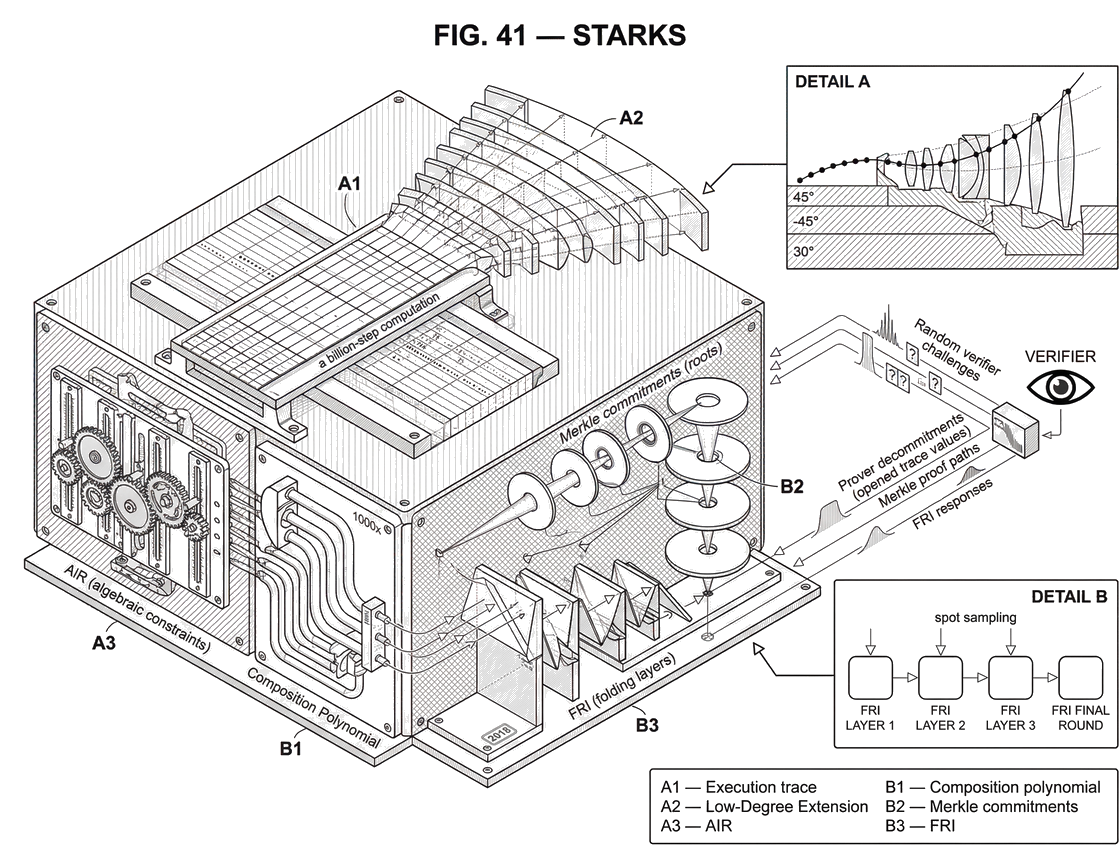
What is a STARK?
STARKs are a way to prove a computation was done correctly without making every verifier redo the work. Their importance comes from a rare combination: no trusted setup, hash-based security that is considered more plausible against quantum attacks, and verification that stays cheap even when the original computation was huge.
Mar 21, 2026
•
24 min read
#CRYPTOGRAPHY
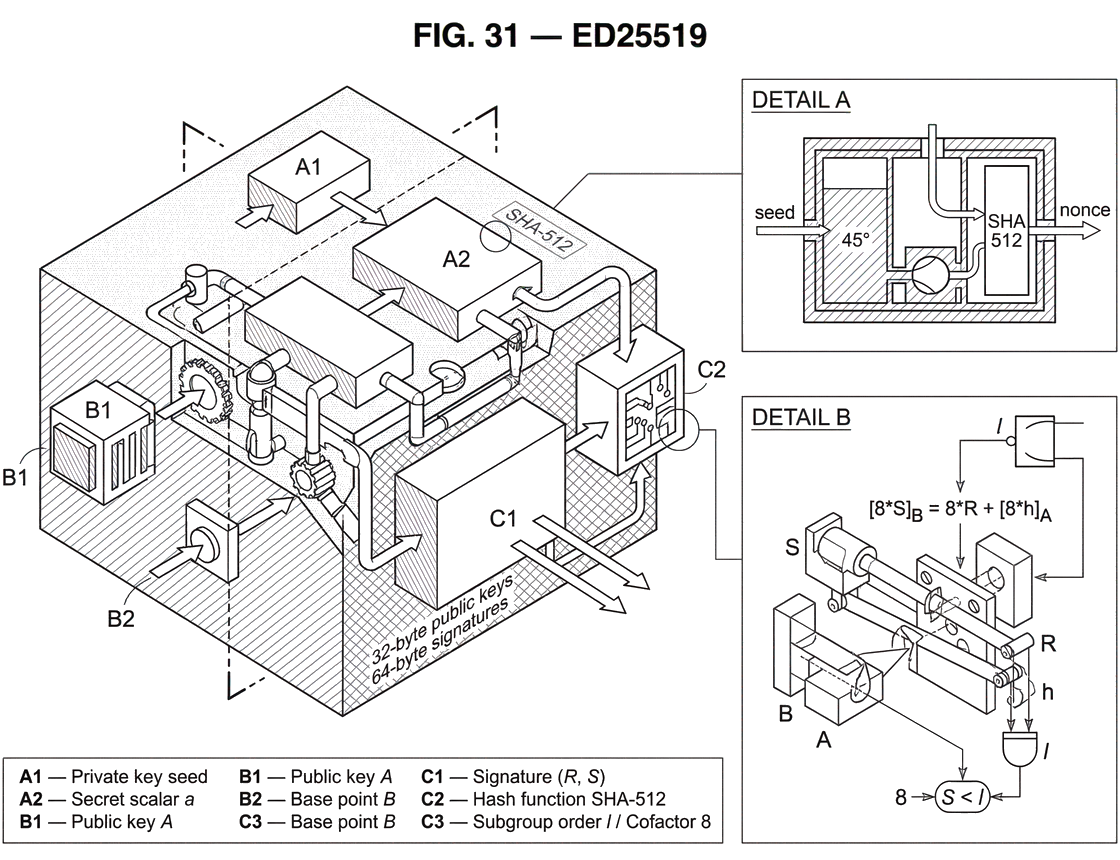
What is Ed25519?
Ed25519 is a digital signature system that became popular because it makes the secure path unusually practical: fast verification, small keys and signatures, and deterministic signing that avoids a famous class of randomness failures. Its details matter, because subtle choices around validation and encoding can change whether two implementations agree that a signature is valid.
Mar 21, 2026
•
24 min read
#SIGNATURES
What Are Schnorr Signatures?
Schnorr signatures are a digital signature scheme with unusually clean algebra: the same structure that makes them simple to verify also makes key aggregation and compact multisignatures possible. That combination of rigor and flexibility is why they matter in modern cryptography and in systems like Bitcoin Taproot.
Mar 21, 2026
•
23 min read
#SIGNATURES
What Are SNARKs?
SNARKs solve a strange problem: how can you convince someone a huge computation was done correctly without making them redo it? Their power comes from turning many checks into a tiny proof that is fast to verify, which is why they matter for privacy systems, blockchains, and verifiable computing.
Mar 21, 2026
•
27 min read
#CRYPTOGRAPHY
What is ECDSA?
ECDSA is the signature system that lets a blockchain user prove control of a private key without revealing it. Its elegance hides a sharp constraint: each signature depends on a one-time secret value, and if that value is reused or leaked, the private key can fall with it.
Mar 21, 2026
•
22 min read
#SIGNATURES
What is a Digital Signature?
Digital signatures solve a precise problem: how to make a digital message carry proof of who approved it and whether it was changed. They are the quiet mechanism behind blockchain transactions, signed software, and secure protocols — but their guarantees are narrower, and more conditional, than many people assume.
Mar 21, 2026
•
25 min read
#SIGNATURES
What is SHA-256?
SHA-256 is the quiet workhorse behind block identifiers, commitments, address derivation, digital signatures, and many integrity checks across crypto systems. Its importance comes from a simple promise: a tiny change in input should produce a completely different 256-bit fingerprint that is easy to compute and hard to fake.
Mar 21, 2026
•
24 min read
#HASH FUNCTIONS
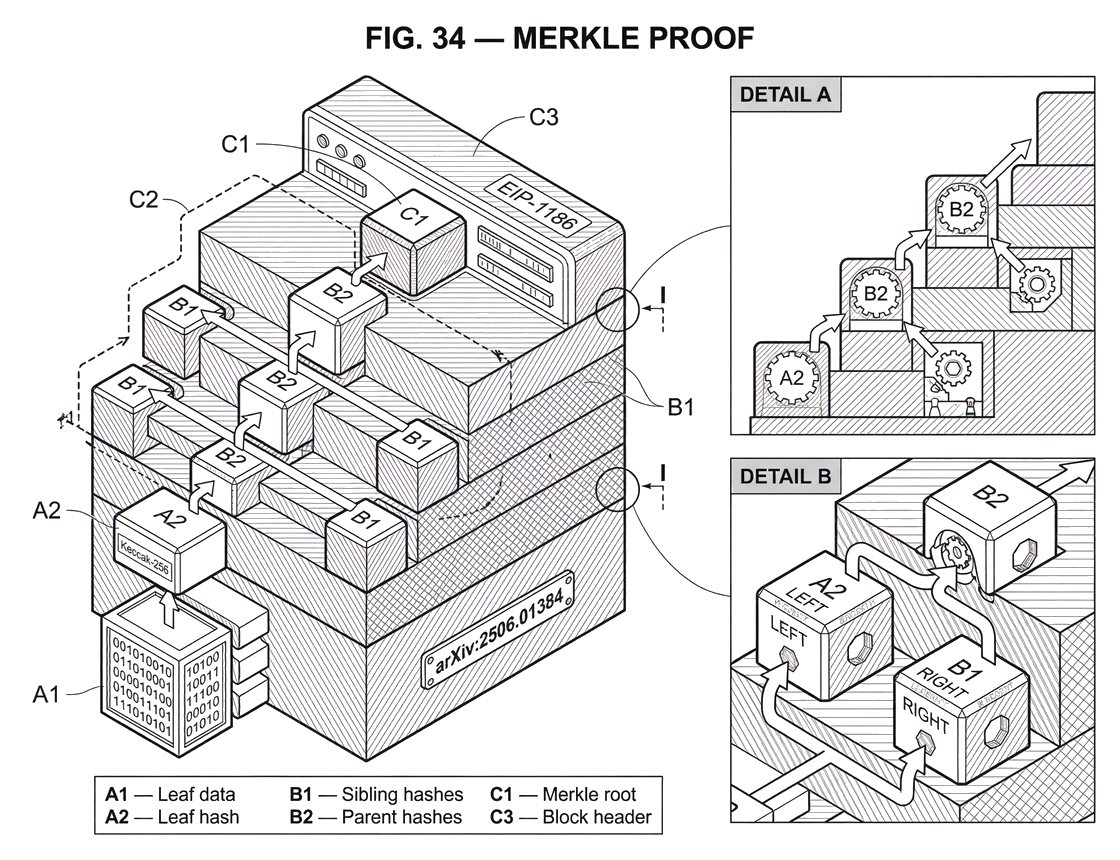
What is a Merkle Proof?
A Merkle proof lets you convince someone that a piece of data belongs to a much larger set without sending the whole set. That sounds almost too convenient, but the mechanism is simple: a short chain of hashes ties one leaf to a single root that stands for everything.
Mar 21, 2026
•
22 min read
#CRYPTOGRAPHY
What is Poseidon Hash?
Poseidon hash matters because ordinary hashes are cheap on CPUs but expensive inside zero-knowledge proofs. Poseidon flips that tradeoff: it is built from finite-field arithmetic so Merkle trees, commitments, and private transactions can be proven with far fewer circuit constraints.
Mar 21, 2026
•
24 min read
#HASH FUNCTIONS
What is X25519?
X25519 is one of the most widely deployed ways to do modern Diffie–Hellman key exchange, but its importance is not just speed. It was designed so secure, constant-time implementations are much easier to get right, which is why it appears across TLS 1.3, Noise, WireGuard, and many cryptographic libraries.
Mar 21, 2026
•
22 min read
#CURVES
What Is Elliptic Curve Cryptography?
Elliptic Curve Cryptography lets modern systems get strong public-key security with much smaller keys than older designs. Its power comes from a simple asymmetry: multiplying a curve point is easy, but reversing that multiplication appears hard — and that gap supports signatures, key exchange, and much of today’s wallet infrastructure.
Mar 21, 2026
•
27 min read
#CURVES
1
2
3
4
5
6
7
8
9
10
11
12
13
14
15
16
17
18
19