Cube
Trade
Pro
Advanced trading interface with professional tools
Swap
Exchange cryptocurrencies instantly
Bundles
Trade multiple tokens in a single transaction
Algos
Create and manage automated trading strategies
Portfolio
Portfolio
View your cryptocurrency holdings and performance
Orders
Track your open and completed orders
Transactions
View your complete transaction history
Rewards
Rewards Dashboard
View your rewards and claim loot boxes
Blocks Leaderboard
See top traders competing for block rewards
Referral Leaderboard
See top referrers and track referral rankings
Investors
Investor Resources
Browse investor resources and documentation
Presentation (pdf)
Download investor presentation
Settings
Profile
Your profile and account verification
Subaccounts
Separate portfolios across subaccounts
Address Book
Manage saved withdrawal addresses
Multi-Factor Authentication
Add a verification step for sensitive account actions
API Keys
Connect applications to your account
Onramp
Link bank account to buy crypto
Account Recovery
Manage account recovery setup
Learn
News
Read the latest news, announcements, and updates from Cube Exchange
What-Is Guides
Learn about cryptocurrencies
FAQ
Frequently asked questions about Cube Exchange
Fees
View our transparent fee schedule and pricing information
Security
Learn more about Cube Exchange security
About
About
Learn more about Cube Exchange
Legal
Legal information, terms of service, privacy policy, and risk disclosures
EN
Select Language
EN
English
ES
Español
ID
Bahasa Indonesia
JA
日本語
PL
Polski
PT
Português
RU
Россия
TH
แบบไทย
TR
Türkçe
UK
Україна
VI
Tiếng Việt
ZH-CN
简体中文
ZH-TW
繁體中文
Light
Dark
System
Sign In
/
Foundations
/
Governance
/
Foundations: Governance
What Is Snapshot Voting?
Snapshot voting became popular because on-chain governance is expensive at exactly the moment communities want broad participation. It solves that by keeping voting power anchored to blockchain state while moving proposals and votes off-chain into signed, verifiable messages.
Mar 21, 2026
•
26 min read
#GOVERNANCE
What Is On-Chain Governance?
On-chain governance tries to answer a difficult question: how can a blockchain change its own rules without relying entirely on informal coordination? By moving proposals, voting, and sometimes execution onto the chain itself, it makes governance legible and automatable — while also exposing it to new failure modes.
Mar 21, 2026
•
25 min read
#GOVERNANCE
What Is Off-Chain Governance?
Off-chain governance is how blockchain communities actually make many important decisions: through discussion, proposals, signaling, and coordination outside the protocol itself. It exists because not every disagreement, upgrade, or emergency can be reduced to automatic on-chain rules.
Mar 21, 2026
•
25 min read
#GOVERNANCE
What Are Governance Proposals?
Governance proposals are how blockchains and DAOs turn disagreement into an auditable decision process. They are not just votes on ideas: they are structured artifacts that define what changes, who can approve it, and how that approval becomes a real software or treasury action.
Mar 21, 2026
•
24 min read
#GOVERNANCE
What is Delegation?
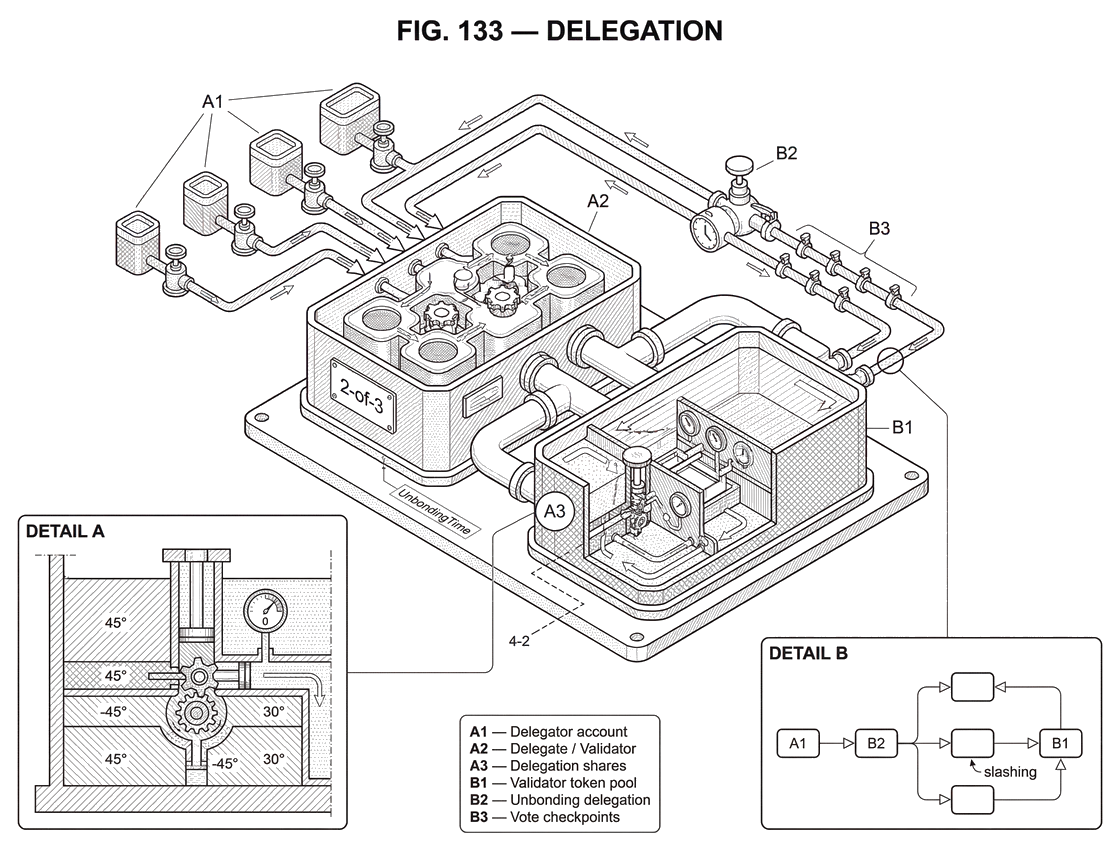
Delegation lets a large group act through a smaller set of trusted actors without giving up ownership of power itself. In blockchain governance, that simple idea sits behind validator staking, vote delegation, and representative systems — and most of the hard problems come from making delegated power revocable, measurable, and hard to abuse.
Mar 21, 2026
•
28 min read
#GOVERNANCE