Cube
Trade
Pro
Advanced trading interface with professional tools
Swap
Exchange cryptocurrencies instantly
Bundles
Trade multiple tokens in a single transaction
Algos
Create and manage automated trading strategies
Portfolio
Portfolio
View your cryptocurrency holdings and performance
Orders
Track your open and completed orders
Transactions
View your complete transaction history
Rewards
Rewards Dashboard
View your rewards and claim loot boxes
Blocks Leaderboard
See top traders competing for block rewards
Referral Leaderboard
See top referrers and track referral rankings
Investors
Investor Resources
Browse investor resources and documentation
Presentation (pdf)
Download investor presentation
Settings
Profile
Your profile and account verification
Subaccounts
Separate portfolios across subaccounts
Address Book
Manage saved withdrawal addresses
Multi-Factor Authentication
Add a verification step for sensitive account actions
API Keys
Connect applications to your account
Onramp
Link bank account to buy crypto
Account Recovery
Manage account recovery setup
Learn
News
Read the latest news, announcements, and updates from Cube Exchange
What-Is Guides
Learn about cryptocurrencies
FAQ
Frequently asked questions about Cube Exchange
Fees
View our transparent fee schedule and pricing information
Security
Learn more about Cube Exchange security
About
About
Learn more about Cube Exchange
Legal
Legal information, terms of service, privacy policy, and risk disclosures
EN
Select Language
EN
English
ES
Español
ID
Bahasa Indonesia
JA
日本語
PL
Polski
PT
Português
RU
Россия
TH
แบบไทย
TR
Türkçe
UK
Україна
VI
Tiếng Việt
ZH-CN
简体中文
ZH-TW
繁體中文
Light
Dark
System
Sign In
/
Foundations
/
Foundations
Core blockchain and crypto concepts: wallets, keys, consensus, and the building blocks of Web3.
#BLOCKCHAIN
#CONSENSUS
#CRYPTOGRAPHY
#DEFI
#EXECUTION
#GOVERNANCE
#INFRASTRUCTURE
#INTEROPERABILITY
#ORACLES
#PRIVACY
#SCALING
#SECURITY
#STAKING
#TOKENS
#TRANSACTIONS
#WALLETS
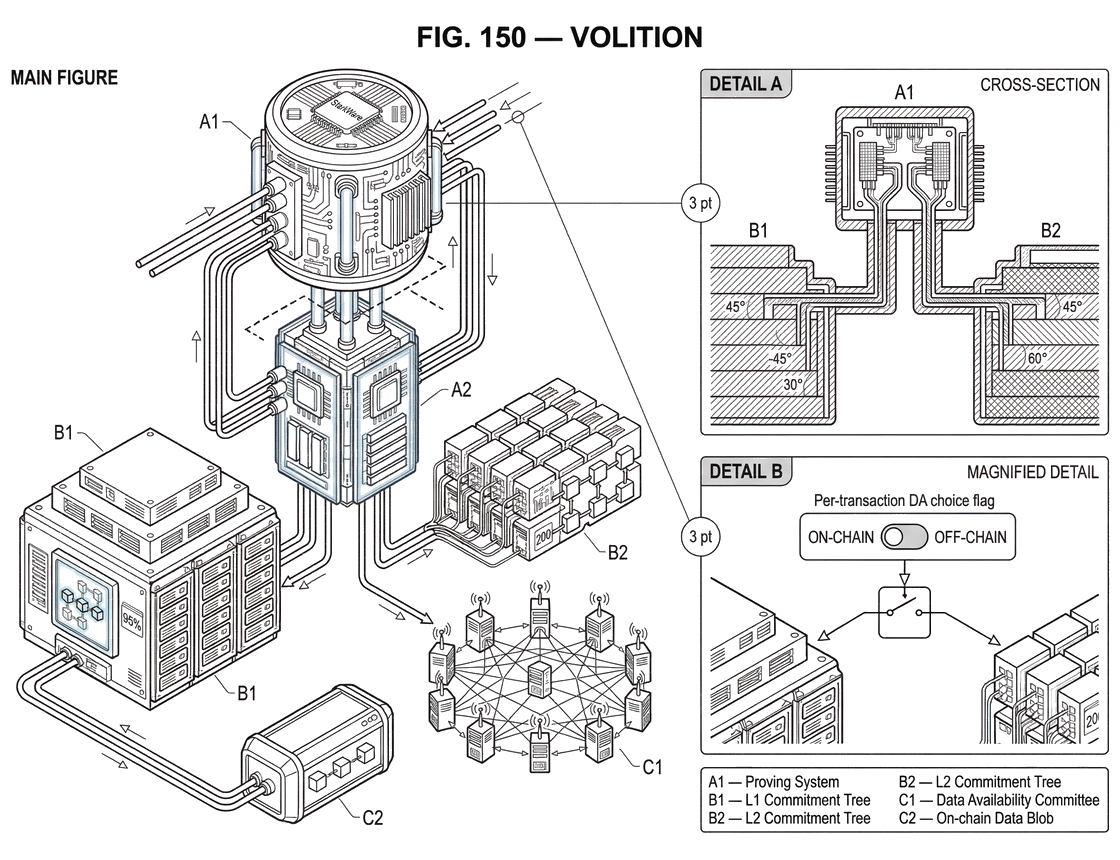
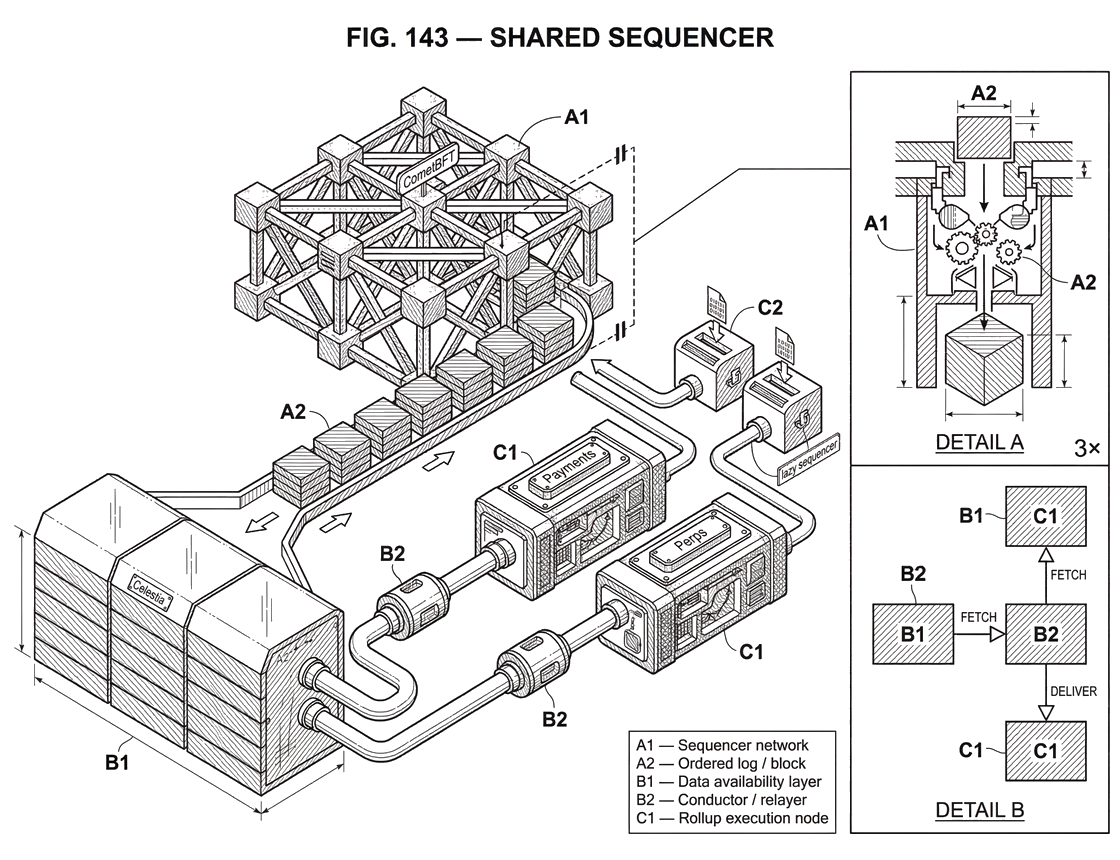
What is a Shared Sequencer?
A shared sequencer tries to solve a strange problem in rollups: each chain can be fast on its own, yet the moment users need to coordinate across chains, latency, fragmentation, and trust assumptions come back. By giving multiple rollups a common ordering layer, shared sequencing aims to make cross-rollup interaction feel less like messaging between separate worlds and more like one market with one clock.
Mar 21, 2026
•
24 min read
#ROLLUPS
What is a Validity Proof?
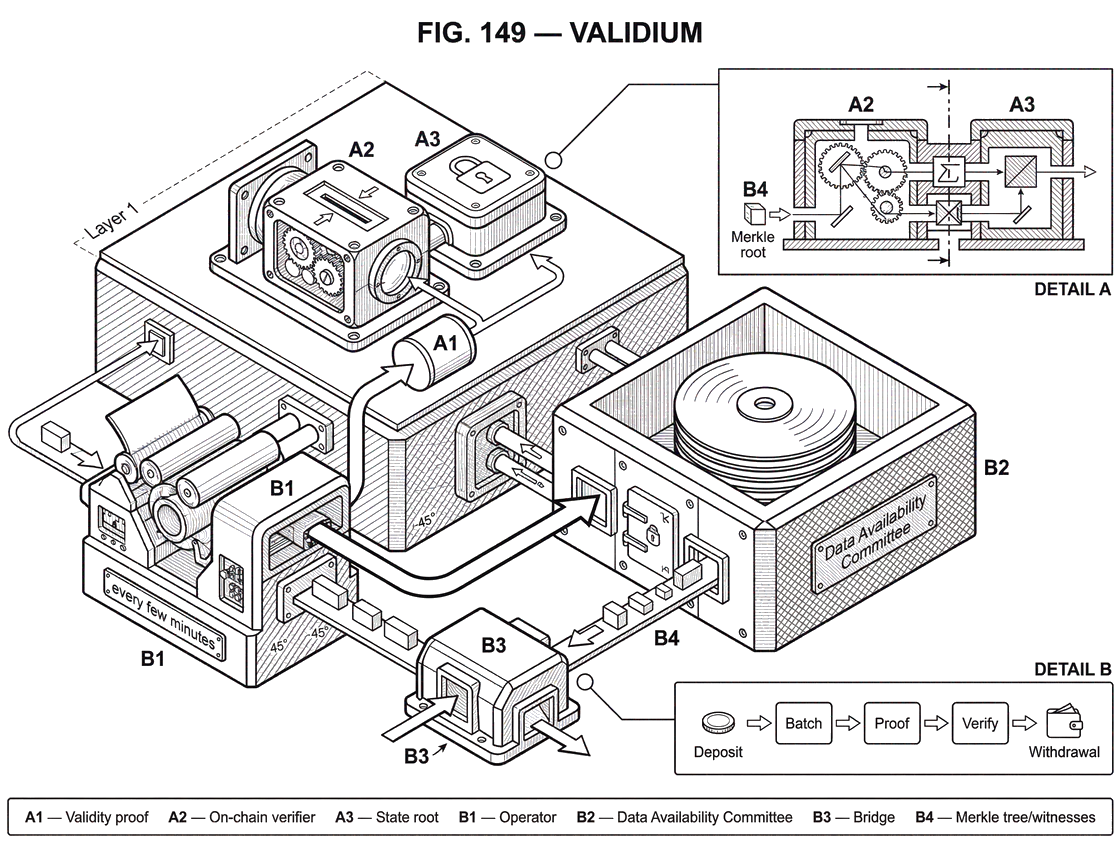
A validity proof lets a blockchain accept an offchain computation without redoing the work itself. That simple shift changes the economics of scaling: a layer 1 checks a compact proof of correctness instead of re-executing every transaction, which is why validity rollups can offer fast finality and strong security at the same time.
Mar 21, 2026
•
24 min read
#ROLLUPS
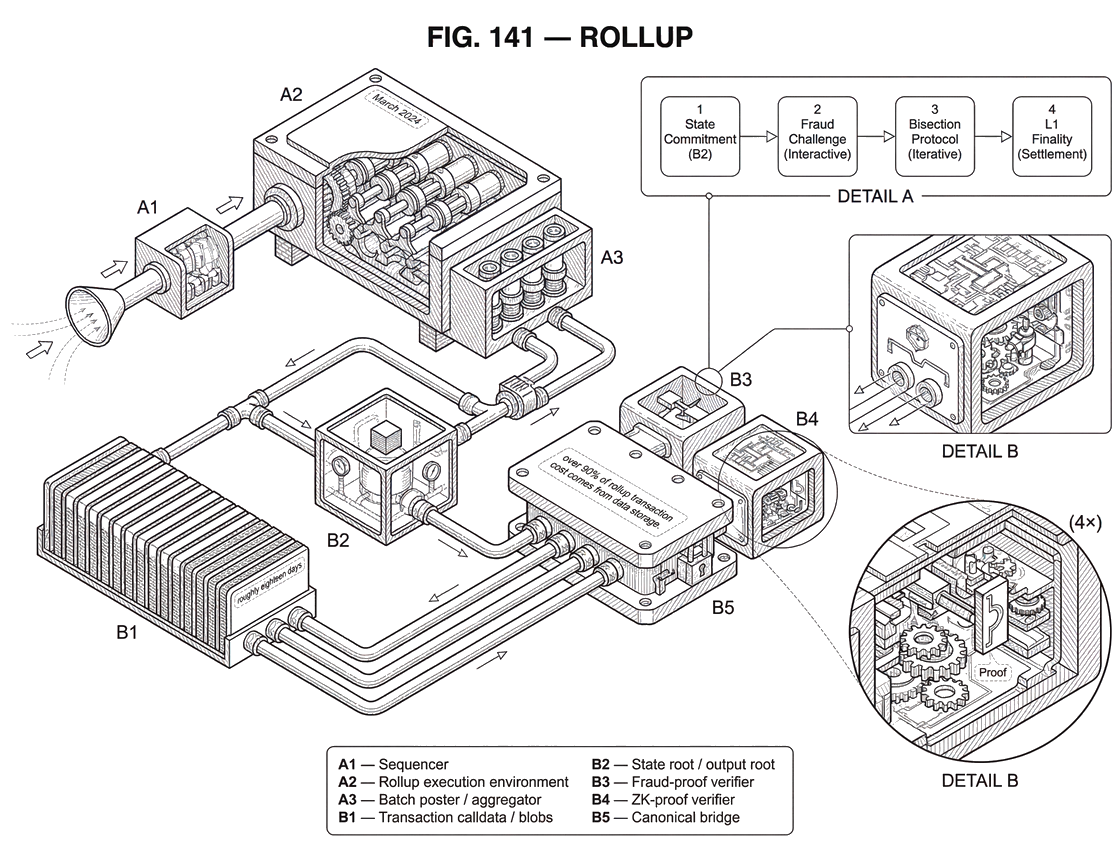
What is a Rollup?
Rollups matter because they change the scaling tradeoff that made many blockchains expensive to use: instead of asking the base chain to execute every transaction, they ask it to verify and store just enough to keep the system honest. That simple shift is why rollups can be much cheaper than L1 while still leaning on L1 for security.
Mar 21, 2026
•
23 min read
#ROLLUPS
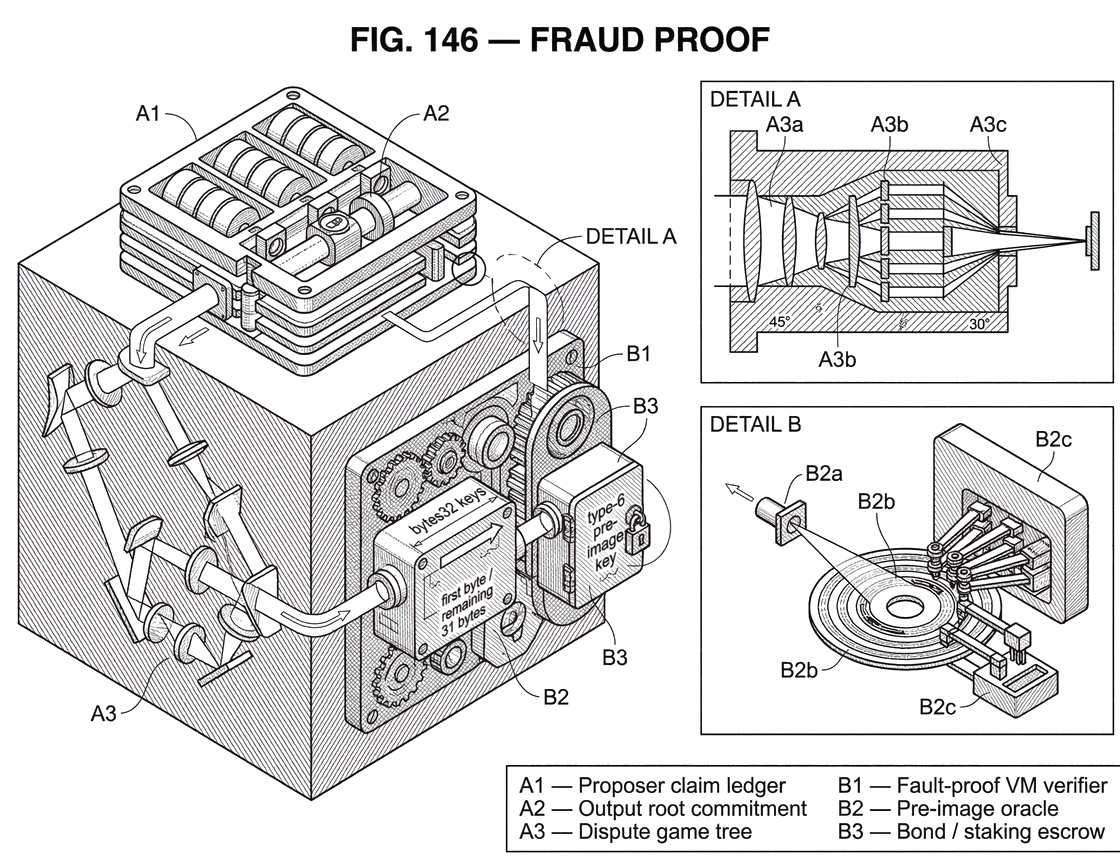
What is a Fraud Proof?
Fraud proofs are the mechanism that makes optimistic rollups more than a promise. Instead of proving every state transition up front, they let the system move fast by assuming correctness — and then give anyone a way to force a precise, onchain check when something looks wrong.
Mar 21, 2026
•
24 min read
#ROLLUPS
What is an Optimistic Rollup?
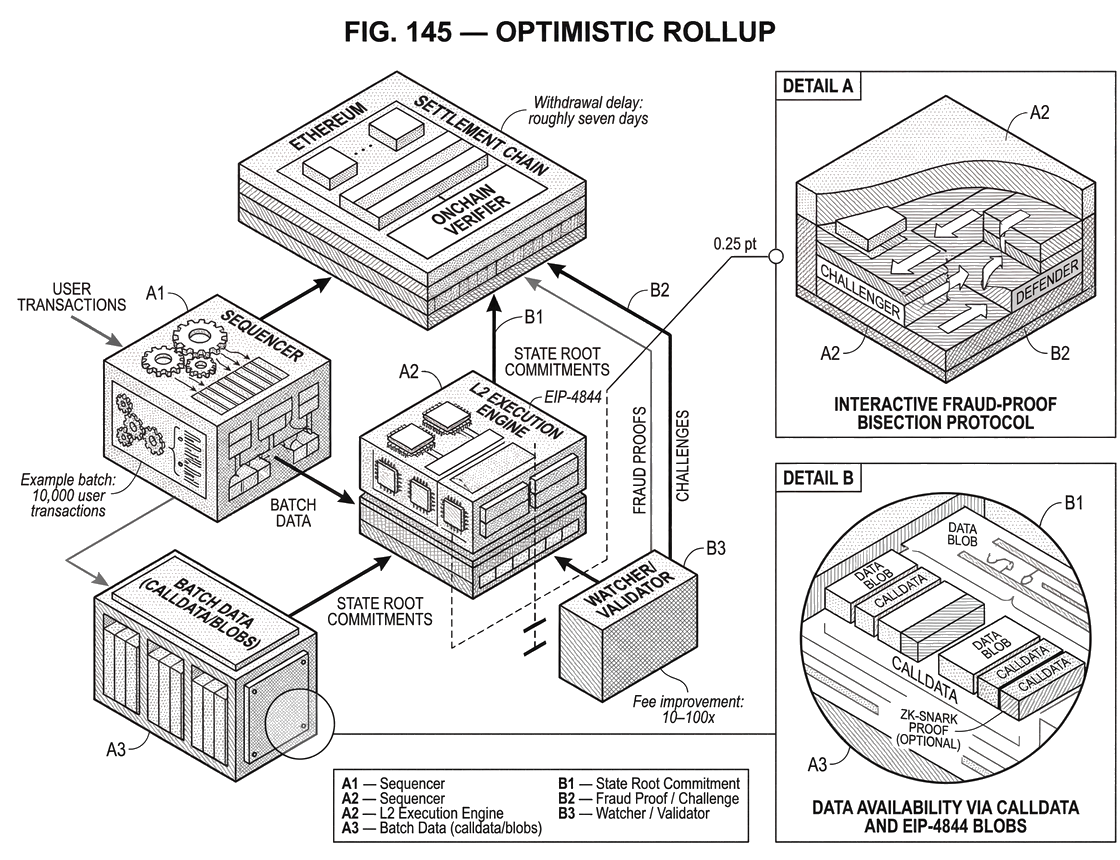
Optimistic rollups matter because they try to get the best part of a blockchain twice: cheap, fast execution offchain, with security still anchored to a more expensive base chain. The key idea is simple but subtle: assume batches are valid unless someone proves otherwise, and make that challenge process reliable enough to matter.
Mar 21, 2026
•
23 min read
#ROLLUPS
What is Layer 2?
Layer 2 is the answer to a basic tension in blockchains: if every node must process everything, the system stays trust-minimized but expensive and slow. Layer 2 changes where work happens while keeping final settlement tied to Layer 1, which is why it has become the main path to blockchain scaling.
Mar 21, 2026
•
23 min read
#LAYERS
What Is a Settlement Layer?
A settlement layer is where a blockchain system makes its promises enforceable. It is the layer that records commitments, verifies proofs or challenges, and gives users a credible way to withdraw or recover assets even when an execution layer fails.
Mar 21, 2026
•
23 min read
#LAYERS
What is a Sidechain?
A sidechain is a separate blockchain that lets assets or messages move off a main chain without changing the main chain itself. That sounds like simple scaling, but the important question is where the security comes from: a sidechain has its own security model, and that tradeoff is the whole story.
Mar 21, 2026
•
26 min read
#LAYERS
What Is the Consensus Layer?
The consensus layer is the part of a blockchain stack that answers the hardest coordination question: which block does the network agree came next, and when is that choice unlikely to be reversed? In modular systems, that job is deliberately separated from execution so blockchains can scale, upgrade, and specialize without mixing agreement with computation.
Mar 21, 2026
•
22 min read
#LAYERS
What Is the Execution Layer?
The execution layer is the part of a blockchain system that actually runs transactions and updates state. It matters because scaling is not just about making blocks faster to agree on — it is about deciding where computation happens, how it is verified, and which layer bears the cost.
Mar 21, 2026
•
23 min read
#LAYERS
What is Proto-Danksharding?
Proto-danksharding matters because it changes what kind of data a blockchain block can carry, not just how much. By introducing cheap, temporary blob space for rollups, it cuts one of the main costs behind Layer-2 fees while preserving a path toward much larger data-availability scaling later.
Mar 21, 2026
•
23 min read
#DATA
What is Sharding?
Sharding is one of the clearest ways to make a blockchain do more work without asking every node to process everything. The hard part is not the split itself, but preserving security, data availability, and cross-shard correctness once the system is no longer fully replicated.
Mar 21, 2026
•
25 min read
#DATA
1
2
3
4
5
6
7
8
9
10
11
12
13
14
15
16
17
18
19