Trump’s Impact on Bitcoin and Altcoins
Explore Trump’s Impact on Bitcoin and Altcoins, examining his statements, policies, and their implications on the crypto market's evolving landscape.
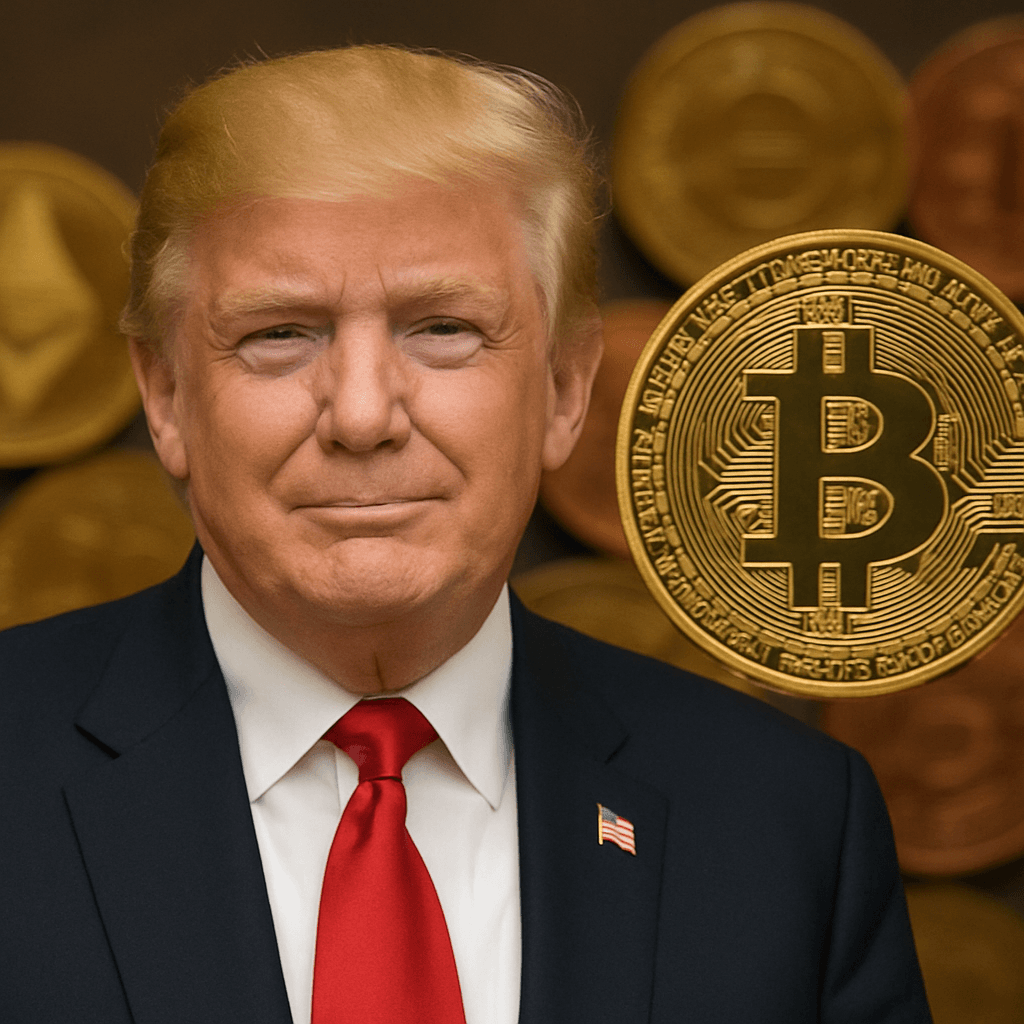
Trump’s Impact on Bitcoin and Altcoins
The cryptocurrency market evolves at lightning speed, influenced not only by technological advances but also by political developments. Among the political figures who have left a visible mark on this industry, Donald Trump, the 45th President of the United States, stands out. From his critical tweets on Bitcoin (BTC) to the regulatory groundwork his administration set in motion, Trump’s presidency provides a valuable case study of how politics, finance, and technology intersect.
This article takes a deep look at Trump’s relationship with cryptocurrencies, exploring his public statements, policies, market impact, and legacy. Along the way, we’ll highlight how his actions affected both Bitcoin and altcoins, while providing links to essential blockchain concepts such as Proof of Work, Consensus Algorithms, and Layer 1 Blockchains.
👉 Ready to explore crypto beyond politics? You can buy Bitcoin, sell Bitcoin, or trade BTC/USDT right now on Cube.Exchange.
Trump’s Public Stance on Crypto
Donald Trump is one of the rare U.S. presidents to openly comment on cryptocurrencies while in office. In July 2019, he tweeted:
- Bitcoin and other cryptocurrencies are “not money.”
- Their value is “highly volatile and based on thin air.”
- Crypto could facilitate “unlawful behavior, including drug trade and other illegal activity.”
These remarks, amplified by global media, instantly became a flashpoint for debate. At the time, Bitcoin was trading near its 2019 highs, and Trump’s comments caused a short-term dip. His words highlighted just how sensitive the crypto market can be to political discourse.
For supporters of blockchain, his critique overlooked the benefits of decentralization, borderless payments, and trustless systems powered by cryptographic consensus. Critics, however, saw his skepticism as justified, pointing to risks like money laundering, scams, and market manipulation.
👉 Want to understand Bitcoin fundamentals before diving into politics? Start with What is Bitcoin and Trade BTC/USDT today.
Why Trump’s Comments Mattered
Political leaders wield enormous influence over financial markets. When a sitting U.S. president takes aim at digital currencies, the effects ripple globally.
Trump’s remarks:
- Legitimized the crypto debate — Before his tweets, crypto was largely discussed in tech and finance circles. His comments brought the issue to the highest levels of political discourse.
- Sparked regulatory speculation — Traders feared that negative sentiment from the president could lead to stricter U.S. regulation.
- Exposed volatility — Bitcoin prices moved rapidly, showing how external political events can influence an asset designed to be independent of government control.
This episode reinforced the idea that while crypto operates outside traditional banking, it cannot escape political scrutiny.
👉 Want to protect against volatility? Learn about Stop-Loss Orders and Market Orders.
Policy Moves During Trump’s Presidency
While Trump’s tweets grabbed headlines, his administration also enacted policies that left a lasting mark on the crypto industry.
1. Cryptocurrency Working Group
Trump signed an executive order establishing a multi-agency working group on digital assets. Its mission:
- Evaluate the risks and opportunities of crypto.
- Assess how technologies like Proof of Stake and Layer 2 Blockchains could integrate into finance.
- Consider national security risks linked to anonymity and cross-border transactions.
By recognizing crypto as a serious policy issue, this group set the stage for future regulatory frameworks in the U.S.
2. FinCEN Proposals
The Financial Crimes Enforcement Network (FinCEN) under Trump advanced rules requiring exchanges to report transactions above certain thresholds. These proposals targeted money laundering and terrorist financing, aligning crypto markets with the Bank Secrecy Act.
While intended to increase legitimacy, critics argued they risked stifling innovation. Supporters, on the other hand, saw compliance as essential for mainstream adoption.
👉 Dive deeper: explore Data Availability and Finality to understand why transparency matters in blockchain systems.
The Market’s Reaction
Trump’s presidency highlighted how investor sentiment reacts quickly to political signals:
- Short-term price swings: Bitcoin often dipped after Trump’s negative comments.
- Long-term strengthening: Ironically, the scrutiny pushed exchanges to adopt stronger compliance and securitypractices.
- Institutional entry: Clearer rules made it easier for institutions to enter the space, paving the way for the Bitcoin bull run of 2020–2021.
This “short-term pain, long-term gain” dynamic illustrates how regulation can both challenge and legitimize emerging markets.
👉 For traders: learn how to manage volatility with Limit Orders and Liquidity Pools.
Global Ripple Effects
Trump’s words didn’t stop at U.S. borders. They encouraged other governments to evaluate crypto more seriously:
- European Union: accelerated efforts toward the Markets in Crypto-Assets (MiCA) framework.
- China: doubled down on restrictions while simultaneously accelerating its CBDC project, the digital yuan.
- Emerging markets: nations like Nigeria and El Salvador later embraced Bitcoin in ways that contrasted sharply with Trump’s skepticism.
This international ripple showed that while the U.S. president’s stance mattered, crypto was already a global phenomenon.
👉 Explore global-scale concepts: Cross-Chain Interoperability, Sharding, and Rollups.
The Debate: Regulation vs Innovation
The Trump era crystallized the central tension in crypto: should governments prioritize strict oversight or allow freedom for innovation?
- Pro-regulation camp: argues that rules protect consumers, prevent scams like Rug Pulls, and encourage institutional adoption.
- Pro-innovation camp: warns that excessive oversight risks slowing technologies like DeFi, NFTs, and Layer 2 scaling.
Trump’s policies often leaned toward caution, reflecting traditional financial concerns about crime and volatility. But by pushing crypto into the regulatory spotlight, he also legitimized it as an asset class worth serious policy attention.
👉 Want to explore both sides? Compare Centralized Exchanges and Decentralized Exchanges.
Trump’s Legacy in Crypto
Looking back, Trump’s legacy in crypto is paradoxical:
- His criticisms added short-term uncertainty but drew massive global attention to Bitcoin.
- His administration’s working groups and FinCEN proposals created frameworks that future administrations built upon.
- By elevating crypto to a matter of national policy, he ensured that digital assets could no longer be ignored.
Today, Bitcoin continues to grow, Ethereum fuels innovations like smart contracts, and altcoins power ecosystems from DeFi lending to NFT marketplaces. Trump’s era marked the point where global politics fully collided with digital finance.
Conclusion: Lessons for the Future
Donald Trump’s impact on Bitcoin and altcoins demonstrates how politics can shape technology. His remarks highlighted volatility, while his administration’s policies emphasized security and compliance. Together, these factors contributed to crypto’s transition from a niche experiment to a mainstream financial sector.
For traders and investors, the key takeaway is clear: crypto doesn’t exist in a vacuum. Political developments, regulations, and global discourse will continue to shape its future.
👉 Want to prepare yourself?
- Learn the basics: What is Blockchain, Proof of Stake, Consensus Layer.
- Explore trading: Buy Bitcoin, Sell Ethereum, Trade BTC/USDT.
- Go deeper into crypto knowledge: DeFi, Liquidity Pools, NFTs.
The balance between regulation and innovation remains at the heart of the crypto debate. Trump’s presidency showed both the risks of political scrutiny and the opportunities of global attention. As the industry moves forward, those lessons will shape how digital assets integrate into the financial systems of tomorrow.
Recent articles
Read the latest from Cube News
The newest briefings, updates, and market notes from the news desk.