What is Undeads Games
Learn what Undeads Games (UDS) is, how its game token works, what drives demand, how staking changes exposure, and the main supply risks.
Introduction
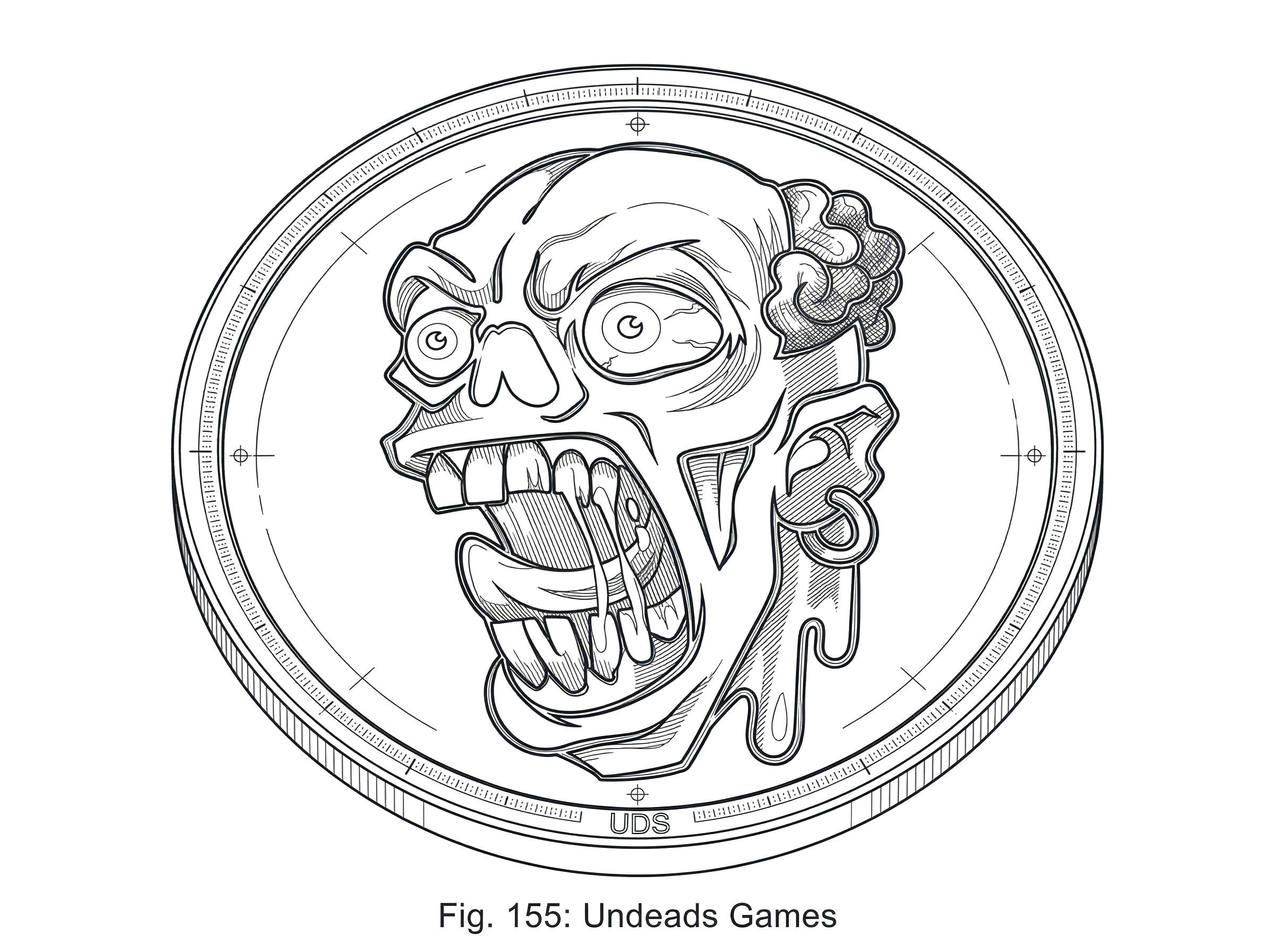
Undeads Games (UDS) is the ERC-20 token meant to hold together the on-chain side of the Undeads game economy. If you buy UDS, you are not buying equity in a game studio or a simple claim on game revenue. You are buying exposure to a token that the project says is used for in-game transactions, staking, economy coordination, and governance across its metaverse products.
Gaming tokens often sound broader than they are. The key question is whether actual player activity and platform design create reasons to acquire and hold the token that are stronger than the project’s own reward emissions. With UDS, that is the central economic test.
What is UDS used for in the Undeads game economy?
The cleanest way to understand UDS is as the settlement asset for the blockchain layer of Undeads. The project describes it as the utility token used throughout the Undeads Metaverse for trading and exchanging in-game assets, staking, building a player-driven economy, and participating in governance. On-chain, it exists as an Ethereum ERC-20 token at contract address 0x712bd4beb54c6b958267d9db0259abdbb0bff606, with 18 decimals and a reported maximum total supply of 250,000,000 UDS.
UDS is intended to be more than a reward point. It is the token people are supposed to use when a game action needs a transferable crypto asset rather than a closed, off-chain balance. The project also uses ERC-721 and ERC-1155 NFT standards for in-game assets, which helps explain the token’s role: those assets need some medium of exchange if a player economy is meant to exist on-chain. UDS is meant to fill that role.
The core thesis is simple: UDS only works as a token investment if players, speculators, and ecosystem participants need it to do things that cannot be done just as well without it. If item trading, staking participation, governance access, or metaverse interactions reliably require UDS, usage can translate into token demand. If most player value sits in non-tokenized gameplay or in a separate reward currency, UDS starts to look more like a promotional asset attached to the brand.
How can Undeads gameplay create lasting demand for UDS?
A game token gets durable demand only when game actions create recurring token flows. The project’s own description points to four intended channels: paying for or exchanging in-game assets, staking, governance, and broader economic activity inside the metaverse. These channels do not carry equal weight.
The strongest potential demand driver is marketplace settlement. If desirable game assets are represented as NFTs and UDS is the common unit used to buy, sell, or price them, active trading converts player activity into token demand. In that setup, more users, more items, and more transaction velocity can support token utility. The NFT standards cited by the project help because they make assets individually ownable and transferable, but the standards themselves do not create value. Value appears only if players actually want the items and need UDS to transact around them.
Staking creates a different kind of demand. It does not come from game spending; it comes from users locking tokens to earn more tokens. That can increase holding demand and reduce circulating float for a time, especially when lockups are long. But staking-led demand is reflexive rather than external. It depends on participants believing rewards and token price will compensate them for inflation, illiquidity, and smart-contract risk.
Governance is a weaker demand driver unless tokenholders genuinely influence meaningful decisions. The project says UDS is used for governance, but the practical importance of that depends on what token votes control, how decentralized decision-making really is, and whether governance affects cash flows, emissions, or core product rules. In many gaming tokens, governance exists more as an extra feature than as the main source of demand.
There is also a complication inside the Undeads economy: the project describes Gold ZBUX as a stable in-game reward currency. That suggests not every in-game economic action needs to run through UDS. If gameplay rewards, spending, or routine loops happen mostly in a separate in-game currency, UDS may be pushed toward a narrower role: premium asset, staking token, marketplace token, or governance token rather than the ecosystem’s everyday money. That does not break the thesis, but it narrows it.
How does staking affect UDS supply, rewards, and investor risk?
For UDS today, staking appears to be one of the clearest operational uses of the token. The project advertises staking for up to two years, a staking pool of 50,000,000 UDS, distribution of more than 1,000,000 UDS per month, and APRs of up to 50%, with the maximum APR explicitly limited to regulate inflation and ensure fair distribution. It also says users can boost rewards by holding an Undeads Zombie NFT.
This creates two linked effects. First, staking can reduce liquid supply by moving tokens out of the tradable float and into lockups. Second, the rewards paid to stakers increase supply available to holders over time, because those rewards come from a predefined token allocation. Staking can tighten float in the short run while adding inflationary pressure as rewards vest and are distributed.
That tradeoff sits at the center of UDS exposure. If you hold UDS without staking, you remain liquid but may be diluted relative to participants who receive token emissions. If you stake, you gain access to those emissions, but you also take lock-up risk because the site states staked assets and earnings are locked until the end of the chosen period. Staking changes your position from liquid token exposure to a combined package of token exposure, smart-contract exposure, and time-lock exposure.
The NFT reward boost adds another layer. If an Undeads Zombie NFT multiplies staking rewards, demand for higher staking yields can spill over into demand for project NFTs. That can strengthen the internal economy by linking token holding and NFT holding. It can also make the system more circular: token demand supports NFT demand, NFT ownership boosts token rewards, and both depend on continued interest in the ecosystem.
The project’s tokenomics page allocates 50,000,000 UDS, or 20% of supply, to staking rewards, with rewards unlocking two months after the token generation event and then monthly for 48 months. That gives a concrete source for yield. The yield is not coming from some organic operating surplus; it is coming from token issuance that was reserved in advance. The economic question is whether staking rewards are offset by enough real token utility and demand.
How do supply caps and unlock schedules affect UDS dilution?
UDS has a reported maximum supply of 250,000,000 tokens on Etherscan, and that figure is repeated by several market pages. It sets the outer bound of dilution. However, the project’s own tokenomics page also displays a conflicting “Token Supply 100,000,000” figure elsewhere on the same page. Since the same primary source contains both values, readers should treat the 250,000,000 max supply as the best-supported figure only because it matches the on-chain token tracker and multiple secondary listings. The inconsistency itself is a due-diligence issue.
The broader tokenomics schedule is more informative than the headline cap. The project lists detailed vesting buckets, including a team allocation of 37,500,000 UDS, or 15%, with a 12-month cliff and 36-month vesting schedule, and the staking-reward allocation noted above. vesting schedules shape when previously locked tokens can enter the market and potentially pressure price.
When a token has meaningful team, treasury, ecosystem, or reward unlocks, the relevant market question is not simply “what is the max supply?” It is “how quickly can more tokens become sellable?” Even if total supply is capped, circulating supply can expand for years through reward emissions and vesting releases. CoinMarketCap has reported circulating supply materially below the max, which implies a large share of supply either remains locked, undistributed, or otherwise outside the circulating estimate.
The practical consequence is straightforward. UDS exposure is exposure to adoption relative to unlocks. If new buyers, players, and stakers absorb emitted or vested supply faster than it reaches the market, token price can benefit. If they do not, the supply schedule can weigh on the token even if the game keeps shipping products.
What risks could prevent UDS from becoming a durable game‑economy token?
The most important risk is role slippage: the possibility that the game and brand succeed more than the token does. This happens when users enjoy the product, but the token is not actually necessary for the parts they care about. The Steam page for the game “Undeads” is especially relevant here because it explicitly says: “No blockchain. No NFTs. No crypto.” If that Steam product becomes a major user touchpoint and remains off-chain, a large slice of player engagement may not translate into direct UDS demand.
That does not automatically contradict the token. A project can run both conventional games and on-chain products under the same brand. But investors should not assume every Undeads player is a UDS user. The bridge from game popularity to token demand has to be demonstrated.
A second risk is concentration. CertiK’s Skynet page labels the holder concentration as extreme, with a major holding ratio of 93.22%. Without knowing exactly which wallets those are, that figure signals material dependence on a small group of large holders, whether they are team wallets, treasury wallets, market-making wallets, or exchanges. High concentration can amplify governance centralization, increase perceived overhang, and make market behavior more fragile.
A third risk is security and contract trust. The project points to multiple audits, and CertiK shows six audits available with the latest in August 2024, but it also reports only 68.52% audited code coverage and notes that a medium-severity centralization issue was acknowledged. Etherscan also shows compiler-version warnings indicating possible exposure to known low-severity Solidity compiler issues. None of that proves the token is unsafe by itself, but “audited” should not be read as “risk-free.”
A fourth risk is economic circularity. If the main reason to hold UDS is to stake it for more UDS, the token depends heavily on market confidence and new demand to support the reward structure. A healthy game token usually needs more than yield; it needs spending, trading, access, or status functions that people value independently of emissions.
When you buy UDS, what rights and exposures do you actually get?
Spot UDS is the Ethereum ERC-20 token itself. There is no evidence here of a wrapper, liquid staking derivative, ETF, or fund structure that changes the underlying claim. Buying UDS means holding the base token, with normal ERC-20 wallet and custody considerations: you can self-custody it in Ethereum-compatible wallets, or you can leave it on an exchange and take exchange counterparty risk instead of direct wallet-management risk.
If you self-custody, the main advantage is direct control of the asset and the ability to interact with staking or marketplace functions if supported. The cost is that you are responsible for contract verification, network selection, wallet security, and transaction fees on Ethereum. Since the token contract address is critical for avoiding scams, the verified address to check against is 0x712bd4beb54c6b958267d9db0259abdbb0bff606.
If you stake, your exposure changes in three ways at once. Your tokens become illiquid until the lock period ends, your return depends partly on reward emissions rather than just price appreciation, and your outcome becomes more sensitive to the staking system’s terms and operational continuity. The advertised APR can be attractive, but it should be read as compensation for taking those added risks, not as free yield.
If you want market access rather than on-chain interaction, readers can buy or trade UDS on Cube Exchange, where the same account can be funded with bank-funded USDC or external crypto, used for a simple convert flow on a first buy, and later used for spot trading with market or limit orders. A simpler venue can reduce friction, but it does not change the fact that you are still getting exposure to the same underlying ERC-20 asset and its tokenomics.
Conclusion
UDS is best understood as the tokenized economic layer around the Undeads ecosystem, not as a generic bet on zombie-themed gaming. Its value depends on whether players and ecosystem participants truly need the token for asset trading, staking, and governance often enough to outweigh emissions, unlocks, and concentration risk.
The short version to remember is this: UDS can work if the game economy pulls people into the token faster than token rewards and vesting push supply out. If that pull stays weak, UDS is mostly a branded staking asset rather than a durable game-economy token.
How do you buy Undeads Games?
Undeads Games can be bought on Cube through the same direct spot workflow used for other crypto assets. Fund the account, choose the market or conversion flow, and use the order type that fits the trade you actually want to make.
Cube lets readers move from a bank-funded USDC balance or an external crypto deposit into trading from one account. Cube supports both a simple convert flow for first buys and spot markets with market and limit orders for more active entries.
- Fund your Cube account with fiat or a supported crypto transfer.
- Open the relevant market or conversion flow for Undeads Games and check the current price before you place the order.
- Use a market order for immediacy or a limit order if you want tighter price control on the entry.
- Review the estimated fill and fees, submit the order, and confirm the Undeads Games position after execution.
Frequently Asked Questions
Related reading