What is Coinhako?
Learn what Coinhako is, how this Singapore-based crypto exchange works, and why its custodial, regulated model appeals to mainstream users.
Introduction
Coinhako is a Singapore-based cryptocurrency platform that helps people buy, sell, and hold digital assets through a centralized, custodial exchange. That description sounds simple, but it solves a specific problem that has shaped crypto adoption in Asia for years: owning crypto is not just about choosing an asset, it is about getting money in and out reliably, in local market conditions, with a product ordinary users can actually navigate. Coinhako’s role is best understood through that practical lens. It is less about inventing new crypto infrastructure and more about making existing crypto networks accessible through a familiar account-based platform.
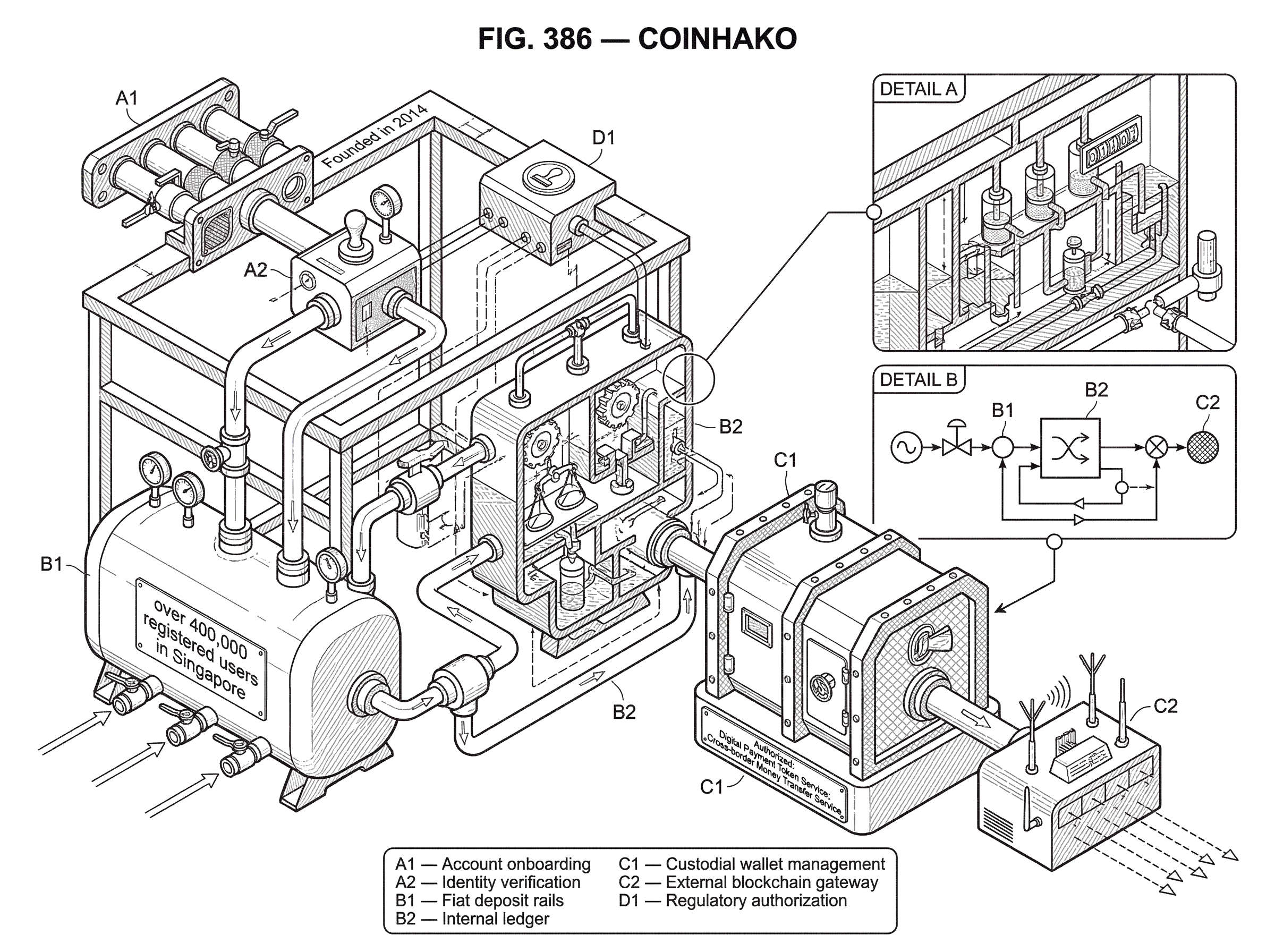
Founded in 2014, Coinhako is one of the longer-standing crypto platforms in the Asia Pacific region. The company says it has over 400,000 registered users in Singapore, and it presents itself as a gateway into the crypto economy for users in Asia. In Singapore, its legal and regulatory footing matters to that story: Hako Technology Pte. Ltd., trading as Coinhako, appears in the Monetary Authority of Singapore directory as a Major Payment Institution, authorized for Digital Payment Token Service and Cross-border Money Transfer Service. That does not tell you everything about the product, but it does clarify an important point: Coinhako is not merely a website matching buyers and sellers informally. It operates as a regulated platform within Singapore’s payment-services framework.
What problem does Coinhako solve for Singapore and regional users?
| Option | Ease of fiat | Control of keys | Typical speed | Primary risk | Best for |
|---|---|---|---|---|---|
| Coinhako (custodial) | Direct bank on‑ramps | Platform holds keys | Fast internal trades | Platform operational failure | Beginners, fiat users |
| Self‑custody (wallet) | Requires external on‑ramp | User holds keys | Slower on‑chain settlement | User error or key loss | Power users, maximum control |
| Non‑custodial on‑ramp | Instant swaps to wallet | User controls keys | Fast swaps, on‑chain later | Gateway or service risk | Users wanting control + convenience |
At first glance, a centralized crypto exchange seems like a simple marketplace. In practice, the hard part is not only matching trades. The hard part is bridging two different systems that follow different rules. On one side is the banking world, where balances are tied to legal identity, local currency, and payment rails. On the other side are blockchains, where assets move through wallet addresses, network confirmations, and irreversible transfers. Most people do not want to live at that boundary. They want a service that absorbs its complexity.
That is the basic usefulness of Coinhako. A user opens an account, completes identity checks, deposits fiat money through supported payment methods, and then trades for crypto without needing to manage every underlying technical detail from the first day. The exchange keeps an internal ledger of customer balances, updates those balances when trades happen, and only touches the blockchain directly when assets are deposited to or withdrawn from the platform. This is why a centralized exchange can feel much faster than transacting on-chain for every action. Inside the platform, many state changes are bookkeeping changes rather than blockchain transactions.
This design also explains who finds Coinhako useful. It tends to fit users who want exposure to crypto markets without immediately becoming their own wallet operator, security engineer, and payments coordinator. That includes first-time buyers, users converting local currency into major crypto assets, and people who value a familiar app-based experience more than maximum on-chain control. The trade-off is built into the model: convenience comes from handing custody and operational responsibility to the platform.
How does Coinhako handle fiat deposits, trades, and blockchain transfers for users?
The cleanest way to understand Coinhako is to follow the life of a typical transaction. Imagine a Singapore-based user who wants to buy Bitcoin. They do not begin by interacting with the Bitcoin network directly. They begin by creating an account with Coinhako and completing the platform’s verification steps, because the exchange needs to connect crypto activity to a named customer and to the payment system that funds the account. Once the user deposits fiat, Coinhako records that deposit in the user’s account balance. When the user places a buy order or uses a simple buy flow, the platform executes the trade within its own market structure and updates the account to show less fiat and more Bitcoin.
Up to this point, the user may not have touched the Bitcoin blockchain at all. That is not a bug; it is the mechanism. Centralized exchanges reduce friction by netting activity internally. If one customer buys and another sells, the platform can reflect those changes in its database without broadcasting each step as a separate on-chain event. The blockchain matters most when value crosses the boundary of the exchange: when someone deposits crypto in from an external wallet, or withdraws crypto out to one.
That distinction helps explain why exchanges like Coinhako are easier to use than self-custody at the beginning, and why they create a different risk profile. When assets remain on the platform, the customer’s practical claim is mediated by Coinhako’s systems, controls, and policies. The exchange must manage wallets, security, transaction monitoring, and customer account integrity correctly. The user gains convenience, but they rely on the platform to perform custody safely.
How does MAS regulation affect Coinhako's product and customer protections?
| Regulatory status | Access to fiat rails | Customer protections | Oversight level | Effect on operations | Best for users |
|---|---|---|---|---|---|
| Unregulated platform | Limited bank access | Minimal formal protections | No formal supervision | Higher operational uncertainty | Risk‑tolerant users |
| Regulated MPI (Coinhako) | Bank and payment partnerships | Required money protections | MAS supervision and reporting | Clear compliance obligations | Mainstream retail users |
| Bank / financial institution | Full banking rails | Deposit and consumer protections | Comprehensive regulation | Strict controls and limits | Customers prioritising fiat safety |
For a service like Coinhako, regulation is not just background information for a company profile. It changes how the product can function in the real world. A crypto platform that wants to connect to fiat payment rails, serve mainstream users, and operate durably in Singapore has to do more than present a trading interface. It needs a legal structure, compliance processes, and operational controls that let banks, payment partners, and customers treat it as an ongoing financial service rather than an informal software project.
Coinhako’s MAS status matters in that sense. The MAS Financial Institutions Directory lists Hako Technology Pte. Ltd. as a Major Payment Institution, and notes authorization for Digital Payment Token Service and Cross-border Money Transfer Service. MAS also states that major payment institutions are subject to more comprehensive regulation than standard payment institutions, including requirements to protect customer money. Readers should be careful not to infer details the directory does not provide: the listing does not itself explain Coinhako’s custody architecture, asset-by-asset treatment, or internal risk systems. But it does support the narrower and important conclusion that Coinhako operates inside a recognized Singapore regulatory perimeter.
For users, the practical consequence is not that regulation removes risk. Crypto platforms remain operationally demanding businesses, and regulated status is not a guarantee against outages, losses, or bad execution. The more modest claim is the right one: regulation can shape behavior, oversight, and customer protections, especially around money handling and business conduct. That matters a great deal for a platform whose core job is to sit between bank transfers and digital assets.
Is Coinhako a retail custodial on‑ramp or a pro trading venue?
| Exchange type | Target users | Fiat support | Order types | Typical liquidity | When to choose |
|---|---|---|---|---|---|
| Retail local exchange (Coinhako) | Retail, regional users | Local currency rails | Simple spot orders | Moderate for major tokens | On‑ramp and casual trading |
| Global pro exchange | Professional traders | Multi‑currency rails | Advanced and derivatives | Deep across many pairs | High‑frequency and margin trading |
| OTC desk | Institutional or large traders | Custom fiat settlement | Block trades, negotiated | Very deep for large orders | Large off‑book trades |
Not all centralized exchanges are trying to do the same job. Some are built primarily for global liquidity and advanced traders, with deep derivatives markets, complex order types, and a product surface optimized for professionals. Coinhako appears to occupy a different part of the design space. From the company’s positioning and the way it is described in reporting, the platform is aimed more at making crypto access straightforward for users in Singapore and the broader region than at becoming a maximalist trading terminal.
That difference matters because it shapes the entire user experience. A locally oriented exchange usually wins by reducing the frictions that stop ordinary users from participating at all: currency conversion, local onboarding, account verification, and familiar funding flows. In that model, the exchange is useful not because it offers every conceivable crypto instrument, but because it lowers the number of things that can go wrong between “I have money in my bank account” and “I now hold a digital asset.”
The company has also expanded beyond the narrowest retail spot-buying idea over time. Reporting from 2020 noted that Coinhako had launched an over-the-counter desk in 2019, which points to a broader service ambition for larger or more specialized trades. Even so, the central logic remains the same. Coinhako’s main product is not a new blockchain or a non-custodial protocol; it is an access layer that packages crypto markets into a managed platform.
What risks and trade‑offs appear if Coinhako faces a security incident or outage?
The strongest way to understand a centralized exchange is to ask what happens under stress. In February 2020, Coinhako restricted withdrawals and disabled account send functions after what it described as a sophisticated attack. According to reporting at the time, fewer than 20 users were believed to be directly affected, the company said the incident was not a wallet hack and that user private keys were not affected, and affected users were reimbursed. Passwords and Two-Factor Authentication were also reset for all users, while some services such as crypto deposits, trading, and fiat withdrawals remained operational.
The details of that incident were not fully disclosed publicly, so it would be wrong to draw precise technical conclusions from it. But the broader lesson is useful. When you use a custodial exchange, your safety depends partly on how well the operator can detect abnormal behavior, limit damage, pause risky functions, and remediate users if something slips through. In self-custody, the burden sits more directly on the individual user. In custodial systems, the burden shifts toward institutional security and incident response.
That shift is neither purely good nor purely bad. For many users, especially beginners, a professionally run platform with recovery processes, compliance checks, and centralized support may be safer in practice than unmanaged self-custody. For others, the idea that an exchange can freeze sends, reset access credentials, or become a single point of failure is exactly why they prefer to hold assets in wallets they control. Coinhako sits on that familiar centralized-exchange trade-off: easier access and managed operations in exchange for reliance on an intermediary.
Who should use Coinhako and when is a custodial exchange appropriate?
The simplest way to think about Coinhako is as an on-ramp, trading venue, and custodial account wrapped into one service. It is for people who want crypto exposure through a platform that handles the difficult edges: onboarding, account management, fiat connectivity, and the mechanics of custody. That makes it especially legible to users entering crypto from the conventional financial system rather than from a deeply technical or crypto-native background.
Its long operating history since 2014 and its Singapore regulatory status strengthen that proposition, particularly for users who care about dealing with an established local platform rather than an offshore venue with weaker local presence. At the same time, the same design choices imply limits. If your priority is full sovereign control of assets, transparent on-chain execution for every movement, or the broadest possible set of advanced market tools, a custodial retail-oriented exchange may not be your ideal endpoint. It may still be your starting point.
Conclusion
Coinhako is best understood not as a crypto protocol but as a bridge: a regulated, centralized platform that turns local money, identity checks, and account balances into practical access to digital assets. Its usefulness comes from absorbing complexity that blockchains and banks do not solve for each other. If you remember one thing, it is this: Coinhako’s product is convenience at the boundary between fiat finance and crypto; and the central trade-off is that convenience depends on trusting the platform to hold and operate that boundary well.
What should you look for before choosing a crypto exchange?
Before choosing an exchange, verify custody, execution, fees, deposit/withdrawal workflows, and regulatory standing. Use Cube Exchange as a practical comparison anchor by checking differences in custody model (Coinhako’s custodial ledger vs Cube’s MPC non‑custodial approach), supported order types, fee schedules, and fiat rails. After that, run quick hands‑on checks on each platform to validate the claims.
- Read the custody and regulatory pages for Coinhako and Cube; note whether each platform holds private keys, the listed licences (MAS or equivalent), and any stated customer‑fund protections.
- Fund a small test deposit into each account via the local fiat on‑ramp or a small crypto transfer; record how long the deposit takes to credit and the exact routing/fees.
- Open the relevant spot market (for example BTC/SGD or BTC/USDC) on both platforms and place a small limit order and a market order to compare execution, visible fees, and Spread.
- Withdraw a small amount to an external wallet from each platform; note the withdrawal fee, minimums, and on‑chain confirmation time to receive the funds.
Frequently Asked Questions
Coinhako is a centralized, custodial platform that keeps internal account balances in its ledger for most trades; the company only interacts with the underlying blockchains when value crosses the exchange boundary - specifically when users deposit crypto from an external wallet or withdraw crypto out to an external address.
The Monetary Authority of Singapore lists Hako Technology (Coinhako) as a Major Payment Institution authorised for Digital Payment Token and Cross‑border Money Transfer services, which places the firm inside Singapore’s regulatory perimeter and implies obligations around money handling; however, the listing does not describe Coinhako’s custody architecture and regulation does not eliminate operational risk or act as a bank guarantee.
Yes - Coinhako has the operational ability to restrict functions and reset access: during a February 2020 security incident it restricted withdrawals and send functions, reset passwords and two‑factor authentication for all users, and said affected users were reimbursed, though the company did not disclose full technical details of the incident.
Coinhako is designed as an on‑ramp and custodial account for mainstream users, so if your priority is full sovereign control of private keys and guaranteed on‑chain execution for every movement, a custodial retail exchange like Coinhako may not meet that need.
The platform is primarily positioned for straightforward fiat‑to‑crypto on‑ramps and spot trading for local users, though it has expanded services such as launching an over‑the‑counter (OTC) desk in 2019; it is not presented as a derivatives or pro‑trading venue.
When you send crypto from an external wallet to Coinhako, the exchange will interact with the blockchain to accept that deposit and then credit your Coinhako account internally - blockchain transactions are used at the points where assets move into or out of the platform.
Coinhako presents itself as a Singapore‑based platform that has operated since 2014 and reports over 400,000 registered users in Singapore, which supports its local longevity claim, but those user figures are company‑reported and not independently verified.
The company and its public materials emphasise a Singapore focus and a MAS licence for DPT services, but they do not provide comprehensive, verifiable information in these sources about equivalent licences or regulatory authorisations in other countries.
Related reading