Cube
Trade
Pro
Advanced trading interface with professional tools
Swap
Exchange cryptocurrencies instantly
Bundles
Trade multiple tokens in a single transaction
Algos
Create and manage automated trading strategies
Portfolio
Portfolio
View your cryptocurrency holdings and performance
Orders
Track your open and completed orders
Transactions
View your complete transaction history
Rewards
Rewards Dashboard
View your rewards and claim loot boxes
Blocks Leaderboard
See top traders competing for block rewards
Referral Leaderboard
See top referrers and track referral rankings
Investors
Investor Resources
Browse investor resources and documentation
Presentation (pdf)
Download investor presentation
Settings
Profile
Your profile and account verification
Subaccounts
Separate portfolios across subaccounts
Address Book
Manage saved withdrawal addresses
Multi-Factor Authentication
Add a verification step for sensitive account actions
API Keys
Connect applications to your account
Onramp
Link bank account to buy crypto
Account Recovery
Manage account recovery setup
Learn
News
Read the latest news, announcements, and updates from Cube Exchange
What-Is Guides
Learn about cryptocurrencies
FAQ
Frequently asked questions about Cube Exchange
Fees
View our transparent fee schedule and pricing information
Security
Learn more about Cube Exchange security
About
About
Learn more about Cube Exchange
Legal
Legal information, terms of service, privacy policy, and risk disclosures
EN
Select Language
EN
English
ES
Español
ID
Bahasa Indonesia
JA
日本語
PL
Polski
PT
Português
RU
Россия
TH
แบบไทย
TR
Türkçe
UK
Україна
VI
Tiếng Việt
ZH-CN
简体中文
ZH-TW
繁體中文
Light
Dark
System
Sign In
/
Foundations
/
Cryptography
/
Foundations: Cryptography
#COMMITMENTS
#CURVES
#HASH FUNCTIONS
#SIGNATURES
#THRESHOLD SYSTEMS
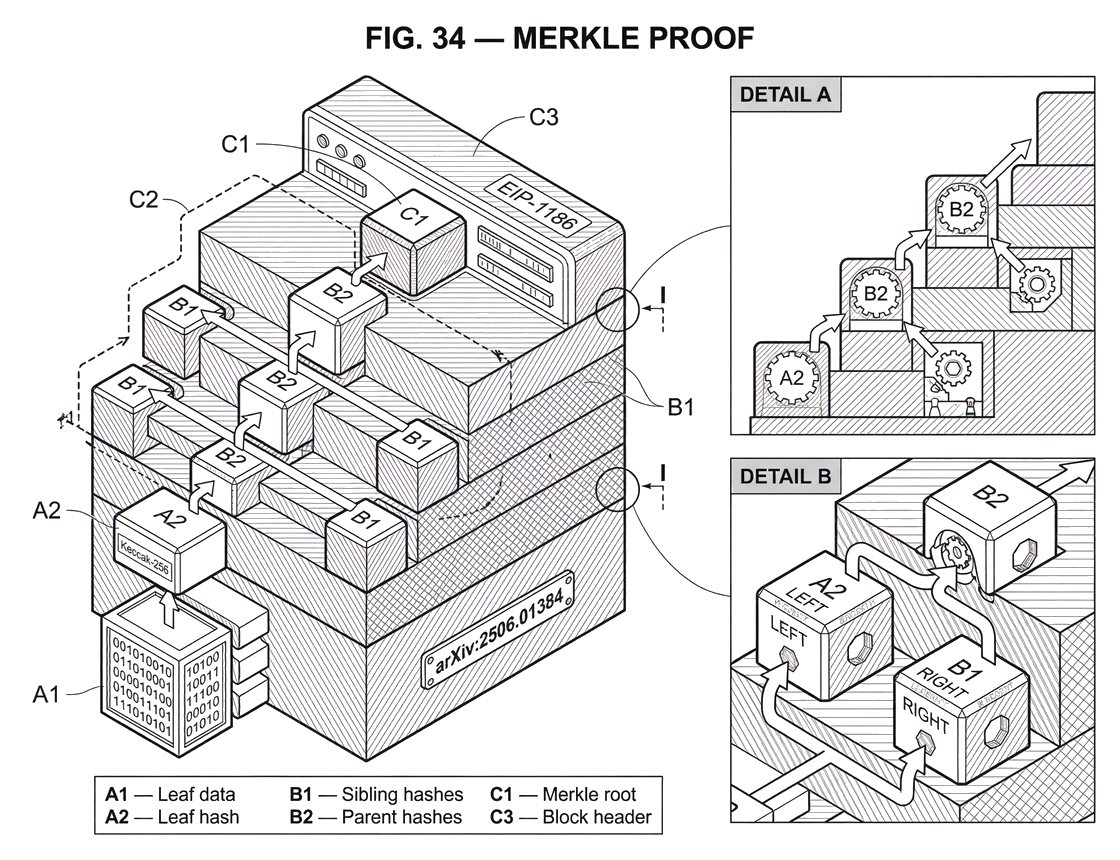
What is a Merkle Proof?
A Merkle proof lets you convince someone that a piece of data belongs to a much larger set without sending the whole set. That sounds almost too convenient, but the mechanism is simple: a short chain of hashes ties one leaf to a single root that stands for everything.
Mar 21, 2026
•
22 min read
#CRYPTOGRAPHY
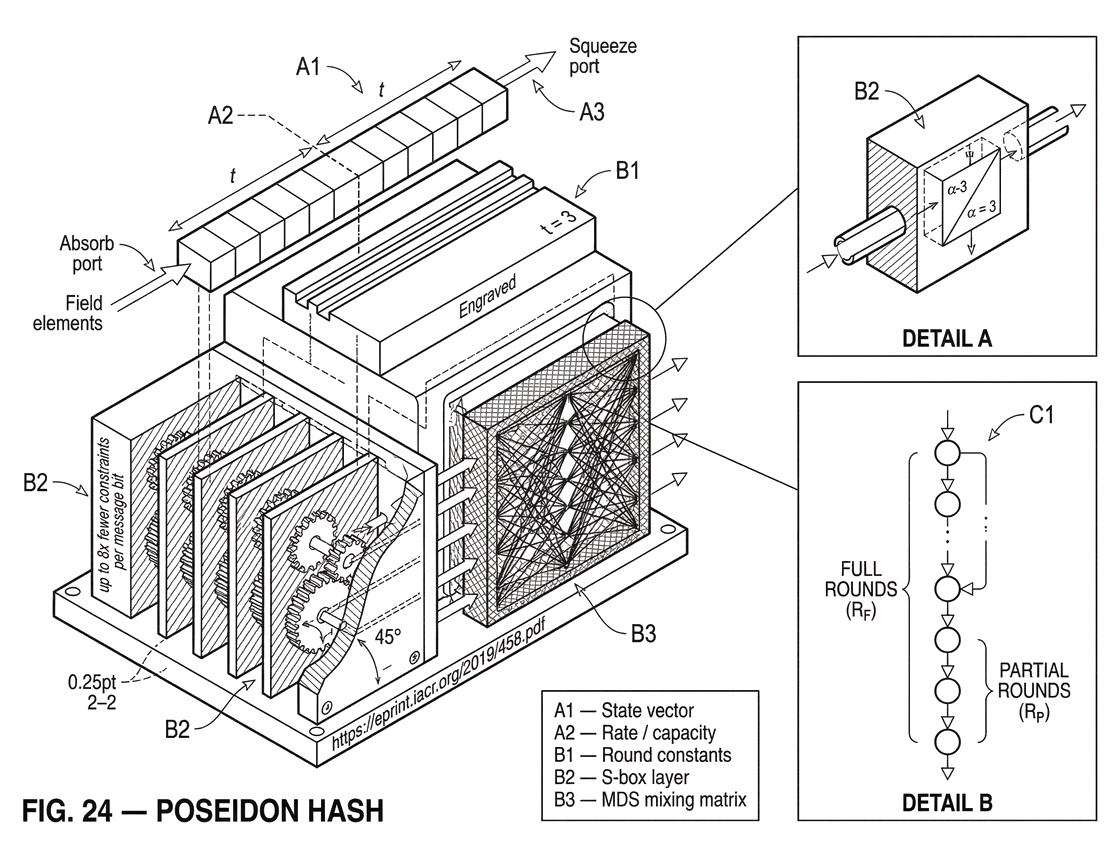
What is Poseidon Hash?
Poseidon hash matters because ordinary hashes are cheap on CPUs but expensive inside zero-knowledge proofs. Poseidon flips that tradeoff: it is built from finite-field arithmetic so Merkle trees, commitments, and private transactions can be proven with far fewer circuit constraints.
Mar 21, 2026
•
24 min read
#HASH FUNCTIONS
What is X25519?
X25519 is one of the most widely deployed ways to do modern Diffie–Hellman key exchange, but its importance is not just speed. It was designed so secure, constant-time implementations are much easier to get right, which is why it appears across TLS 1.3, Noise, WireGuard, and many cryptographic libraries.
Mar 21, 2026
•
22 min read
#CURVES
What Is Elliptic Curve Cryptography?
Elliptic Curve Cryptography lets modern systems get strong public-key security with much smaller keys than older designs. Its power comes from a simple asymmetry: multiplying a curve point is easy, but reversing that multiplication appears hard — and that gap supports signatures, key exchange, and much of today’s wallet infrastructure.
Mar 21, 2026
•
27 min read
#CURVES
What is secp256k1?
secp256k1 is the elliptic curve behind Bitcoin keys, legacy Ethereum transaction signatures, and many other blockchain systems. Its importance is easy to underestimate: a short parameter list defines the exact mathematical world in which private keys, public keys, and signatures all have to agree.
Mar 21, 2026
•
22 min read
#CURVES
What Are KZG Commitments?
KZG commitments are a way to commit to an entire polynomial with a single small cryptographic object, then later prove specific values of that polynomial with equally short proofs. That unusual combination of compactness and verifiability is why they matter in modern zero-knowledge systems and blockchain data-availability designs.
Mar 21, 2026
•
23 min read
#COMMITMENTS
What is a Pedersen Commitment?
Pedersen commitments solve a delicate problem: how to hide a value completely while still letting others verify arithmetic about it. That combination — **perfect hiding** with **additive homomorphism** — is why they sit underneath confidential transactions, range proofs, and many zero-knowledge systems.
Mar 21, 2026
•
21 min read
#COMMITMENTS
What Is a Polynomial Commitment?
Polynomial commitments solve a surprisingly specific problem with broad consequences: how do you bind yourself to a whole polynomial now, then later prove just one value of it without revealing everything else? That simple capability sits underneath modern SNARKs, verifiable secret sharing, and blockchain data-availability designs.
Mar 21, 2026
•
24 min read
#COMMITMENTS
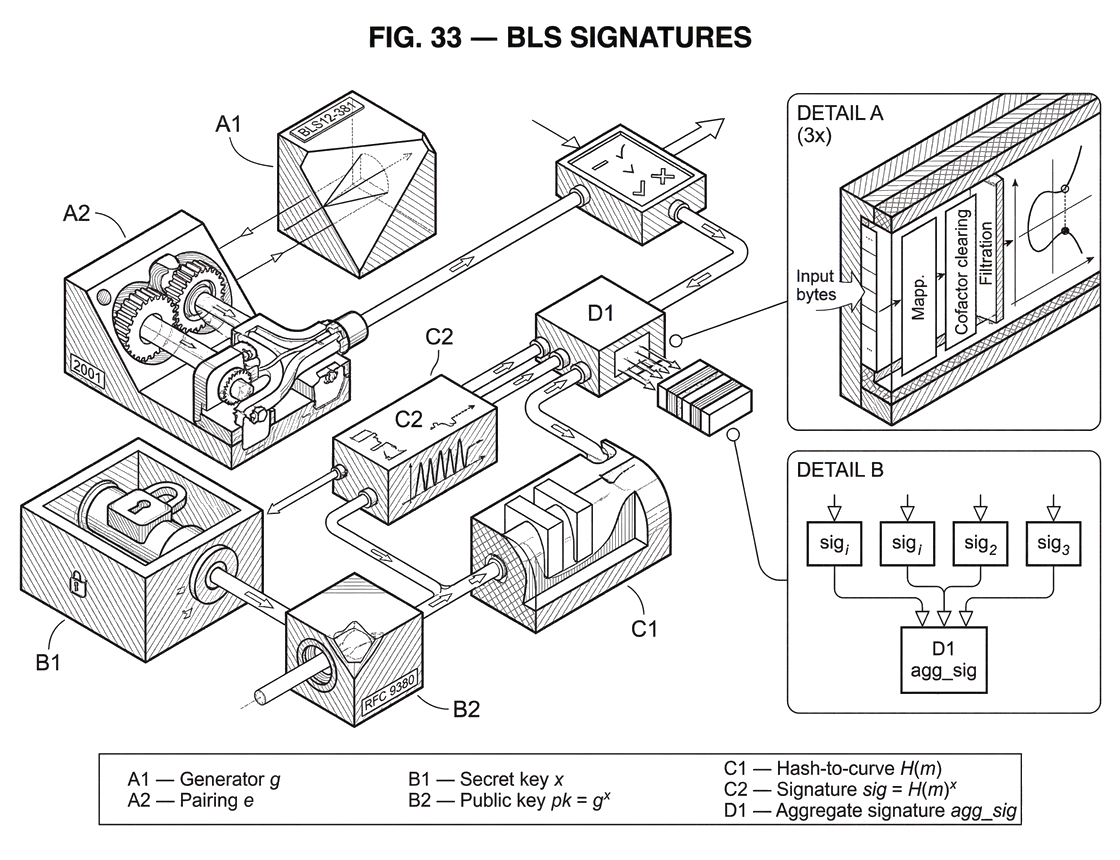
What is a BLS Signature?
BLS signatures matter because they make a strange trade possible: signatures can stay compact even when many participants sign, and those signatures can often be merged into one. That property is why modern blockchain systems use BLS for validator attestations, multisignatures, and other places where ordinary signatures would create too much bandwidth and verification overhead.
Mar 21, 2026
•
21 min read
#SIGNATURES
What is Multi-Party Computation (MPC)?
Multi-party computation lets several parties compute a result together without handing each other their raw secrets. It matters because it changes the usual tradeoff between coordination and privacy: you can collaborate on sensitive data, or control a cryptographic key, without any one place becoming the point of total trust or total failure.
Mar 21, 2026
•
26 min read
#THRESHOLD SYSTEMS
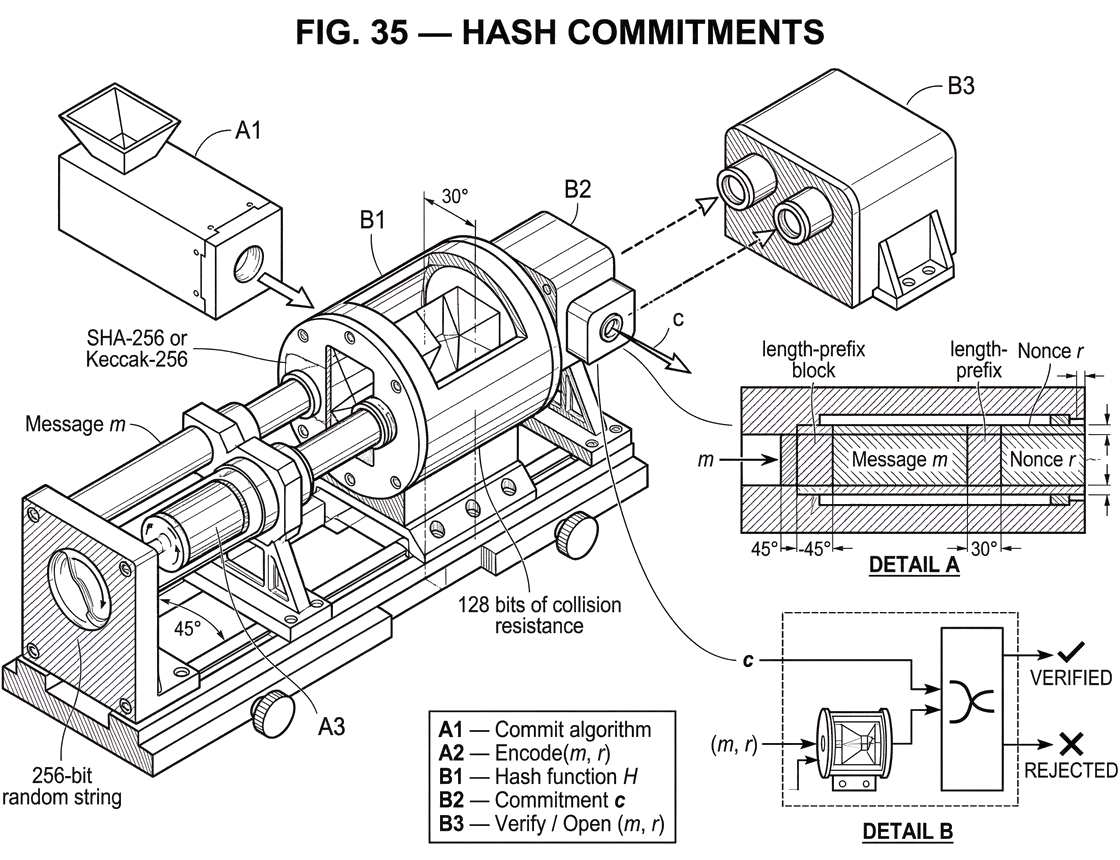
What is a Hash Commitment?
A hash commitment lets you publish a short digest now and reveal the underlying value later, in a way that is meant to hide the value at first and lock it in for later verification. That simple trick sits underneath coin flipping, auctions, smart-contract commit–reveal flows, and many zero-knowledge systems—but it only works if you understand exactly what the hash is, and is not, buying you.
Mar 21, 2026
•
26 min read
#COMMITMENTS
What is Curve25519?
Curve25519 matters because it made strong elliptic-curve cryptography easier to implement safely, not just faster. Its design ties together a carefully chosen curve, a prime field that computers handle efficiently, and formulas that support constant-time key exchange in real protocols like TLS.
Mar 21, 2026
•
22 min read
#CURVES
1
2
3