What is VEUR?
Learn what VEUR is, how VNX EURO maintains euro exposure, what backs it, how multichain issuance works, and the key risks in holding it.
Introduction
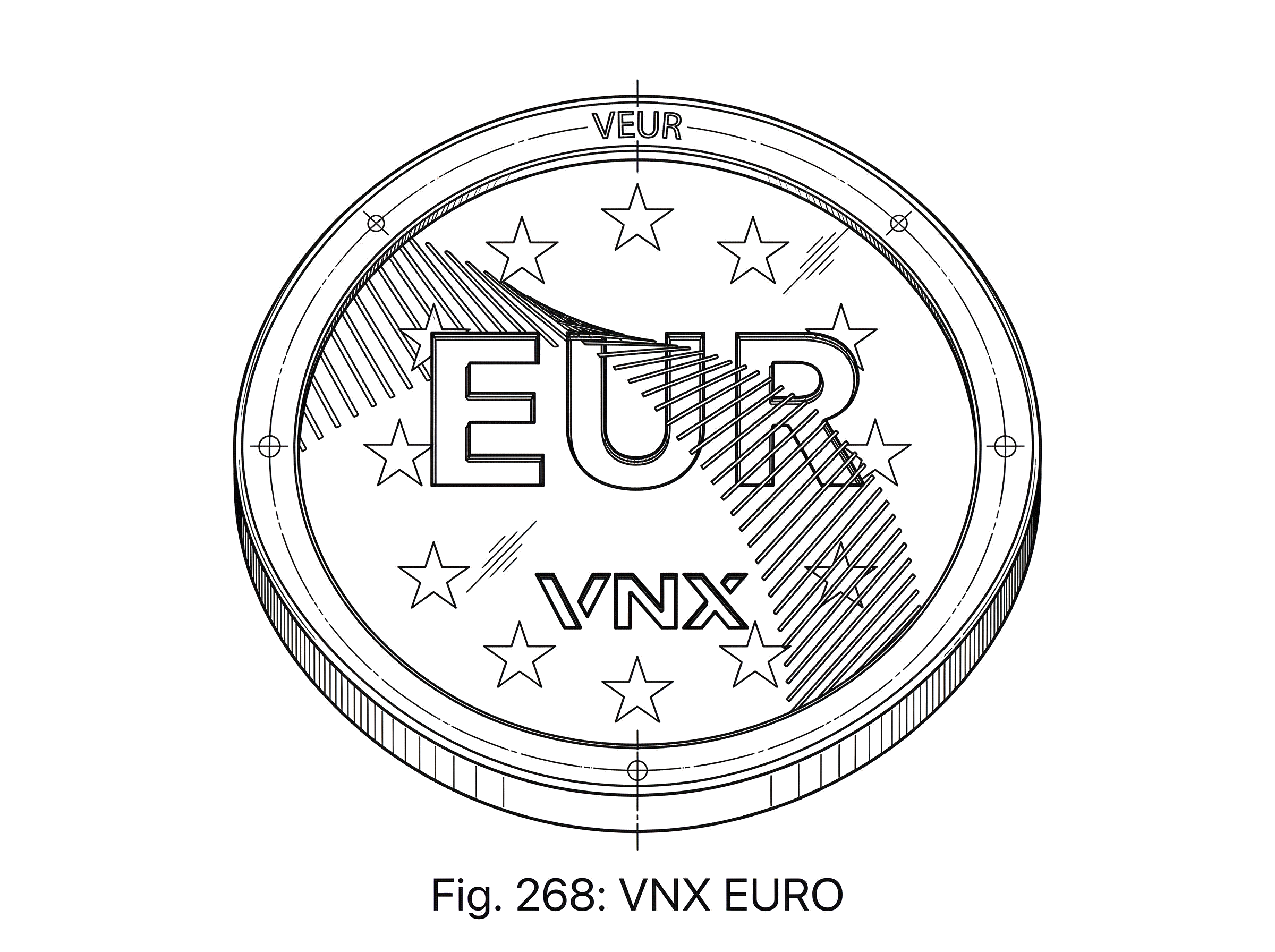
VNX EURO (VEUR) is a euro-referencing token issued by VNX Commodities AG, and the main thing to understand is that you are getting exposure to an issuer-managed euro claim structure, not to euros sitting directly in your own bank account. The token is designed to track the euro onchain, but the path from token to value runs through VNX’s reserve management, legal terms, compliance controls, and exchange services.
Many readers hear “stablecoin” and assume a simple 1:1 cash claim. VEUR is more specific than that. In VNX’s own terms, it is a fiat-referenced token, and the token itself “does not represent a right” to the underlying reserve. Instead, holding VEUR gives the holder the practical ability to request services from VNX, subject to account registration, eligibility, and AML/KYC checks. The core question is not only whether VEUR trades near one euro. It is what has to keep working for that euro exposure to remain usable.
What does VEUR do as an issuer-backed euro token?
VEUR’s job is to put euro-denominated purchasing power onto blockchains where users want something steadier than a volatile crypto asset and more native to European balances than a dollar token. That sounds simple, but the mechanism is unusual enough that it is easy to misread.
VNX describes VEUR as part of its fiat-referenced token line. The issuer states that for every VEUR in circulation it holds an equivalent reserve on behalf of users. In the legal terms, those reserves are described as being initially based on VNX Gold, while later reserve reporting for VEUR refers to corresponding EUR value equivalents held in bank or securities custody accounts in the name of VNX Commodities AG. The key settled fact is that VEUR depends on off-chain reserves managed by the issuer, and the holder relies on that issuer-managed structure to maintain parity.
VEUR is therefore economically closer to an issuer-backed euro instrument than to a decentralized crypto-native dollar substitute. Demand comes from users who want a euro unit for trading, settlement, treasury storage, payments, or moving between crypto positions without leaving the blockchain environment. If those users can reliably enter and exit near par, VEUR is useful. If access to issuer services weakens, confidence in reserves weakens, or market liquidity dries up, the token can still exist onchain while the quality of the exposure deteriorates.
How does VNX’s reserve-and-service loop determine VEUR’s value?
The token clicks once you see that VEUR’s value is held together by a loop.
VNX issues tokens against reserves. Users hold and transfer those tokens across supported blockchains. When holders need fiat conversion or another supported token outcome, they do not exercise a simple bearer right embedded in the token contract. They request an exchange or related service from VNX, and VNX can provide it only within its legal, compliance, and operational framework. The peg therefore depends on both reserve sufficiency and service credibility.
The legal wording is central here. VNX’s terms say the token represents information that a reserve has been built in minimum parity with the token, but the token itself is not a direct right to the underlying asset. A transfer of VEUR to a new wallet also transfers the practical ability to ask for VNX exchange services only if the new holder opens an eligible VNX account. In plain English: the market can pass the token around freely, but the official exit route to issuer services is gated.
For a trader, VEUR’s floor is not enforced in the same way as a token with broad direct redemption rights. For a long-term holder, counterparty analysis sits alongside smart contract analysis. For a payments user, the token’s usefulness depends on whether exchanges, wallets, and off-ramp partners keep accepting it at stable value.
What backs VEUR’s euro peg, and what uncertainties remain?
There are two different layers to separate: reserve coverage and legal claim strength.
On reserve coverage, VNX has published materials saying every token in circulation is backed by an equivalent reserve. An Agreed-Upon Procedures report by AREVA for 31 December 2023 found that the total supply of VEUR, 1,085,458.55 tokens at that date, did not exceed corresponding EUR value equivalents of at least the same amount held in bank accounts or securities custody accounts in the name of VNX Commodities AG. This gives concrete third-party reconciliation of supply against reported reserves at a point in time.
But the same report is not a full audit opinion. It explicitly says it is an agreed-upon procedures engagement under ISRS 4400, not a reasonable or limited assurance opinion. The procedures did not establish legal segregation in bankruptcy, did not test all internal controls, and did not give a broader assurance conclusion. A careful reader should treat the reserve claim as supported, but only within a limited scope.
On legal claim strength, the terms are more restrictive than many token buyers expect. VEUR holders do not automatically have a direct contractual redemption right to reserve assets merely by holding the token in a wallet. The usable path is a VNX platform service relationship. Insolvency treatment, service interruption, or account eligibility may therefore shape outcomes more than the token’s ticker suggests. The unresolved question is not only whether reserves exist, but how strongly token holders are protected if something goes wrong at the issuer level.
Is VEUR supply fixed or elastic, and what does that mean for holders?
VEUR does not work like a scarce crypto asset whose thesis depends on fixed supply. Its supply expands when VNX generates more tokens against reserves and contracts when tokens are redeemed, exchanged, or burned in cross-chain movements. The relevant economic property is elasticity around demand, not scarcity.
That changes how to think about upside and risk. Holding VEUR is generally not a bet that the token itself will appreciate far above one euro. The intended outcome is stability. If usage grows, the token can become more useful and more liquid, but that should mostly show up in supply, transfer activity, and market depth rather than in a permanently rising token price. Growth in VEUR is supposed to create more VEUR outstanding, not a higher VEUR unit price.
The multichain design reinforces this. Secondary sources describe a burn-and-mint bridging model that moves VEUR between chains while keeping global supply constant. Even if chain-specific balances shift, the economic point is the same: supply follows issuance and redemptions, while bridging redistributes where that supply lives. Chain choice affects convenience, fees, and liquidity more than core monetary exposure.
How does VEUR’s multichain issuance affect usability and continuity risk?
VEUR has been described across multiple sources as available on several blockchains, including Ethereum, Polygon, Solana, Avalanche, Base, Stellar, and Q. The exact roster has changed across documents, which is common for expanding multichain issuers. The core takeaway is that VEUR is not a single-chain asset with one fixed venue of use.
The token’s job is transactional as much as financial. A euro-referencing token becomes more useful when it can circulate where traders, wallets, and applications already are. Lower-fee chains can make small payments and transfers more practical. Ethereum compatibility can help with established custody and DeFi integrations. Solana or Base presence can support faster or cheaper settlement. The economic exposure is still “issuer-backed euro reference,” but the operational experience changes materially by chain.
It also creates an extra dependency. VNX’s terms say it may suspend activities relating to the token during blockchain incidents, choose which fork to support, and even migrate tokens to another blockchain. Multichain access is a convenience, but it also leaves the issuer with ongoing technical and governance discretion over continuity. That is not unique to VEUR, but it is central to the risk profile.
How is holding VEUR different from holding bank euros, gold, or VNXAU?
This is where the token is easiest to misunderstand.
Holding VEUR is not the same as holding bank euros. Bank euros are a claim inside the banking system, with whatever deposit protections and banking relationships apply. VEUR is an onchain token issued by a private company under its own legal terms, with no deposit insurance promised in the materials provided. The convenience is blockchain mobility. The tradeoff is added issuer and service risk.
Holding VEUR is also not the same as holding gold. Some public descriptions emphasize gold-related backing logic or VNX Gold lineage, but the exposure you buy through VEUR is intended euro parity, not gold price upside. If the reserve model uses gold or gold-linked structures in part of its design, that is an implementation detail serving euro reference, not a reason to expect VEUR to behave like a commodity token.
And it is different from holding VNXAU. VNXAU is the product whose thesis is direct precious-metal backing and commodity exposure. VEUR’s thesis is transactional stability around the euro. Conflating the two leads to the wrong expectations about returns, volatility, and why someone would hold the token.
Who uses VEUR and what use cases create demand?
VEUR has a clearer role than many small stablecoins: it is one of relatively few euro-referencing crypto assets available across multiple chains. That creates demand in several settings where a euro unit is specifically useful.
The first is trading and treasury management. European users, euro-based businesses, and funds may want to reduce foreign-exchange mismatch that comes from parking everything in USD stablecoins. A euro token lets them keep value onchain without immediately taking dollar exposure.
The second is payments and settlement. A euro-denominated token can be more natural for invoicing, payouts, and cross-border transfers among European counterparties than a dollar token, especially when both sides already operate in crypto rails.
The third is DeFi and exchange infrastructure, where a euro unit can serve as collateral, quote currency, or liquidity asset if enough venues support it. Utility grows nonlinearly with integrations. A euro stablecoin with thin venue support is mostly a niche storage asset. The same token, once embedded across wallets, exchanges, cards, and apps, starts to act like a usable monetary rail.
Wirex’s integration is relevant here because it extends VEUR beyond trading into spending. According to a 2024 release, Wirex added VEUR and VCHF so users could spend them via Wirex cards and convert stablecoin balances into fiat for bank transfers. That does not settle the token’s reserve quality, but it does show the kind of distribution that can turn a euro token from a passive holding into an actively used balance.
What risks or events could weaken VEUR’s usefulness as a euro rail?
The biggest risks all strike the same mechanism.
If reserve confidence weakens, the token’s credibility as a euro instrument weakens. If access to VNX services becomes more restricted, the practical redemption path becomes less valuable. If exchange and wallet support remain shallow, the token may keep existing but trade with worse liquidity and wider spreads. If regulatory treatment changes, compliance friction can shrink the addressable user base.
There is also a technical governance layer. Etherscan identifies the Ethereum deployment as a proxy contract, which means implementation logic can potentially be upgraded. Proxy structures are common, but they mean holders should care who controls upgrades and under what process. The same page also flags compiler-related warnings. Those warnings are not proof of an exploit, but they are reminders that technical trust is part of the package.
Finally, VEUR is exposed to concentration and scale risk. Relative to major global stablecoins, it remains small. Small size cuts both ways: it can mean room to grow, but it also means thinner liquidity, greater sensitivity to a few holders or venues, and more dependence on issuer execution.
How can I buy, hold, and exit VEUR in practice?
For many users, the practical question is not whether VEUR exists but what they are actually holding when they buy it. On a centralized venue, you usually hold exposure to VEUR through the exchange’s custody and market structure, not through a direct service relationship with VNX. In self-custody, you control the tokens directly, but you also take on blockchain transfer risk and still rely on VNX or secondary markets for a clean exit at par.
VNX’s terms also make costs and restrictions more concrete than many token projects do. The issuer discloses tiered exchange fees of 0.1% to 0.3% depending on user volume, plus fixed blockchain withdrawal fees that vary by network. Onchain transfers are irreversible, and the company reserves rights to block or freeze suspicious transactions linked to sanctions or illicit activity concerns. So self-custody does not remove the compliance perimeter around issuer services.
If you want market access rather than direct platform use, readers can buy or trade VEUR on Cube Exchange. Cube lets users fund an account with a bank purchase of USDC or a crypto deposit, then keep stablecoin balances and trading activity in one place, which is useful if your goal is to move between VEUR and other crypto assets without using a one-purpose on-ramp.
Conclusion
VEUR is best understood as an issuer-backed euro rail for crypto markets: useful when you want euro-denominated value onchain, but dependent on VNX’s reserves, legal service model, and market integrations. The token’s promise is stability and transferability, not scarcity or yield. If you remember one thing, remember this: buying VEUR means trusting the reserve-and-service loop that keeps an onchain token behaving like a euro balance.
How do you buy VNX EURO?
VNX EURO is usually part of a funding or cash-management workflow, not just a one-off buy. On Cube, you can move into VNX EURO, keep that balance in the same account, and rotate into other markets later without changing platforms.
Cube lets readers fund the account with a bank purchase of USDC or a crypto deposit, then keep stablecoin balances and trading activity in one place. Cube is useful for stablecoin workflows because the same account supports simple conversions, spot trades, and moving back into other assets when needed.
- Fund your Cube account with a bank purchase of USDC or a supported crypto deposit.
- Open the relevant conversion flow or spot market for VNX EURO and check the quoted price before you place the trade.
- Enter the amount you want, then use a market order for immediacy or a limit order if the exact entry matters.
- Review the filled VNX EURO balance and keep it available for the next trade, transfer, or rebalance.
Frequently Asked Questions
No - VEUR does not embed a direct on‑chain redemption right; holders must use VNX’s exchange/service flow (which requires opening an eligible VNX account and passing AML/KYC) to convert tokens into fiat or other supported outcomes, so token possession alone is not a standalone claim on reserve assets.
VNX commissioned an Agreed‑Upon Procedures engagement (AREVA) that reconciled VEUR supply to EUR value equivalents in VNX’s bank/custody accounts as of 31‑Dec‑2023, but that engagement is ISRS 4400 (no assurance/opinion) and did not test legal segregation or internal controls, so reserve evidence is time‑specific and limited in scope.
It is unresolved: the AREVA procedures inspected bank confirmations but explicitly did not establish legal segregation in bankruptcy, and VNX’s public materials do not provide conclusive legal proof that reserves are segregated from VNX Commodities AG’s estate in insolvency.
No - VEUR is designed to maintain euro parity for transactional use; although VNX’s reserve model has roots in its gold product, VEUR’s intended exposure is euro‑referenced stability, not direct commodity (gold) upside.
VEUR supply is elastic: VNX issues tokens against reserves and redeems/burns on conversions, and cross‑chain bridging uses burn‑and‑mint flows to keep global supply aligned; the token is meant to track euro parity rather than appreciate via fixed scarcity.
Multichain availability primarily affects convenience, fees, and venue liquidity rather than the euro economic exposure; however, it also adds operational dependencies because VNX can suspend activity, choose forks to support, or migrate tokens, so chain choice influences continuity risk as well as usability.
Self‑custody gives you on‑chain control of the token, but practical exit to euros still depends on VNX’s services or secondary‑market liquidity; VNX’s terms disclose tiered exchange fees (0.1%–0.3%) plus fixed blockchain withdrawal fees and reserve the right to block/freeze suspicious transactions, so custody type does not eliminate issuer or compliance dependencies.
The token’s Ethereum deployment is a proxy contract and Etherscan shows compiler warnings, which means the implementation can be upgraded and there are technical flags to inspect; issuer upgrade/ownership authority is material but not fully transparent in the public evidence, so upgradeability is a real governance/technical risk to consider.
If market liquidity or service access weakens, VEUR can continue to exist onchain while trading with wider spreads or at non‑par prices; the peg relies on both reserve sufficiency and credible off‑ramp services, so liquidity, issuer credibility, and venue support determine practical peg maintenance.
Related reading