What is Rocket Pool?
Learn what Rocket Pool is, how its Ethereum liquid staking and node operator model works, and why users choose `rETH` over custodial staking.
Introduction
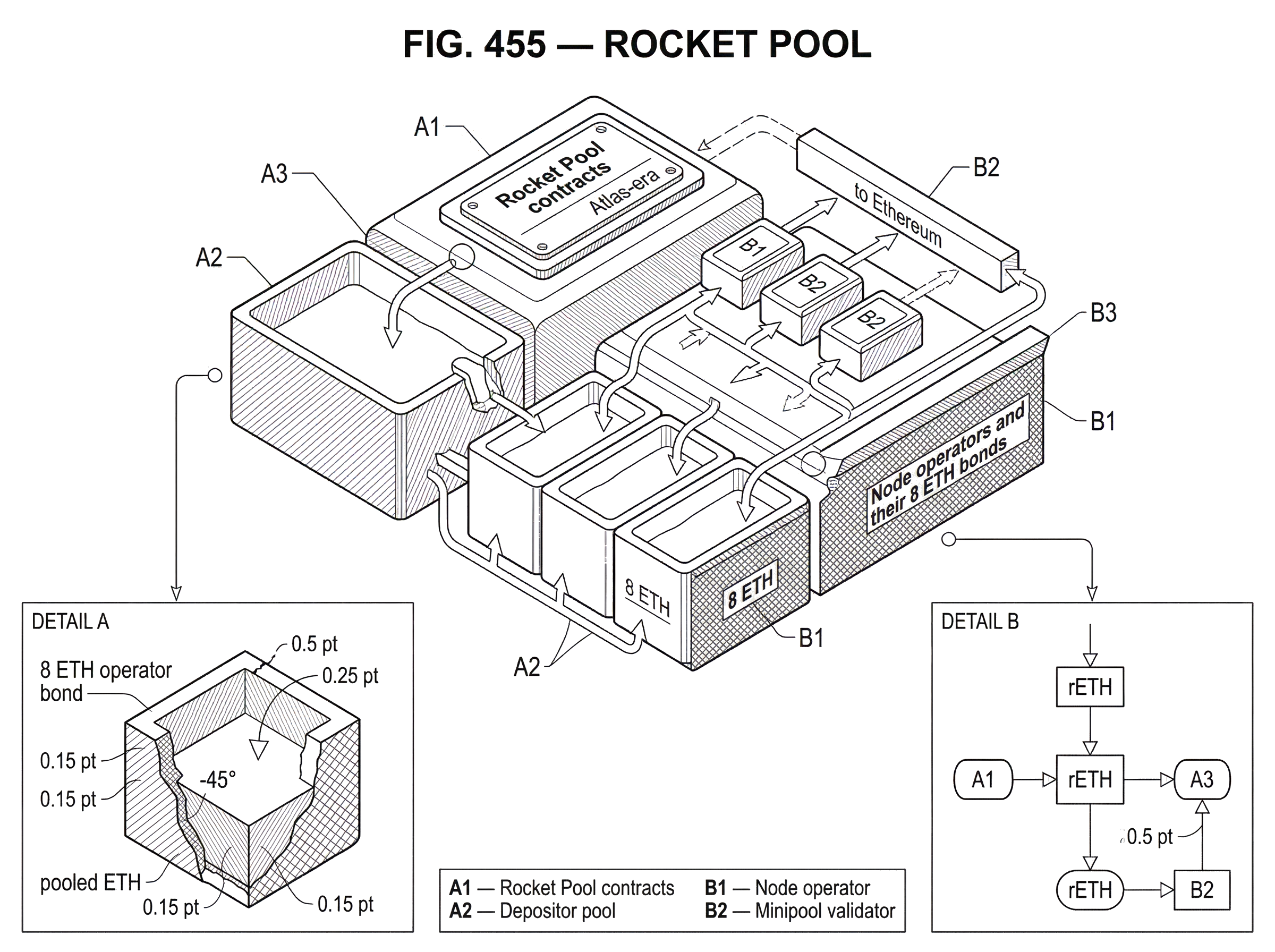
Rocket Pool is a decentralized Ethereum staking protocol that lets people stake ETH in two different ways: as depositors who want a liquid staking token, and as node operators who want to help run validators without supplying the full 32 ETH alone. That combination is the important thing to notice. Many staking products let you do one side or the other, but Rocket Pool is designed so the small staker and the node operator are part of the same machine.
The problem it solves is straightforward. On Ethereum, a full validator is capital-intensive and operationally demanding. You need enough ETH to back the validator, and you need infrastructure that stays online and behaves correctly. Most ETH holders do not want to do that. But if they hand their ETH to a centralized exchange, they get convenience by giving up control and decentralization. Rocket Pool sits in the middle: it pools deposits through smart contracts and routes that capital to permissionless node operators, while giving depositors a liquid token they can hold, trade, or use elsewhere.
How does Rocket Pool split staking between depositors and node operators?
| Role | ETH required | Main contribution | Primary benefit | Main risk | Best for |
|---|---|---|---|---|---|
| Depositor | Small amounts (0.01+ ETH) | Capital for minipools | rETH liquidity + rewards | Smart‑contract & pool risk | Retail holders wanting liquidity |
| Node operator | 8 ETH bond | Runs validator infrastructure | Commission + consensus rewards | Uptime & slashing risk | Technically capable operators |
Rocket Pool works because Ethereum staking really contains two separate jobs that do not need to be done by the same person. One job is supplying ETH. The other is operating validator infrastructure. If you separate those jobs cleanly, you can let many people contribute capital in small amounts while a different set of people contributes technical work.
That is Rocket Pool’s core design. Retail users deposit ETH into Rocket Pool’s smart contracts and receive rETH, the protocol’s liquid staking token. Official project materials describe rETH as a token that automatically accrues staking rewards over time and can be traded, used in DeFi, or redeemed for ETH plus rewards. In other words, the user does not need to run a validator or wait in place with an illiquid position. Their claim on the pooled stake is represented by a token.
On the other side, node operators join Rocket Pool by staking less than the full amount required for a solo validator. The project’s repository describes a model where an operator can stake 8 ETH, and Rocket Pool pairs that with ETH deposited by rETH users to assemble a full validator position. The operator runs the node, earns consensus rewards, and also receives commission for performing that work on behalf of pooled depositors.
That pairing explains who Rocket Pool is really for. If you simply want staking exposure with less operational burden and a transferable token, you are using the depositor side. If you want to run Ethereum validator infrastructure but do not want to fund a validator entirely on your own, you are using the node-operator side. The protocol is useful because it connects those needs rather than treating them as separate products.
How does rETH provide liquid staking exposure in Rocket Pool?
| Option | Liquidity | Control | Smart‑contract risk | Capital required | Best for |
|---|---|---|---|---|---|
| rETH (Rocket Pool) | High (transferable token) | Noncustodial via contracts | Yes (protocol contracts) | Any small amount | Liquidity + decentralization |
| Solo staking | Low (locked validator) | Full self‑custody | Low (no pool contracts) | 32 ETH | Maximum control, minimal protocol dependency |
| Custodial exchange | Varies; often liquid | Custodian controls keys | Counterparty/custody risk | Any amount | Convenience, minimal ops |
For a depositor, the user-facing flow is meant to be simple. You deposit ETH into Rocket Pool’s contracts, and in return you receive rETH. The reason this is called liquid staking is that your staking position is no longer trapped inside the validator setup itself. Instead, it is represented by an on-chain asset you control.
The easiest way to think about rETH is as a moving claim rather than a static receipt. A normal receipt says, “you once deposited this much.” rETH is closer to “you own a proportional claim on staked ETH and its accumulated rewards.” That is what makes it useful. You can hold it if you just want staking exposure, transfer it if you want liquidity, or use it in other on-chain applications if those integrations exist. The analogy is helpful because it captures the claim-like nature of the token, but it fails in one important way: rETH is not merely a passive paper record. It is an actively usable token inside Ethereum’s broader on-chain economy.
This is where Rocket Pool differs from plain delegated staking. In a non-liquid setup, your capital is committed and largely inert until you unwind the position. In Rocket Pool, the position remains economically tied to staking, but the token form gives you flexibility. That flexibility is the main product feature for ordinary ETH holders.
There is a trade-off, though. When you hold rETH, you are not just exposed to ETH staking rewards. You are also exposed to smart-contract risk, protocol design risk, and validator performance across the pooled system. security reviews of Rocket Pool’s Atlas-era contracts found multiple issues, including high-severity and critical findings that were reported as remediated. That does not make the system uniquely unsafe, but it does mean the right comparison is not “Rocket Pool versus doing nothing.” It is “Rocket Pool versus other ways of staking,” each with different trust and risk profiles.
How do Rocket Pool node operators enable validator decentralization?
Rocket Pool calls attention to node staking because the liquid token only works if someone is actually doing the validator job. The protocol’s answer is a permissionless node-operator model. The repository describes this as allowing people to run validator nodes with 8 ETH rather than the full 32 ETH, with the remaining ETH sourced from pooled user deposits.
This changes the economics of participation. Lowering the operator bond means more people can plausibly run infrastructure, which supports decentralization. It also means the protocol does not have to rely on a small set of large professional operators. That is important because a liquid staking system can look decentralized from the depositor side while still being operationally concentrated underneath. Rocket Pool is explicitly trying to avoid that outcome.
A simple example makes the mechanism clearer. Imagine a technically capable Ethereum user who wants to run validators but only has 8 ETH available for the staking side. On their own, that is not enough for a traditional validator. Inside Rocket Pool, that operator supplies their 8 ETH, the protocol matches it with ETH from depositors, and together those funds back a validator position. The operator then does the ongoing work: securing, maintaining, monitoring, and upgrading the node stack. The protocol documentation emphasizes these operational responsibilities because the operator is not buying a passive yield product; they are taking on real infrastructure work in exchange for rewards and commission.
That structure also explains why Rocket Pool’s documentation separates liquid staking guides from run a node guides. They are not two unrelated features. They are two entry points into the same system, aimed at users with different constraints.
Why is rETH valuable only when node operators run validators in Rocket Pool?
The deepest thing to understand about Rocket Pool is that rETH is not valuable merely because a token exists. It is valuable because there is a mechanism underneath it converting pooled ETH into actual staking activity. If the protocol could mint a token without building and maintaining validators, the token would be cosmetic. The node-operator layer is what gives the liquid token economic substance.
The reverse is also true. Node operators are more useful inside Rocket Pool because the protocol aggregates depositor capital around them. Without that pooled capital, many operators would remain below the threshold needed to run validators economically. So the protocol creates a two-sided market: depositors supply ETH and want liquidity; operators supply infrastructure and want capital efficiency.
Once you see that, several design choices make more sense. Governance proposals around deposit-pool size, rETH collateral targets, and withdrawal liquidity are not side details. They are ways of tuning the connection between the depositor side and the operator side. If too much ETH sits idle, depositors may see weaker outcomes. If too little buffer exists, liquidity or operational resilience can become tighter. These are engineering trade-offs inside a live staking system, not cosmetic parameter changes.
How do Ethereum withdrawals and protocol upgrades affect Rocket Pool and rETH redemption?
Rocket Pool has continued to evolve as Ethereum’s staking system has changed. Atlas-era materials and audits describe support for lower-ETH-bonded minipools, partial withdrawal handling, and updated validator flows. The broad point is not every implementation detail of a given release. The broad point is that a staking protocol on Ethereum is not static. It has to adapt to changes in validator mechanics, withdrawals, and protocol economics.
That matters for users because Rocket Pool is not just a token wrapper around ETH. It is an operating protocol with upgrades, governance, and ongoing node-management requirements. The official ecosystem around it reflects that: documentation for users, operational guides for node operators, a governance forum, and a formal RPIP process for protocol changes. If you are choosing Rocket Pool, you are choosing participation in a living protocol rather than a fixed financial instrument.
Who should use Rocket Pool: depositors, node operators, or custodial services?
| User type | Capital needed | Operational effort | Primary benefit | When to avoid |
|---|---|---|---|---|
| Retail depositor | Small amounts | None | rETH liquidity + staking | Avoid if you reject smart‑contract risk |
| Technical operator | ≈8 ETH bond | High (node maintenance) | Capital‑efficient validator rewards | Avoid if unwilling to run nodes |
| Solo staker | 32 ETH | High (self ops) | Full custody, simpler economics | Avoid if lacking 32 ETH |
| Custodial user | Any amount | None | Outsourced convenience | Avoid if you value decentralization |
In practice, Rocket Pool appeals to two kinds of Ethereum participants. The first is the ETH holder who wants staking rewards but values liquidity and a more decentralized alternative to exchange staking. For that user, the attraction is clear: very small deposits are possible, and the resulting rETH can remain usable rather than locked into a non-transferable position.
The second is the technically inclined operator who wants to run validator infrastructure with less capital than solo staking would require. For that user, Rocket Pool offers a path into validator operations that is permissionless and more capital-efficient than funding the full validator balance alone. But it is only attractive if the operator is genuinely prepared for uptime, maintenance, monitoring, and upgrade work. This is not a “click once and forget it” role.
Some users will not find Rocket Pool the right fit. If you want the fewest moving parts possible, solo staking avoids smart-contract and pooled-protocol risk, though it demands more capital and effort. If you want maximum convenience and do not care much about decentralization, a custodial service may feel simpler. Rocket Pool sits between those poles: more decentralized and more composable than custodial staking, but more complex than simply holding ETH or running your own entirely self-funded validator.
Conclusion
Rocket Pool is best understood as a system that matches ETH capital with validator operators. Depositors bring ETH and receive rETH, a liquid staking token. Node operators bring infrastructure and a smaller bond, and the protocol combines both sides into Ethereum staking activity.
That is why the product exists, and that is the part worth remembering: Rocket Pool turns staking from a one-user, one-validator model into a pooled marketplace between capital and operation, while trying to preserve decentralization and liquidity at the same time.
Frequently Asked Questions
Rocket Pool lets an operator stake a smaller bond (commonly 8 ETH) and matches that operator stake with ETH deposited by users to create a full validator; the operator runs the node and receives running rewards plus a commission for performing infrastructure work.
rETH is a transferable liquid staking token that represents a proportional claim on pooled staked ETH and accumulated rewards, automatically accruing staking rewards so depositors keep liquidity while retaining economic exposure to staking.
Holding rETH exposes you to staking rewards but also to smart‑contract risk, protocol/design risk, and pooled validator performance (i.e., you bear risks from the Rocket Pool contracts and the distributed operators rather than only your own validator), and security reviews have documented high‑severity findings that were later remediated or discussed.
Rocket Pool has adapted around Ethereum withdrawal changes and protocol upgrades, but the landing documentation and readme do not fully specify rETH → ETH redemption mechanics or exact withdrawal flows on mainnet, so the precise timing, fees, and on‑chain redemption path should be confirmed in the protocol’s detailed docs before depending on them.
The protocol is explicitly designed to support decentralization via a permissionless node‑operator model that lowers the capital barrier (encouraging many operators by allowing partial operator bonds) and by pairing depositor capital with operator infrastructure, though operational concentration remains a monitored risk.
Independent audits (e.g., Atlas‑era reviews) found multiple issues including high‑severity and critical items; many findings were addressed or downgraded by the team and fixes were committed, but the audits also note constraints from large numbers of deployed minipool contracts that limit some refactors.
Governance proposals (RPIPs) are used to tune protocol parameters like deposit‑pool size and tokenomics, and recent RPIPs show active work on tokenomics rework and upgrade coordination, meaning changes to limits, fee capture, or reward distribution are handled through the protocol’s governance process.
Rocket Pool is aimed at two groups: ETH holders who want staking exposure plus liquidity and a decentralized alternative to custodial staking, and technically capable operators who want to run validators with less capital than a solo 32 ETH requirement, while those wanting minimal moving parts may prefer solo staking and those wanting maximum convenience may prefer custodial services.
Some ecosystem tooling (for example the Rocketscan explorer) can be impacted by upgrades and has been taken offline for Atlas upgrade work, so external dashboards or explorer availability may vary and users should check current tooling status for accurate protocol data.
Related reading