What is LOFI?
Learn what LOFI is: a Sui-based culture token with fixed supply, treasury-controlled allocations, fee-funded initiatives, and market-driven demand.
Introduction
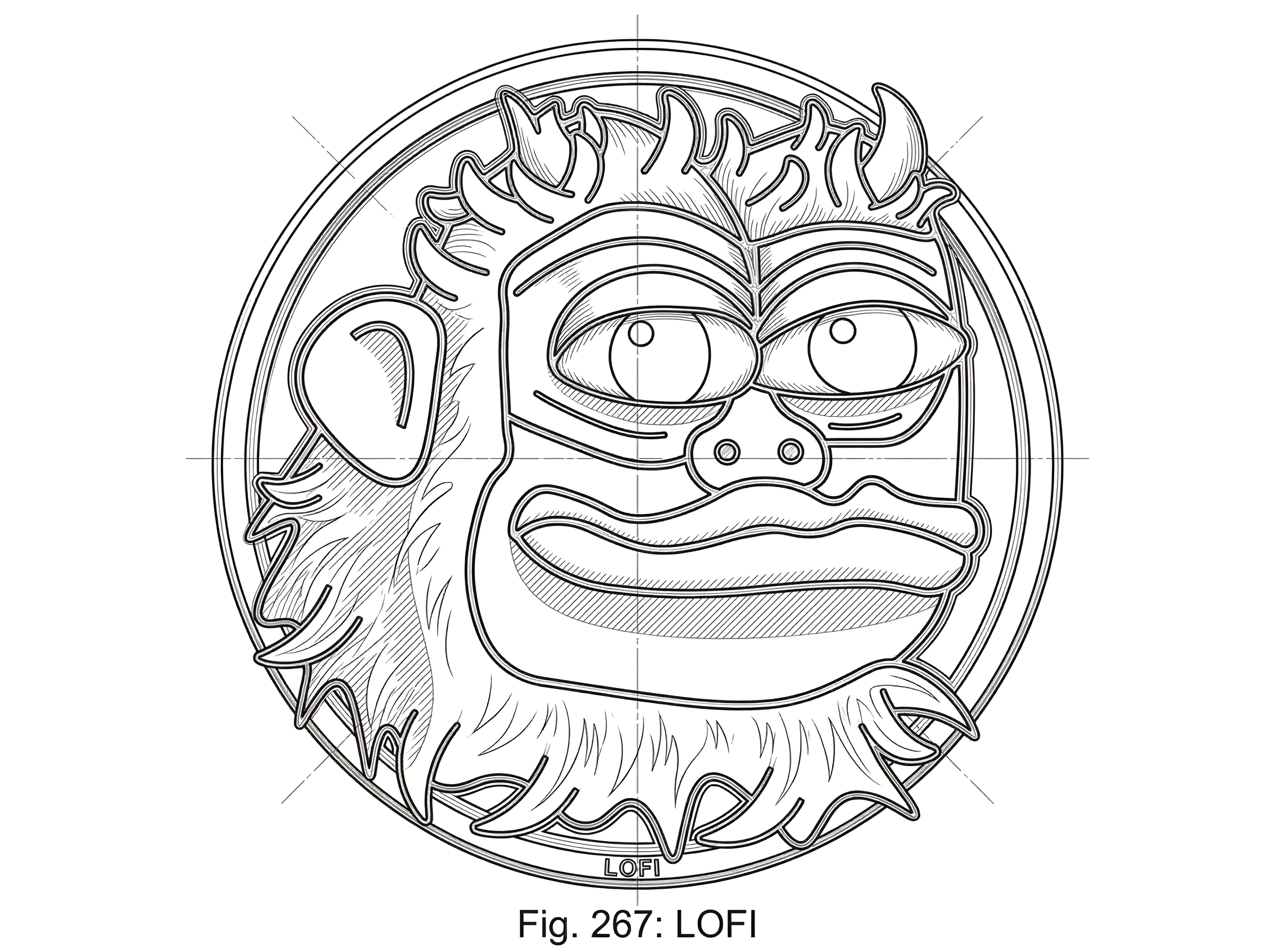
LOFI is a Sui-based token whose main job is to coordinate a brand, a community, and a stream of ecosystem activity around that brand. That sounds simple, but it is also the point most likely to be misunderstood. LOFI is not presented by its own materials as a token with formal governance rights, legal claims on assets, or a necessary role in Sui’s base-layer operation. What you are buying is exposure to whether the LOFI identity can keep attracting attention, liquidity, listings, and participation strongly enough that the token remains desirable to hold and trade.
That puts LOFI in a different category from tokens whose demand comes from mandatory gas payments, hard staking requirements, or contractual claims on protocol revenue. Its economics are closer to a culture-and-community asset with some supporting mechanics around liquidity, exchange access, merchandise, and charitable branding. The project also ties part of its identity to environmental initiatives, especially water restoration and reducing ocean plastic, and says trading activity in certain liquidity pools helps fund operations and those initiatives. The value proposition therefore rests more on social coordination and market structure than on enforceable tokenholder rights.
What does LOFI do on the Sui blockchain?
LOFI is a fungible token on Sui with a fixed maximum supply of 1,000,000,000. The project describes it as a community and brand token. That description is the clearest starting point. A community token can still trade actively and build a substantial market, but its demand usually comes from affiliation, speculation, ecosystem perks, identity, and access to a shared story rather than from a hard technical necessity.
The strongest settled fact here is that LOFI is transferable on Sui and can be held or traded by anyone with access to the token on-chain or through an exchange that lists it. The project launched on Cetus, a Sui-based decentralized exchange, through what it describes as a fair launch with an initial liquidity pool. Later market access expanded through centralized exchange listings as well. For an asset like LOFI, easy entry and exit are a large part of the product.
The weaker and more contingent part of the thesis is utility. Project materials point to merchandise purchases, community participation, ecosystem identity, and charitable alignment. Those can support interest, but they are not the same as a token being indispensable to some product’s function. The project’s own legal language is unusually important here: it says LOFI is not intended to be a medium of exchange, not a security or capital-markets product, and does not represent voting rights or other entitlements. In plain English, owning LOFI does not automatically give you control rights, cash-flow rights, or a legal claim on project assets.
The cleanest way to think about LOFI is this: it is a market-traded token for a Sui-native culture project, and demand depends on whether that project can keep converting attention into trading activity, liquidity, and ecosystem participation.
What drives demand for LOFI?
For LOFI, demand comes from use of the token as an asset rather than use of the token as infrastructure. That creates a different set of demand drivers.
The first driver is simple market participation. If traders want exposure to the LOFI brand, or expect future exchange listings, marketing reach, or community growth to support the token, they buy it. This is the most immediate demand source and probably the dominant one. Because LOFI does not appear to have a formal governance or cash-flow claim, market demand is highly sensitive to attention, narrative strength, and liquidity conditions.
The second driver is ecosystem participation around the LOFI identity. The project ties the token to merchandise, NFTs, community campaigns, and a charitable arm called the Lofi Foundation. None of these creates guaranteed token demand in the strict sense, but they can make the token more culturally sticky. A culture token stays relevant when people continue to care enough to hold it, trade it, display affiliation, and use it as the common unit of a community.
The third driver is access to listed markets. Exchange listings do not change a token’s intrinsic rights, but they do change the set of people who can buy it. For a token like LOFI, easier access can be economically important because it reduces the friction between interest and ownership. The project has been promoted as available across multiple venues, which broadens the pool of possible holders beyond on-chain Sui users alone.
There is also a fee-linked mechanism in project materials, but it should be understood carefully. The official site refers to a 1% liquidity-pool fee supporting operations and a charitable fund, while the Kraken MiCA white paper refers to a 0.25% transaction fee on certain liquidity-pool trades supporting operations and charitable initiatives. The safe conclusion is that at least some pool trading activity is intended to route fees toward the project treasury and related initiatives. The exact percentage appears inconsistent across sources, so the existence of a treasury-supporting pool fee is better established than the precise number.
That mechanism works indirectly. If a project treasury is funded by trading activity, it may be better able to pay for operations, market making, listings, and campaigns that sustain visibility. But pool fees do not automatically become tokenholder income, and holding LOFI does not appear to entitle you to a share of them.
How is LOFI supply distributed and why does the launch structure matter?
LOFI’s maximum supply is fixed at 1 billion tokens. On its face, that removes one common risk: open-ended inflation from uncapped issuance. There is no evidence here of staking inflation, mining emissions, or an expanding token schedule that dilutes holders over time.
But fixed supply is not the same as decentralized supply. Distribution is just as important as the cap. According to both the project materials and the Kraken white paper, 75% of the supply was associated with the fair launch, while the team later market-bought 25% of total supply after launch. That 25% is described as split into 10% for operations treasury, 10% for market making and centralized-exchange listings, and 5% for Sui ecosystem airdrops.
This is the most important supply fact after the 1 billion cap. A meaningful share of LOFI sits under team-directed control or influence even though the launch is framed as fair. A fair launch can reduce some forms of initial insider advantage, but if the team subsequently accumulates a quarter of total supply from the market, holders still face concentration risk. The project may use those tokens for legitimate reasons such as liquidity support or distribution, but they remain a major lever over circulating float and market behavior.
The practical question is not only how many tokens exist, but how many are freely trading, how many are strategically held, and how treasury-controlled balances might be used. Tokens reserved for market making may support tighter spreads and more orderly listings. Tokens used for airdrops may expand the community. Tokens used for operations may create future sell pressure if the treasury needs funding. Without detailed ongoing treasury transparency, that uncertainty remains part of the exposure.
A few secondary sources present inconsistent token-allocation tables. Where there is conflict, the project’s own materials and Kraken’s MiCA documentation are the stronger basis: 75% fair launch, 10% operations treasury, 10% market making and CEX listings, 5% airdrops, all within a 1 billion maximum supply.
Does LOFI route trading fees to charity, and what does that imply for holders?
LOFI tries to connect token activity with real-world environmental funding. That gives the token a more specific identity than a generic meme asset. The project says liquidity-pool fees help support operations and a charitable fund focused on restoring water sources and reducing ocean plastic. The Lofi Foundation’s materials also describe blockchain-based donations, public wallet-linked recognition systems, and pooled use of donated funds for environmental causes.
What is real here is the organizational intent and the existence of a donation-oriented charitable arm. The foundation’s terms make clear that donations are voluntary, final, public on-chain, non-refundable, and not tax-deductible in the United States. They also make clear that donated funds are pooled and allocated at the team’s discretion rather than tracked one-for-one to specific cleanup actions. So the project has built infrastructure for philanthropy, but not in a way that creates a direct financial right for tokenholders.
Charitable branding can be read in two very different ways. The optimistic reading is that it strengthens community cohesion and differentiates LOFI from purely speculative tokens. The harder-headed reading is that it is mainly a narrative layer unless the project can sustain transparent reporting and durable trust. Both can be partly true.
For valuation, the effect is indirect. If the charitable mission increases loyalty, donations, press, partnerships, or user retention, it can support the token’s social demand. But a holder should not confuse mission alignment with ownership of the foundation or entitlement to its assets. The terms explicitly reject that interpretation.
Should I hold LOFI in a Sui wallet or on a centralized exchange?
How you hold LOFI changes the kind of risk you take.
Holding the native token on Sui means you control the asset directly in a Sui-compatible wallet and can move it into on-chain pools, swaps, or other ecosystem tools that support it. This gives you the cleanest exposure to the token itself, but also makes you responsible for wallet security, network fees, and verifying that you are interacting with the correct contract. The published token identifier is 0xf22da9a24ad027cccb5f2d496cbe91de953d363513db08a3a734d361c7c17503::LOFI.
Holding LOFI on a centralized exchange changes that exposure. Economically you still follow the token’s market price, but operationally you are relying on the exchange’s custody, deposit and withdrawal rails, and listing decisions. That can make access easier, especially for users who do not want to manage Sui wallets, but it also means your practical control over the asset depends on the venue remaining functional and keeping the market listed.
If you are simply trying to get initial market exposure, readers can buy or trade LOFI on Cube Exchange, where the same account can move from a bank-funded USDC balance or an external crypto deposit into a simple convert flow or spot trading with market and limit orders. For a token like LOFI, easier entry can help sustain broader holder participation.
There are also ecosystem-adjacent wrappers and liquidity positions to distinguish from the token itself. The evidence includes a community-created liquid staking token called lofiSUI. That is not the same thing as holding LOFI. It represents a staking-style exposure created by the LOFI community, with its own pool liquidity, contract risks, and market behavior. If you hold a wrapped or derivative asset instead of native LOFI, your risk expands from “will LOFI hold value” to “will the wrapper mechanism, liquidity, and custody assumptions hold up as expected.”
Likewise, if you provide LOFI liquidity in a pool rather than simply holding it, your exposure changes again. You gain fees or incentives if available, but you also take on impermanent loss, smart-contract risk, and pool-specific design risk. For a volatile culture token, that can be materially different from directional ownership.
What can cause LOFI’s market or infrastructure to fail?
LOFI depends on more than its own brand.
The first dependency is Sui itself. Because LOFI is native to Sui, its usability depends on Sui wallets, exchanges, explorers, and infrastructure continuing to work well. Sui’s design allows fast transfers and parallel execution for suitable transactions, which is helpful for trading and user experience. But the economic point is simpler: if the Sui ecosystem loses users, liquidity, or exchange support, LOFI’s accessible market shrinks with it.
The second dependency is trading infrastructure. LOFI’s origin and liquidity path run through Sui DeFi venues such as Cetus and Aftermath, and later through centralized exchanges. That creates smart-contract and venue risk alongside token risk. This is not abstract. Cetus, the launch venue cited by the project, suffered a major exploit in May 2025 tied to flawed arithmetic checks in its AMM implementation. That incident was about Cetus rather than LOFI’s token contract, but it shows how a token’s market can be disrupted by failures in the places where it trades.
The third dependency is centralized coordination by the project team. The team-controlled 25% position, the foundation’s discretionary allocation of pooled donations, and the engagement of outside market-making support all mean LOFI is not a pure autonomous protocol asset. It is partly an organizational asset whose market conditions can be shaped by treasury decisions, exchange relationships, and branding efforts. Strong execution can help the token. It also leaves holders with key-person and governance-opacity risk that is larger than the label “community token” may suggest.
Legal structure is another weak point. Kraken’s MiCA white paper notes that there is no clear legal entity accountable for LOFI in a way that would give holders strong recourse. Project materials also disclaim legal commitments and rights extensively. That does not make the token illegitimate, but it does narrow what a holder can realistically claim if expectations are not met.
Finally, LOFI faces the standard threat for culture tokens: substitutability. If attention moves elsewhere, there may be little hard utility to hold demand in place. Tokens without mandatory protocol functions usually rely on the community staying alive and legible. Once that weakens, liquidity can thin out quickly.
What would make LOFI more or less likely to retain value?
LOFI strengthens when its soft drivers become more durable. Better exchange access, deeper on-chain liquidity, consistent treasury transparency, credible reporting around charitable spending, and ecosystem uses that meaningfully encourage people to keep holding all make the token more robust. If the project can turn branding into recurring participation rather than one-off speculation, the token’s market role improves.
The thesis weakens if the token remains mostly a narrative asset without durable reasons to own it after the initial story fades. It also weakens if treasury-controlled supply creates market overhang, if charitable claims become hard to verify, or if liquidity fragments across thin venues. For a token like LOFI, market access and trust are the core of the asset.
Conclusion
LOFI is a Sui-native culture token with a fixed 1 billion supply, a community-and-brand focus, and an ecosystem story that combines trading access, merchandise, and environmental philanthropy. The essential point is that owning LOFI gives exposure to whether that social and market machine keeps working, not to formal governance rights or contractual claims on project cash flows.
If you remember one thing, remember this: LOFI is best understood as a tradable bet on the staying power of a Sui-based brand and community, shaped by liquidity, treasury decisions, and attention more than by hard protocol necessity.
How do you buy LOFI?
LOFI can be bought on Cube through the same direct spot workflow used for other crypto assets. Fund the account, choose the market or conversion flow, and use the order type that fits the trade you actually want to make.
Cube lets readers move from a bank-funded USDC balance or an external crypto deposit into trading from one account. Cube supports both a simple convert flow for first buys and spot markets with market and limit orders for more active entries.
- Fund your Cube account with fiat or a supported crypto transfer.
- Open the relevant market or conversion flow for LOFI and check the current price before you place the order.
- Use a market order for immediacy or a limit order if you want tighter price control on the entry.
- Review the estimated fill and fees, submit the order, and confirm the LOFI position after execution.
Frequently Asked Questions
No - project materials and legal language state that LOFI is not intended to be a security, does not represent voting rights or entitlements, and does not confer legal claims on project assets or cash flows; holding LOFI gives exposure to the brand and community rather than formal governance or income rights.
LOFI has a fixed maximum supply of 1,000,000,000 tokens; the project and Kraken materials state 75% was allocated to the fair launch and the team market‑bought 25% afterward (10% operations treasury, 10% market making/CEX listings, 5% Sui ecosystem airdrops), which concentrates a material portion of supply under team control and can create potential market overhang or centralized influence.
The project documents show a trading‑linked fee mechanism intended to route some liquidity‑pool fees to operations and a charitable fund, but sources disagree on the rate (the project site cites 1% LP fee while Kraken’s white paper cites 0.25%), and those fees do not automatically create a distributable income stream to LOFI holders.
Donations to the Lofi Foundation are voluntary, final, non‑refundable, publicly visible on‑chain, not tax‑deductible in the United States, pooled and allocated at the Foundation’s discretion, and the Foundation is not currently a registered charitable entity - all of which limit legal or tax recourse for donors and do not create tokenholder rights over donated funds.
Holding native LOFI on Sui gives you direct custody and the ability to use it in Sui wallets, pools, and ecosystem tools (contract identifier provided in the article), whereas holding LOFI on a centralized exchange gives price exposure but depends on the exchange’s custody, deposit/withdrawal rails, and listing decisions - each route carries different operational and counterparty risks.
Audit and security visibility is unclear: several listing profiles show audits or documentation as missing, and while LOFI’s markets originated on Sui DEXs like Cetus, the Cetus AMM experienced a major exploit tied to an arithmetic bug - demonstrating venue and composability risk even if LOFI’s token contract itself is not implicated or publicly audited.
LOFI’s thesis is strengthened by deeper, transparent liquidity, broader credible exchange listings, consistent treasury transparency, verifiable charitable reporting, and durable community uses; it weakens if the token remains mostly a narrative asset, if treasury‑controlled supply creates sell pressure, or if liquidity fragments or attention moves away.
LOFI is materially dependent on Sui and the trading infrastructure built on it: if Sui wallets, DEXs, or centralized venues lose users or suffer exploits (for example, the Cetus AMM exploit), LOFI’s accessible market and liquidity can shrink or be disrupted quickly.
Related reading