What is Kraken?
Learn what Kraken is, how its centralized crypto exchange works, and why traders and institutions use its spot, futures, API, and custody services.
Introduction
Kraken is a centralized digital asset exchange: a platform that holds user accounts, maintains order books, and matches trades between buyers and sellers. That may sound straightforward, but it solves a real coordination problem. Blockchains are good at recording ownership and settlement, yet they are not naturally good at running fast, deep, multi-asset markets with fiat on-ramps, advanced order types, and institutional workflows. Kraken exists in that gap.
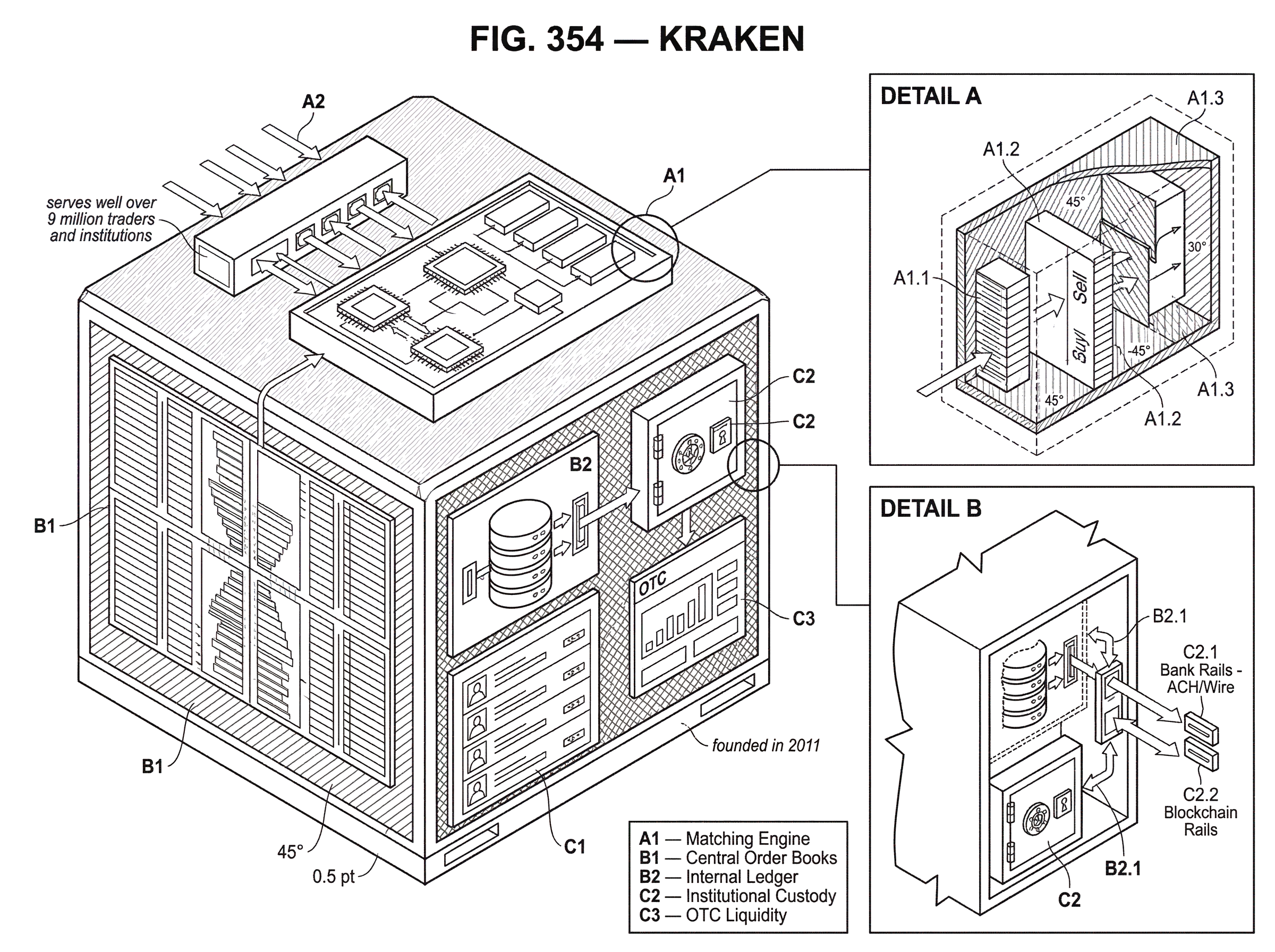
What makes Kraken useful is not just that it lets people buy and sell crypto. It is that it bundles several pieces of market infrastructure into one place: spot trading, futures access, APIs for automated trading, and institutional services such as custody, OTC connectivity, and prime-style interfaces. According to Kraken’s own materials, it is one of the world’s largest digital asset exchanges, serves well over 9 million traders and institutions, supports trading in more than 200 digital assets and eight fiat currencies, and positions itself as a leader in euro volume and liquidity.
The simplest way to understand Kraken is to see it as a managed market. Instead of each trade being negotiated directly on a blockchain, Kraken keeps an internal ledger of customer balances, aggregates orders into order books, and updates positions when trades occur. The blockchain still matters, because assets ultimately enter and leave through deposits and withdrawals, but the market itself runs inside Kraken’s system. That design is why trading can be fast, why order books can be deep, and why institutions can connect programmatically through REST, WebSocket, and FIX.
How does Kraken match trades and manage user balances?
At user level, Kraken works like a venue where many participants submit intentions to trade. A buyer might want to purchase bitcoin with euros at a certain price; a seller might want to sell immediately at the best available bid. Kraken’s job is to collect these intentions, organize them into an order book, and match compatible orders. The mechanism is familiar from traditional exchanges, but in crypto it matters even more because users often need to move between fiat currencies and digital assets without waiting for slow on-chain execution each time.
This is the central trade-off of a centralized exchange. You gain speed, convenience, and richer market structure because Kraken keeps custody of trading balances and updates them internally. You give up some of the direct self-custody and trust minimization that blockchains make possible. If you trade on Kraken, you are relying on Kraken’s systems, controls, and governance to maintain balances correctly, process withdrawals, and keep markets available.
That model also explains why Kraken can offer more than a simple swap screen. The company says it was founded in 2011 and was among the early exchanges to offer spot trading with margin, regulated derivatives, and index services. Over time, that has developed into a broader platform with retail and pro interfaces, plus separate connectivity for developers and institutions. The product is really less like a wallet and more like a market operator.
A concrete example makes this clearer. Imagine a trader who deposits U.S. dollars, buys ether, and later sells part of that position for euros. On-chain, doing this directly would require interacting with separate systems for banking, exchange, and settlement. On Kraken, the dollars appear in the user’s account balance after funding, the buy order is matched against Kraken’s internal order book, and the user’s balance changes from dollars to ether without each trade leg becoming a separate blockchain transaction. Later, when the trader sells ether for euros, Kraken again updates internal balances. Only when the user withdraws does the system need to move assets out to a bank rail or blockchain network. That is the mechanism that makes centralized exchanges efficient.
When should you use Kraken REST, WebSocket, or FIX?
| Interface | Latency | Data flow | Best for | Typical user |
|---|---|---|---|---|
| REST | Higher latency | Request-response | Order entry & queries | Retail developers |
| WebSocket | Low latency | Event-driven stream | Market data & algos | Quant traders |
| FIX | Low latency | Session-based messages | Institutional order flow | Firms & brokers |
Kraken’s API center reveals an important part of the product: Kraken is not only for people clicking buttons in a web app. It is also built for software. The exchange offers REST APIs for spot and futures trading, WebSocket APIs for spot and futures, and FIX connectivity for institutional trading. Those are not redundant versions of the same thing. They exist because different trading tasks have different timing and reliability needs.
REST, in Kraken’s own description, is request-response messaging over HTTP. It is the right tool when a client wants to ask for something discrete: place an order, check an account state, fetch a resource. WebSocket is two-way, event-driven connectivity for trading. That matters when a strategy needs a stream of book updates, fills, or market events without repeatedly polling. FIX support matters for institutions because many professional trading systems are already built around that protocol. In other words, Kraken is useful to different kinds of users because it exposes the same market through interfaces suited to retail apps, algorithmic traders, and institutional desks.
That architecture shapes who Kraken is for. A casual user may only ever see the exchange through Kraken or Kraken Pro. A quantitative trader may care mainly about low-latency market data and order entry through WebSocket. A fund or broker may care about FIX sessions, custody controls, and OTC workflows. The common element is still the same: Kraken is operating a centralized trading venue, but it lets very different participants plug into it at the layer that fits their workflow.
Kraken also advertises deep liquidity and volume, direct access to its order books, tight spreads, low fees, and more than 99% uptime. Those claims matter because an exchange becomes more useful as more traders use it: deeper order books tend to improve execution and make larger trades less disruptive. The exact metrics behind those claims are not provided in the overview page, so it is best to treat them as platform positioning rather than independently established facts within the supplied material.
How do Kraken's futures, OTC, and custody products differ from spot trading?
| Product | Primary purpose | Execution style | Integration | Best for |
|---|---|---|---|---|
| Futures | Leverage exposure | Order-book derivatives | Dedicated futures APIs | Traders seeking leverage |
| OTC | Large-block execution | Bilateral off-book trades | OTC REST / automated OTC | Institutions needing block liquidity |
| Custody / Prime | Secure asset custody | Custody-first workflows | Custody REST / Prime FIX & WS | Funds needing custody + access |
A spot exchange solves the basic problem of exchanging one asset for another. But many serious market participants need more than that. They may want futures exposure, large-block execution, custody separated from active trading balances, or a standardized connection into treasury and compliance systems. Kraken’s product stack reflects those needs.
The API documentation lists separate spot and futures REST and WebSocket endpoints. That separation is useful because futures trading is not just “spot with leverage.” It is a different market structure with different risk rules, collateral logic, and account state. By exposing futures through dedicated APIs, Kraken is telling users that these are first-class products, not an afterthought wrapped around the spot exchange.
For larger or more operationally constrained clients, Kraken also offers institutional APIs for Custody REST, OTC REST, Prime FIX, and Prime WebSocket. The reason those services exist is simple: institutions often do not want all assets sitting in a standard exchange account awaiting active execution. They may want assets held under stricter controls and only moved into trading workflows when needed. They may also want to execute large trades through OTC channels rather than pushing size directly through the visible order book.
Kraken Custody makes this explicit. Kraken describes it as a qualified digital asset custody solution for institutional investors, using MPC and HSM-based key storage and policy enforcement. It says client assets are held in segregated vaults that can be monitored on-chain, with a full audit trail of organization activity. Just as important, Kraken says custody integrates with trading services, including 24/7 access to Kraken OTC liquidity through an automated OTC trading feature and the ability to transfer assets into Kraken’s institutional products. The practical point is that some users want safety and trading access at the same time, and Kraken is trying to connect those without forcing everything into a single generic exchange account.
Kraken has also said its institutional custody offering completed a SOC 2 Type 2 examination. That does not guarantee security, and Kraken itself frames it as one element of a broader security program, but it does matter because Type 2 is about controls operating effectively over time, not only being designed on paper. For institutions assessing operational risk, that kind of attestation can be as important as raw market access.
What trust and counterparty risks do you accept when using Kraken?
| Custody model | Control | Legal protections | Operational risk | Best for |
|---|---|---|---|---|
| Kraken exchange account | Operator-controlled balances | Subject to Kraken terms | Counterparty & operational risk | Fast trading and fiat access |
| Kraken Custody | Segregated institutional vaults | SOC 2 attestation noted | Policy-enforced key management | Institutions needing custody + access |
| Self-custody | User holds private keys | Protections depend on user | Key loss or user error | Maximum trust-minimization |
The core fact about Kraken is also the core risk: it is a centralized intermediary. Users do not directly control the exchange’s order books, matching engine, internal ledger, or operational policies. Kraken’s custody terms state that it does not control the underlying software protocols of digital asset networks and makes no guarantees about their security or availability. That is an important distinction. When you use Kraken, you are exposed both to Kraken’s own operational performance and to the blockchain networks underneath the assets being traded or custodied.
Kraken’s materials also make clear that access, product availability, and protections can vary by service and jurisdiction. The company’s public pages include strong risk warnings that crypto is high risk and that some products and markets may be unregulated. On the institutional custody side, Kraken notes that Payward Financial, Inc. is not an FDIC-insured bank, so deposits there are not protected by FDIC insurance. These points are not side notes. They are part of the mechanism of using a centralized exchange in crypto: convenience and market access come bundled with counterparty, operational, and jurisdiction-specific risk.
There is also a difference between allegations, settlements, and product mechanics that readers should keep separate. U.S. regulators have brought enforcement actions against Kraken-related entities, including a 2023 SEC staking settlement in which two Kraken entities agreed to stop offering or selling securities through staking services and pay $30 million, without admitting or denying the allegations. The SEC also sued Kraken in late 2023 over exchange-registration issues and alleged commingling; those were allegations in litigation, not simply product documentation. These matters are relevant because they affect how some users think about platform risk, but they do not change the basic explanation of how Kraken functions as an exchange.
Why do traders and institutions choose Kraken?
People use Kraken when they want a crypto trading venue that feels closer to financial market infrastructure than to a simple wallet app. The retail appeal is easy to see: access to many assets, multiple fiat currencies, and round-the-clock support. The professional appeal is deeper: APIs for automation, futures connectivity, institutional custody, and OTC integration. The exchange becomes more valuable to these users because all of those pieces connect to the same market and account system.
That design especially suits traders who need execution quality and institutions that need controlled workflows. A hedge fund might care that custody, OTC, and trading interfaces are linked. A market-making firm might care that it can stream market data over WebSocket and route orders through the appropriate API. A retail trader may never think about those details, but still benefits from the liquidity and market structure created by more sophisticated participants being present on the same venue.
The analogy is that Kraken is like a managed airport for digital assets: it coordinates traffic, enforces routing rules, and provides specialized lanes for different kinds of vehicles. That helps explain why the system can move a lot of activity efficiently. The analogy fails in one important way, though: unlike public infrastructure, Kraken is a private intermediary with its own legal entities, product boundaries, and discretionary controls. Users are not just accessing a neutral network; they are entering a relationship with an operator.
Conclusion
Kraken is best understood as a centralized market infrastructure layer for crypto. It brings together account management, internal balance tracking, order books, trading interfaces, and institutional services so users can move between fiat and digital assets more easily than they could on-chain alone.
That is why it is useful, and also why trust matters. Kraken gives traders speed, liquidity, and professional connectivity by centralizing the hard parts of market operation. If you remember one thing, remember this: Kraken is not just a place to buy crypto; it is a company-run trading venue that makes crypto markets usable at scale.
What should you look for before choosing a crypto exchange?
Compare custody, execution, fees, and supported workflows before you commit to an exchange. Use Cube Exchange as the practical comparison anchor: fund a small test balance on Cube and run the same quick checks you would on Kraken to see differences in custody model, order execution, and fees. The steps below show concrete actions you can take to evaluate a venue and to test Cube’s end-to-end workflow.
Frequently Asked Questions
Kraken is a centralized exchange that holds customer balances in its internal ledger, aggregates orders into order books, and matches trades off-chain; blockchain transfers are used only when assets enter or leave the platform (deposits and withdrawals).
No - trading on Kraken means you do not hold private keys for exchange-held balances; the article explains you trade against Kraken’s internal ledger and therefore rely on Kraken’s custody, controls, and governance rather than direct self‑custody.
Kraken offers REST for discrete request-response actions (place orders, fetch account state), WebSocket for streaming market data and event-driven trading, and FIX for institutional workflows; each exists because different users (retail, algorithmic traders, institutions) have different latency, throughput, and integration needs.
Kraken states its institutional custody completed a SOC 2 Type 2 examination, but the company frames that as one element of a broader security program rather than a complete guarantee of safety; the public materials do not name the auditor or fully disclose the audit scope in this overview.
No - Payward Financial, Inc. (Kraken Financial) is not an FDIC‑insured bank, and the custody pages explicitly state deposits there are not FDIC‑insured or covered by FDIC protections.
The main risks are counterparty and operational risk from using a centralized intermediary (Kraken controls matching, ledgers, and withdrawals), plus exposure to the underlying blockchains and jurisdiction‑specific regulatory limits; the article emphasizes you trade convenience for some loss of trust minimization.
Kraken’s custody product is designed to integrate with trading and OTC execution: client assets can be held in segregated vaults with MPC/HSM key storage and moved into trading or into Kraken’s automated OTC liquidity channels when needed, per the product description.
Only when you (or Kraken’s systems) initiate a withdrawal or transfer do assets leave Kraken for bank rails or blockchain networks - routine trades on the platform are updated in Kraken’s internal ledger and do not create separate on‑chain transactions.
The overview page presents uptime, liquidity, and volume claims as platform positioning but does not supply the underlying metrics or evidence, so those performance claims should be treated as Kraken’s statements rather than independently verified facts in this document.
Yes - Kraken has been subject to U.S. regulatory enforcement actions: the company agreed to a 2023 SEC settlement related to staking (a $30 million agreement by two entities, without admitting or denying allegations) and the SEC later filed a separate complaint alleging registration and commingling issues; the article and source evidence describe these as enforcement matters and allegations in litigation.
Related reading