What is GOMINING?
Learn what GoMining Token is, how GOMINING demand comes from mining-fee discounts, veGOMINING locks, and the weekly Burn & Mint supply mechanism.
Introduction
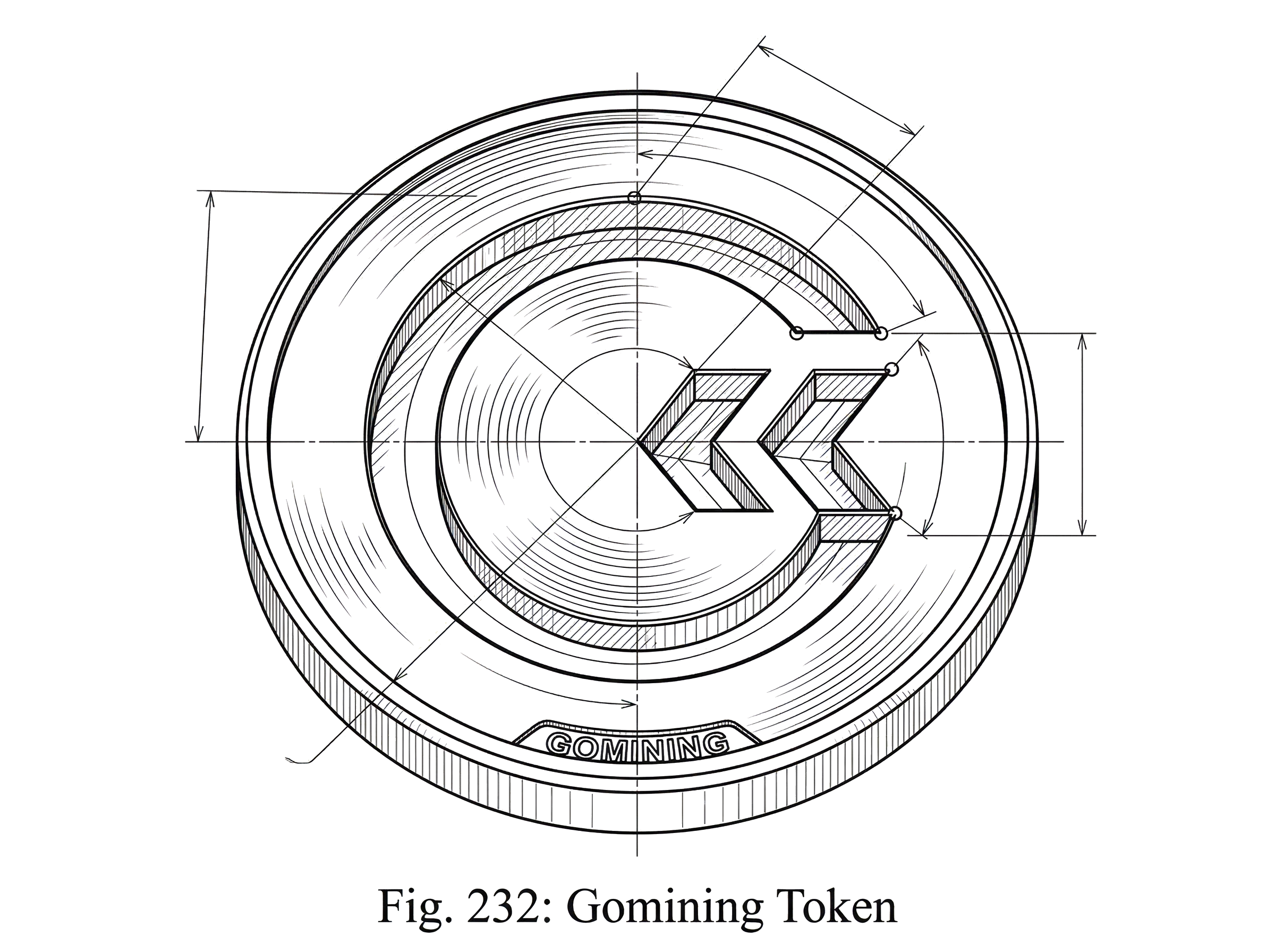
GoMining Token, usually referred to today as GOMINING and sometimes as GMT in project materials, is easiest to understand as a tokenized utility inside a Bitcoin-mining platform rather than as a general-purpose layer-1 coin. The key question is not what chain it lives on, but why anyone inside the GoMining system would need to hold it in the first place. The answer is fairly concrete: users can use GOMINING to pay maintenance fees for GoMining’s “Digital Miners,” receive discounts for doing so, lock the token to gain voting power, and earn rewards tied to the system’s weekly Burn & Mint process.
Many readers will otherwise treat GOMINING like a broad bet on Bitcoin mining economics. It is not direct ownership of mining hardware, not direct ownership of corporate cash flow, and not a dividend right. The project’s own disclosures are explicit that the token is a utility token, not a share, deposit, or claim on issuer assets. What you are buying is exposure to the continued usefulness of this token inside GoMining’s product stack and to the supply mechanics that govern it.
What does the GOMINING token do inside the GoMining platform?
GOMINING’s main job is to act as the preferred operating token inside GoMining’s mining platform. The most direct use is maintenance-fee payment for Digital Miners, which the project describes as virtual or NFT-like assets backed by real Bitcoin mining power hosted in GoMining data centers. If users pay those maintenance costs in GOMINING rather than some other asset, they can receive a discount of up to 20%.
The discount is the simplest path from product usage to token demand. A user who owns mining exposure through the platform has an economic reason to acquire and keep GOMINING if doing so lowers an ongoing operating expense. The white paper describes the discount schedule as increasing with the amount of maintenance coverage the user’s balance can support, at roughly 1% more discount per 18 days of coverage, up to 20% at 360 days. That creates a reason to hold a working balance of tokens rather than touching the token only once.
The second job is governance through a vote-escrow design called veGOMINING. Holders can lock GOMINING for a chosen period between one week and four years. In return they receive voting power that decays linearly over time until the lock expires. Those votes influence the weekly Burn & Mint mechanism, including whether it activates and how much of the week’s burned supply is permanently removed versus offset by new minting.
The compression point for GOMINING is straightforward: it is a platform-utility token whose demand is supposed to come from recurring operating use, while its longer-term holding case depends on locking for governance over a weekly supply-adjustment system. Ignore either side and the token makes less sense.
How does GoMining platform usage create demand for GOMINING?
GoMining’s ecosystem centers on Digital Miners, which the company says correspond to real mining equipment or real mining capacity. Users buy these digital mining exposures and receive Bitcoin-denominated rewards, while GoMining handles the hardware, electricity, and maintenance. That setup creates a continuing maintenance bill, and GOMINING is the token used to make that bill cheaper.
This is economically different from a token whose only use is speculative trading. The strongest organic demand should come from users already inside the mining product who want to reduce costs or unlock related perks. If the platform grows, more users may need GOMINING for fee payments. If users maintain larger balances to preserve higher discounts, a larger share of supply can sit in operating wallets instead of on exchanges.
There is also a softer demand channel through status and rewards. Project materials describe veGOMINING as giving access to token rewards, governance participation, and VIP-related benefits. Some holders will not be active miner operators but may still want exposure to platform incentives. Still, the core economic loop remains the maintenance use case. Without miners generating maintenance demand, the governance and reward layer becomes much more reflexive, with token demand depending mostly on belief in future token demand.
The distinction to keep in mind is simple. GOMINING is strongest when the token is needed because an underlying product is being used. It is weaker when the only reason to buy it is to earn more of itself.
How does the weekly Burn & Mint mechanism affect GOMINING’s supply?
The most important supply mechanic is GoMining’s weekly Burn & Mint equilibrium. According to the project’s white paper and terms, GOMINING used during the week to pay maintenance fees is aggregated and burned on a weekly cycle that ends on Tuesday at 12:00 UTC. veGOMINING holders then influence whether Burn & Mint is activated and what share of that week’s burned tokens stays permanently removed.
The project gives the mint formula as:
GOMINING minted = (1 - V% × (1 - C)) × GOMINING burnt
Here, V% is the governance-selected burn share, and C is an epoch-based coefficient that may vary over time. The practical point is more important than the algebra: weekly usage creates burns, but those burns are not automatically equal to permanent deflation. Governance and protocol parameters decide how much supply comes back through minting.
GOMINING is therefore neither purely deflationary nor purely inflationary in a simple fixed-schedule sense. The token’s net supply path depends on three linked things: how much maintenance activity occurs, how tokenholders vote, and what coefficient applies in a given epoch. If platform usage is strong, more tokens can be routed into the burn side of the system. If governance chooses a higher permanent-burn share, net supply can tighten more. If minting offsets most of the burn, the deflation story weakens.
This is where many token summaries overcompress the story. Saying “fees are burned” is directionally true but incomplete. GOMINING is better understood as having a governed supply-balancing mechanism in which burns come from platform usage, while reissuance can partially offset those burns. The token’s scarcity is therefore partly product-driven and partly governance-shaped.
What happens when you lock GOMINING into veGOMINING?
Locking GOMINING into veGOMINING changes the exposure in two ways at once: it can improve your access to rewards and governance influence, but it also removes your liquidity for a chosen period. The lock can last from one week to four years, and the locked tokens cannot be withdrawn before the period ends. It means the holder is converting a transferable token into a time-bound governance position.
The reward side comes from the same Burn & Mint system. GoMining states that 20% of newly minted tokens in each cycle are allocated as rewards for veGOMINING holders, distributed weekly and shared pro rata by voting power. So locking is not simply “staking” in the loose sense used across crypto. It is more specifically a vote-escrow model: the longer and larger the lock, the more voting power you begin with, and that voting power decays over time.
The decay prevents a lock from granting fixed influence forever. If you lock once and do nothing, your vote balance falls each week until it reaches zero at expiry. To keep influence, you must relock, extend, or add tokens. That creates an ongoing decision rather than a one-time yield toggle.
There are two distinct forms of GOMINING exposure. Liquid GOMINING is tradable and usable for payments, but it does not by itself grant ve-style governance power. Locked GOMINING sacrifices liquidity in exchange for governance rights and weekly reward participation. Those are different positions with different risks. A market buyer who plans to stay liquid should not casually extrapolate the economics of ve rewards onto an ordinary spot holding.
Does my wallet choice change GOMINING governance rights and convenience?
GoMining’s own docs make an operational distinction that materially changes what a holder gets: where the lock is held affects both governance rights and user experience. Locks associated with an Ethereum wallet can be used for governance voting, but they require ETH for gas and rewards may need to be claimed manually unless auto-claim is enabled. Locks in the GoMining in-app virtual wallet are easier to manage, avoid network fees, and deliver rewards automatically, but votes there do not grant governance rights.
That is an unusual but important split. A holder choosing the in-app wallet may still get reward-related benefits and VIP effects, yet lose the ability to participate in on-chain governance. A holder choosing Ethereum wallet custody keeps governance functionality but takes on the frictions of gas costs and more active wallet management.
So “locking GOMINING” is not a single experience. The exposure changes with custody. If you want convenience and automatic handling, the virtual wallet can feel more like a managed rewards product. If you want governance rights, Ethereum wallet locking is closer to direct protocol participation. This is the kind of detail that changes the economic meaning of holding the token, because it determines whether you are merely harvesting rewards or actually shaping the supply mechanism.
The broader custody setup also adds counterparty considerations. GoMining’s terms say the in-app wallet uses licensed custody through Fireblocks, while also stressing that wallet balances are not bank deposits and are not deposit-insured. That does not make the product unusual by crypto standards, but it does mean a holder should distinguish between self-custodied tokens and balances managed inside the GoMining app.
Which chains is GOMINING deployed on and how do I verify the correct token?
On Ethereum, the token is an ERC-20 with 18 decimals at contract address 0x7Ddc52c4De30e94Be3A6A0A2b259b2850f421989. Project materials also say GOMINING is deployed across multiple blockchains, including Ethereum, BNB Chain, TON, and Solana, using the relevant token standards on each chain. That multi-chain footprint can improve access and liquidity, but it also means a buyer needs to verify exactly which chain and contract they are interacting with.
The project has also used overlapping branding. Etherscan notes a rebrand under “GMT Token,” while current materials generally use GOMINING. That is manageable, but it increases the chance of confusion when checking explorers, exchange listings, or older audit materials. The safest habit is to verify the contract address and chain rather than relying on name alone.
For secondary-market access, readers can buy or trade GOMINING on Cube Exchange, moving from a bank-funded USDC balance or an external crypto deposit into trading from one account; Cube also supports a simple convert flow for first buys and spot markets with market and limit orders for more active entries. Buying spot GOMINING on an exchange is very different from acquiring in-app exposure through GoMining’s own wallet or products. Exchange spot gives you the token itself. GoMining products may add custody, lock, or application-layer restrictions on top.
What risks could undermine GOMINING’s value proposition?
The token’s appeal depends on a few claims holding up at once. The strongest is that GoMining keeps attracting users who own Digital Miners and therefore keep needing GOMINING for maintenance discounts. If that product weakens, token demand weakens at the source. The burn mechanism then has less raw activity feeding it, and governance becomes less economically meaningful.
A second dependency is governance credibility. veGOMINING is supposed to let tokenholders shape Burn & Mint outcomes, but the system still depends on platform rules, parameter setting, and implementation choices made by the GoMining ecosystem. The terms note that the mint coefficient can vary by epoch, which means tokenholders are not evaluating a perfectly fixed monetary policy. They are evaluating a governed one.
There are also centralization and contract-control issues worth stating plainly. A 2021 CertiK assessment noted that all tokens were assigned to the deployer at deployment and that owner-only mint and burn functions could mint to any recipient or burn from any account. CertiK also said the deployed token owner was a Gnosis Safe multisig, which is better than a single key, but it does not remove privilege risk. It reduces it. The same report recommended stronger controls such as timelocks, multisig governance, or DAO-style limitations.
Some of this may have evolved since that audit, and the project says later audits were completed as well. But the general lesson remains: GOMINING is not a token whose economic role can be judged only by supply charts. Administrative powers, upgrade paths, and governance implementation matter because they can change effective supply, user confidence, and protocol neutrality.
There is also a basic legal and product risk. GoMining repeatedly states that the token is a utility token and the platform is not an investment product. Whatever the legal merits in different jurisdictions, that language means holders should not assume shareholder-type protections, profit-sharing rights, redemption rights, or claims on company assets. If the ecosystem underdelivers, tokenholders mainly have the market value of the token and whatever on-chain or contractual utility remains.
Finally, multi-chain expansion can broaden accessibility but introduces another layer of operational risk. Bridges, chain-specific implementations, and contract verification become part of the trust surface. The white paper confirms multiple supported chains, but the exact bridge and cross-chain security details are not the centerpiece of the public materials provided here. That uncertainty is relevant for anyone moving beyond simple spot holding on a single verified chain.
Conclusion
GOMINING is best understood as the operating token of GoMining’s digital Bitcoin-mining ecosystem. Its economic logic is straightforward at the center: users buy it to reduce maintenance costs, some lock it to gain veGOMINING voting power and weekly rewards, and the token’s supply changes through a weekly Burn & Mint process shaped by real platform usage and governance choices. If the mining platform keeps generating genuine token-needed activity, the token has a durable role; if that activity fades, the thesis becomes much thinner.
How do you buy GoMining Token?
GoMining Token can be bought on Cube through the same direct spot workflow used for other crypto assets. Fund the account, choose the market or conversion flow, and use the order type that fits the trade you actually want to make.
Cube lets readers move from a bank-funded USDC balance or an external crypto deposit into trading from one account. Cube supports both a simple convert flow for first buys and spot markets with market and limit orders for more active entries.
- Fund your Cube account with fiat or a supported crypto transfer.
- Open the relevant market or conversion flow for GoMining Token and check the current price before you place the order.
- Use a market order for immediacy or a limit order if you want tighter price control on the entry.
- Review the estimated fill and fees, submit the order, and confirm the GoMining Token position after execution.
Frequently Asked Questions
GoMining describes GOMINING as a utility token, not a share, dividend right, or claim on issuer assets; holders get exposure to platform usefulness (fee discounts, locks, rewards) rather than corporate cash flows or ownership rights.
Users who pay Digital Miner maintenance fees in GOMINING receive discounts that increase with how many days of maintenance their balance covers - roughly 1% more discount per 18 days up to 20% at 360 days - so ongoing maintenance needs can create repeated token demand.
Burn & Mint runs weekly (aggregated burns end Tuesday 12:00 UTC): fees paid in GOMINING are burned, but veGOMINING holders vote on a burn share and an epoch coefficient (C) can reduce or offset burns via minting, so burns are governed rather than automatically permanent.
Locking GOMINING into veGOMINING converts liquid tokens into time‑bound voting power that decays linearly until expiry; locked tokens qualify for weekly reward distributions (the protocol states 20% of newly minted tokens are allocated to ve holders) but cannot be withdrawn until the lock ends.
Where you place a lock matters: locks created from an Ethereum wallet grant on‑chain governance voting (but require ETH gas and manual claims unless auto‑claim is used), whereas locks in the GoMining in‑app virtual wallet auto‑distribute rewards and avoid gas but do not grant governance votes.
Independent audits (e.g., CertiK 2021) flagged that at deployment all tokens were assigned to the deployer and that owner-only mint/burn functions could change balances, meaning privileged administrative control historically existed and timelocks/multisig safeguards were recommended to reduce centralization risk.
You can acquire GOMINING on exchanges (the article cites Cube Exchange as an example), but buying spot on an exchange gives you a tradable token while in‑app acquisition or product exposure may add custody, auto‑locks, or other application‑layer restrictions - those are different economic positions.
GOMINING is deployed across multiple chains (the token is an ERC‑20 on Ethereum at 0x7Ddc52…1989 and project materials say deployments exist on BNB Chain, TON, and Solana); because names and rebrands can confuse listings, always verify the exact contract address and chain before interacting.
Locked GOMINING cannot be withdrawn until the chosen lock period ends (locks run from one week up to four years), which creates clear illiquidity risk and requires relocking or extending to maintain governance power after decay reduces vote weight.
Related reading