What is OKCoin?
Learn what OKCoin is, how its centralized crypto exchange works, what services it offers, and the key trade-offs around custody, APIs, and trust.
Introduction
OKCoin is a centralized cryptocurrency exchange: a platform that sits between users and crypto markets so they can buy, sell, deposit, withdraw, and trade digital assets without interacting directly with blockchains for every step. That sounds simple, but it solves a real coordination problem. Blockchains are good at final settlement, yet they are not designed to be convenient retail brokerages, fiat on-ramps, or fast matching engines for large numbers of trades. An exchange like OKCoin exists to bridge those worlds.
That bridge is useful precisely because it changes the user experience. Instead of managing every transaction entirely on-chain, a customer opens an account, passes verification where required, deposits funds, and trades through OKCoin’s internal systems. The benefit is speed and convenience. The cost is that the user is relying on a company’s custody, infrastructure, policies, and jurisdictional availability rather than only on a public blockchain.
OKCoin has also been in the middle of a broader brand transition. On its official site, the company states that Okcoin is rebranding to OKX, with U.S. customers continuing to have access to services such as spot trading and simple buy and sell for select assets, and with additional self-custody and web3 features planned over time. That matters because many readers will encounter both names. In practical terms, OKCoin is best understood as the exchange platform and U.S.-facing service brand that is being folded into the broader OKX ecosystem.
What operational frictions does OKCoin solve for new crypto users?
| Option | Convenience | Speed | Custody control | Best for |
|---|---|---|---|---|
| Self-custody | Low | Slower | Full control | Long-term holders |
| OKCoin (centralized) | High | Fast | Exchange custody | Newcomers & traders |
| DEX (decentralized) | Medium | Variable | User keys | Non-custodial traders |
The hardest part of entering crypto is usually not understanding what Bitcoin or Ethereum are. It is handling all the operational friction around them. Most people do not begin with a self-custody wallet, a pile of stablecoins, and comfort signing transactions on multiple networks. They begin with bank money and a desire to gain exposure to digital assets, convert one asset into another, or move between fiat and crypto without learning every low-level detail first.
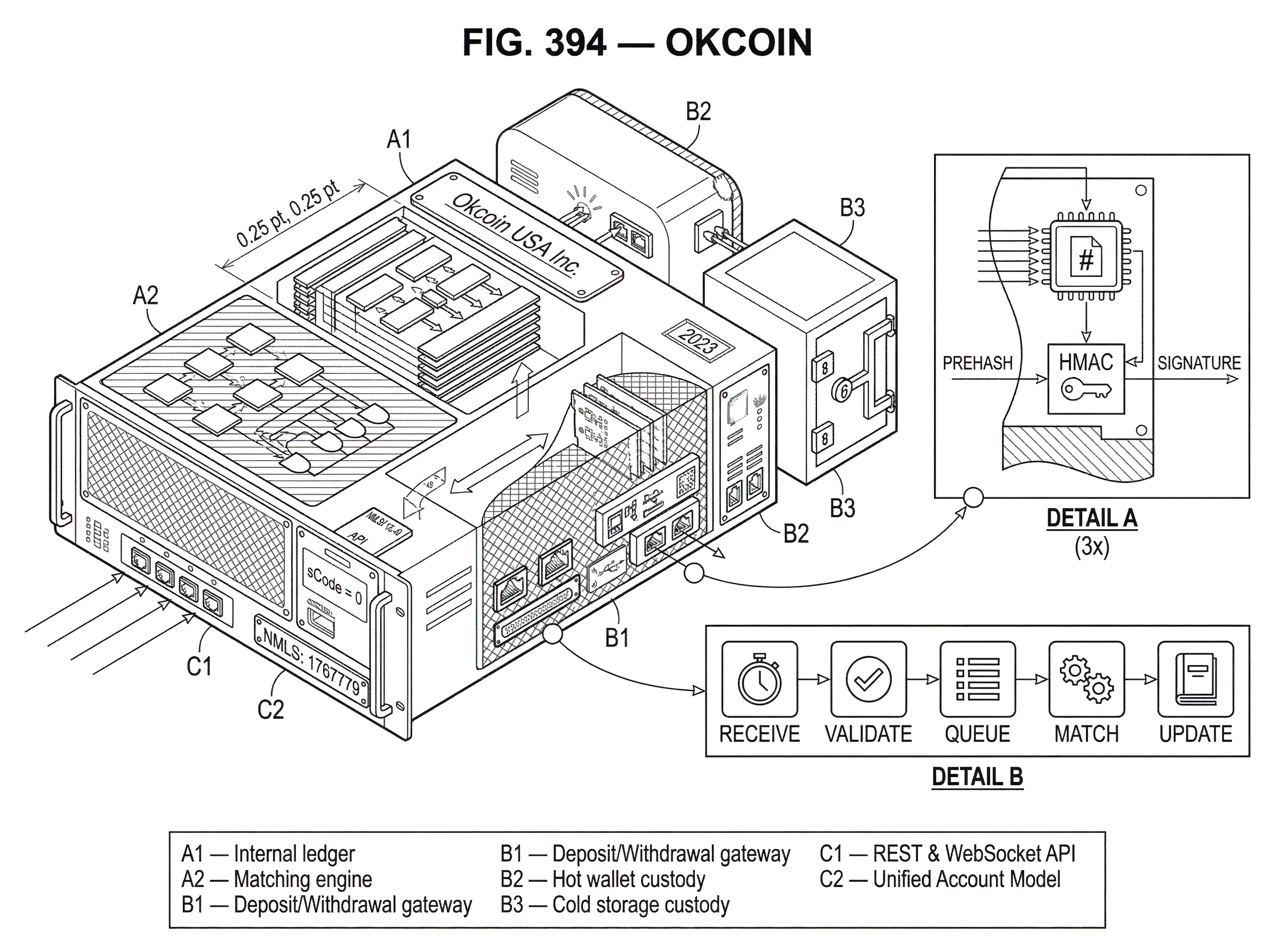
OKCoin solves that by acting as a managed marketplace. It gives users an account-based system where balances are tracked off-chain inside the exchange until the moment assets are deposited or withdrawn. That internal ledger is the key mechanism. Because trades between OKCoin users do not need to be settled on a blockchain one by one, the platform can offer a familiar exchange experience: order books, quick execution, and simpler account management.
This design especially fits users who want spot trading rather than pure self-custody from the first minute. A newcomer might want to buy bitcoin with dollars. A more active user might want to place limit orders and manage positions across several assets. A developer or professional trader might want API access instead of clicking through a web interface. These are different kinds of users, but the platform works for all of them for the same reason: it centralizes the hard parts of market access.
How do deposits, trades, and withdrawals work on OKCoin?
At the user-facing level, OKCoin works like other centralized exchanges. You create an account, complete any identity or regional checks the platform requires, and fund the account. Once funds are inside the platform, you can use either a simple conversion flow or a trading interface for spot markets, depending on what the local product offering supports.
The important distinction is between deposits and withdrawals, which touch the outside world, and trades, which usually happen inside the exchange’s own system. If you deposit crypto, the exchange credits your account after it recognizes the blockchain transfer. If you deposit fiat where available, the exchange credits your trading balance through its banking and payment arrangements. Once the balance is there, buying and selling can happen internally against other users’ orders.
A concrete example makes this clearer. Imagine a U.S. customer who wants to move from dollars into bitcoin. Instead of opening a wallet, acquiring stablecoins elsewhere, and navigating a decentralized exchange, the user signs into OKCoin, funds the account, and submits either a simple buy order or a spot market order. OKCoin’s systems match that demand against available liquidity. The user then sees a bitcoin balance in the account. Only when the user chooses to withdraw does the exchange send assets out to an external wallet or destination address. The exchange is therefore doing two jobs at once: it is a marketplace for price discovery and a custodian coordinating settlement.
That same mechanism explains the platform’s convenience and its constraints. It is convenient because internal transfers and matching are faster and easier than on-chain trading for most users. It is constrained because account access, withdrawals, asset support, and regional availability are governed by the exchange, not by a permissionless protocol alone.
How does OKCoin’s matching engine and order types affect execution?
| Order type | Urgency | Price guarantee | Adds liquidity? | Best use |
|---|---|---|---|---|
| Limit | Low | Possible | Yes | Avoid slippage |
| Market | Immediate | No | No | Fast execution |
| Post-only | Low | Ensures maker | Yes | Provide liquidity |
| IOC/FOK | Immediate | Fill or cancel | No | Complete fills only |
The core of an exchange like OKCoin is the matching engine. Users submit orders that specify what they want to buy or sell and under what conditions. The exchange then matches compatible orders. The exact order type matters because it changes both what the user is asking for and how the engine is allowed to execute it.
OKCoin’s developer documentation describes support for standard order types such as limit, market, post_only, fok, and ioc. The underlying idea is straightforward. A limit order says, in effect, “trade only at this price or better.” A market order says, “trade immediately at the best available prices.” The others refine that instruction by controlling whether the order can add liquidity, must fill completely, or may cancel the unfilled remainder. These are not cosmetic choices. They are ways of controlling execution risk.
For a casual buyer, this detail may stay in the background. For an active trader, it is central. If you are trying to avoid slippage, a limit order may matter more than immediacy. If you are automating a strategy, you need to know not just that an order was accepted, but whether it actually filled, partially filled, or remained open. OKCoin’s API documentation is explicit here: a success code such as sCode = 0 means the server accepted the request, not that the final trading outcome is complete. Final state must be confirmed through the relevant order channel or query endpoint.
That detail reveals something important about exchange design. Trading is not a single event but a sequence: request reception, validation, queuing, matching, and final state update. Users see a clean interface, but underneath there is asynchronous machinery coordinating these steps under load.
How do OKCoin’s REST and WebSocket APIs work for automated trading and integration?
OKCoin is not only a retail interface. It also exposes REST and WebSocket APIs for trading and market access, and its V5 documentation states that this API applies to the Unified account model. This matters because serious traders and integrators do not want to click manually through a website for every action. They want software to place orders, listen to market data, monitor balances, and reconcile account state.
Authentication follows a standard pattern for private exchange APIs but with exact requirements that matter in practice. The client creates an API key, secret key, and passphrase. Requests are then signed so the server can verify that the caller is authorized and that the request has not been tampered with. In OKCoin’s scheme, the signature header is derived from a prehash built from timestamp + method + requestPath + body, signed with HMAC-SHA256 and Base64-encoded. The passphrase is not recoverable after creation because the system stores only a salted hash. That is good for security, but it means key management mistakes are costly.
There is also a timing mechanism that illustrates how real exchange infrastructure deals with stale requests. The API supports expTime, an expiry deadline in Unix milliseconds for some order-related requests. The purpose is simple: if network delay or server load means your request arrives too late, you may prefer the exchange to discard it rather than execute an order that no longer makes sense. But that only works if your client clock is synchronized closely enough with exchange time. So even a seemingly small field reflects a deeper reality: in automated trading, time itself is part of correctness.
Rate limits are another example. The documentation gives endpoint-specific limits, such as a cap on order placement requests over short windows. That is not arbitrary bureaucracy. It is how the exchange protects fairness and system stability when many users and bots are competing for the same matching engine.
What custody, transparency, and counterparty risks should you expect with OKCoin?
| Custody model | Control | Counterparty risk | Transparency | Best for |
|---|---|---|---|---|
| Exchange custody | Low control | Higher risk | Proof-of-reserves | Convenience users |
| Self-custody | Full control | No counterparty risk | On-chain proof | Security-first users |
| Third-party custodian | Partial control | Moderate risk | Audits & reports | Institutions |
A centralized exchange is useful because it holds complexity on the user’s behalf. That same feature creates counterparty risk. If the exchange is holding assets or cash balances for you, then trust is no longer only about blockchain rules. It is also about whether the company is solvent, operationally reliable, and communicating clearly.
OKCoin’s public materials say it uses on-chain technology such as a monthly proof-of-reserves report to increase transparency and accountability. The basic idea of proof of reserves is to give customers more visibility into whether the platform appears to hold on-chain assets corresponding to customer balances. This can improve confidence, but it is not magic. It can show part of the custody picture more clearly than a pure promise can, yet it does not remove all operational, legal, or balance-sheet questions by itself.
The same caution applies to fiat balances and customer protections. Official licensing disclosures state that the U.S. platform is provided by Okcoin USA Inc., a licensed money transmitter with NMLS identifier 1767779 and a money services business registration with FinCEN. That helps explain why the platform can operate where it does, but it does not mean all funds and all products carry the same protections. In 2023, the FDIC sent OKCoin USA a letter alleging that the company had made false or misleading statements about FDIC insurance coverage. The core distinction is simple and important: crypto assets are not FDIC-insured, and users should be careful not to treat exchange marketing language as equivalent to blanket deposit protection.
That is not a side issue. It goes to the heart of how one should think about any centralized exchange, including OKCoin. The service is useful because it abstracts away complexity, but abstraction can blur what is actually protected, who holds what, and which risks remain with the customer.
Where is OKCoin available and how do regional rules change product access?
Exchanges do not operate the same way everywhere because market access depends on local entities and permissions. OKCoin’s licensing page says the U.S. platform is provided by Okcoin USA Inc., while other regions are served by different entities, including Okcoin Europe Ltd for EU and UK residents and a Singapore entity operating under a specified exemption for certain services. The U.S. business also lists restrictions: it does not provide services to residents of several states, including Hawaii, Kentucky, New York, Nevada, Texas, and West Virginia, along with most U.S. territories other than Puerto Rico.
These regional differences are not just legal fine print. They explain why product availability can vary by customer. A user asking “What can I do on OKCoin?” is really asking two questions at once: what the platform is technically capable of, and what the relevant local entity is offering in that jurisdiction. That is also why the current rebrand messaging is framed carefully around continuity of service for U.S. customers, especially spot trading and simple buy and sell for select assets.
Conclusion
OKCoin is a centralized crypto exchange built to make digital-asset markets easier to access than they are on-chain by themselves. Its basic mechanism is simple: users deposit funds, trade through an internal matching system, and withdraw when they want assets moved back to the blockchain or to supported fiat rails.
That makes OKCoin useful for people who want convenience, spot trading, and programmable market access through APIs. It also means the user is depending on an intermediary’s custody, operations, transparency, and jurisdiction-specific rules. The short version to remember is this: OKCoin turns crypto market access into an account-based service; faster and easier than doing everything directly on-chain, but never free of exchange-level trust and platform constraints.
What should you look for before choosing a crypto exchange?
Compare candidate exchanges on custody, execution quality, fees, and supported workflows before deciding. Use a short, hands-on checklist to directly compare OKCoin against Cube Exchange and to validate the flows you will rely on in production. On Cube, you can quickly fund an account, open the market you plan to trade, and inspect order types and fee details to run a side-by-side comparison.
- Check custody and withdrawal model on both platforms: confirm whether the venue is custodial (OKCoin) or non-custodial (Cube's MPC/threshold-signing), and note withdrawal controls and address whitelists.
- Compare execution options and order types: open the target market on each venue and list supported order types (limit, market, post_only, IOC/FOK) and available route/execution settings.
- Compare fees and market microstructure: view maker/taker or spread schedules for the same trading pair on OKCoin and on Cube and calculate expected cost for your target order size.
- Test deposit and withdrawal flows with a small amount: on each platform, complete a small fiat or on-chain deposit and a withdrawal to your external wallet to confirm processing times, required confirmations, and any region-specific restrictions.
Frequently Asked Questions
Using OKCoin means holding balances with a centralized custodian rather than only on-chain, so you take counterparty and operational risk (solvency, custody, regional rules). OKCoin publishes monthly proof-of-reserves to increase transparency, but those reports do not eliminate legal, operational, or balance-sheet questions; regulators (e.g., an FDIC letter) have also flagged potentially misleading marketing about deposit protections.
No - most trades on OKCoin are matched off-chain inside the exchange’s internal ledger and matching engine; only deposits to and withdrawals from external wallets touch the blockchain. That internal ledger is what enables faster execution and account-based balances, while withdrawals trigger on-chain settlement.
sCode = 0 means the server accepted your API request but does not guarantee a final fill, cancellation, or withdrawal completion. You must confirm final state via the exchange’s order-channel pushes or by querying the relevant order/withdrawal endpoints, and consider using expTime and clock synchronization to avoid late executions.
API authentication uses an API key, secret, and passphrase, with requests signed by HMAC-SHA256 over a prehash built from timestamp + method + requestPath + body and Base64-encoded; the passphrase is stored only as a salted hash and cannot be recovered if lost. Some operational rules also apply (for example, API keys with trading and withdrawal permissions that are not IP‑bound expire after 14 days of inactivity).
Yes - the U.S. platform does not serve residents of several states (examples listed by OKCoin include Hawaii, Kentucky, New York, Nevada, Texas, and West Virginia) and excludes most U.S. territories other than Puerto Rico. Availability varies by jurisdiction because different legal entities and licences operate in different regions.
The Okcoin-to-OKX change is an ongoing rebrand: OKCoin’s site says Okcoin is rebranding to OKX while U.S. customers will continue to have access to spot trading and simple buy/sell for select assets. The company’s materials note the rollout of additional self‑custody and web3 features over time, but a precise migration timetable and full product-impact details are not provided.
Proof-of-reserves reports can increase transparency by showing on‑chain holdings, but they are not a substitute for full guarantees - they don’t by themselves resolve off‑chain liabilities, legal exposures, or fiat custody arrangements. In short, proof reports are helpful information but do not eliminate counterparty, operational, or legal risks.
Yes - you should program your bot to respect endpoint-specific rate limits, use expTime to avoid executing stale orders, and keep your client clock tightly synchronized with exchange time; also prepare to confirm final order states asynchronously (via order channels or queries). Some API functions are further restricted (e.g., certain deposit/withdrawal flows) and may require contacting OKCoin support.
Related reading