What is OKX?
Learn what OKX is, how its crypto exchange, wallet, trading tools, APIs, and proof-of-reserves work, and who the platform is built for.
Introduction
OKX is a cryptocurrency exchange, app, and wallet built to let people buy, trade, hold, and use digital assets from a single platform. That combination matters because most crypto activity is not one task but a chain of tasks: getting money onto a platform, converting into an asset, trading across markets, moving funds into storage, and sometimes automating the whole process. A useful exchange is the one that makes those handoffs smooth.
OKX is designed around that idea. On its U.S. site, it presents itself not only as an exchange for buying Bitcoin and other crypto assets, but also as an app and wallet, with products ranging from simple conversion and spot trading to futures, options, yield products, loans, and institutional execution tools. The result is a platform that tries to serve two very different kinds of users at once: people who want the shortest path from dollars to crypto, and traders who need low-friction access to complex markets.
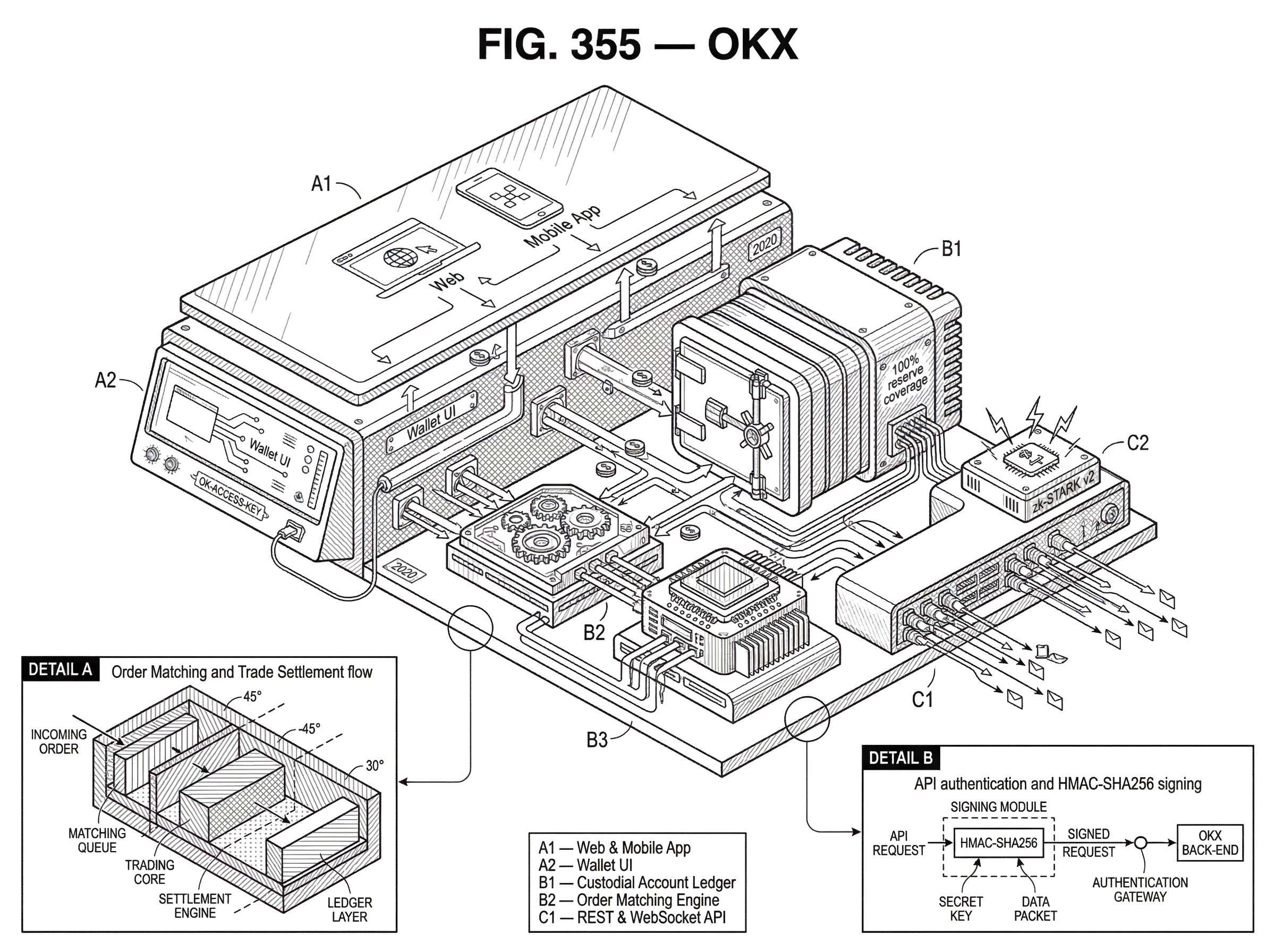
The easiest way to understand OKX is to see it as market infrastructure wrapped in a consumer interface. The visible surface is a website, mobile app, and wallet. Underneath that surface is a system for order matching, custody, transfers, API access, and proof and security tooling. If you know that, most of the product lineup starts to make sense.
How does OKX reduce fragmentation between funding, trading, and custody?
The basic problem is fragmentation. In crypto, buying an asset, storing it, trading it actively, and deploying it into other strategies often happen in different places with different interfaces and risks. Each jump adds friction. You may need to move funds between products, learn new workflows, or trust new counterparties.
OKX tries to reduce that fragmentation by placing several layers of crypto activity into one environment. A user can arrive through a card payment or peer-to-peer purchase, Convert assets quickly, trade spot or derivatives, use bots or APIs, and then move into wallet or earn-style products. For institutions, the same idea appears in more specialized form: OTC liquidity, RFQ workflows, sub-accounts, and historical market data are there to support larger and more customized trading operations.
What makes this useful is not that each product category is unique in isolation. It is that the products are connected. A trader does not have to treat funding, execution, automation, and reporting as unrelated systems. An exchange becomes more valuable when it reduces the number of transitions a user has to manage.
How do OKX’s Convert, Spot, and derivatives fit common user workflows?
| Product | Purpose | Speed | Price control | Leverage | Best for |
|---|---|---|---|---|---|
| Convert | Quick asset swaps | Highest | No order control | None | Fast conversions |
| Spot | Regular buy/sell trading | High | Limit & market orders | None / low | Price-sensitive trades |
| Futures | Directional exposure / hedges | High | Order-book control | Available | Leveraged bets or hedges |
| Options | Volatility & tailored payoff | Moderate | Strategy pricing control | Embedded leverage | Volatility/complex strategies |
At the simplest level, OKX gives users a few different entry points depending on what they are trying to do. Someone who wants speed can use Convert, which OKX describes as quick conversion with zero trading fees and no slippage. That product is not aimed at price discovery in the way an active order-book market is. It is aimed at convenience: “I have asset A, I want asset B, and I do not want to think about order placement.”
That same user can then move into spot trading if price and execution control matter more. Spot is the ordinary exchange market: you buy and sell crypto assets directly. The shift from Convert to Spot shows an important product design principle. OKX separates the need for simplicity from the need for precision rather than forcing every user into the same trading interface.
For users with a stronger view on market direction, OKX also offers futures and options. Its futures markets include perpetual and expiry futures with leverage, while its options offering includes both simpler and more advanced modes. This tells you who the platform is trying to accommodate. It is not only built for someone accumulating a few major assets; it is also built for users managing hedges, directional bets, or volatility exposure.
A concrete example makes the structure clearer. Imagine a user who starts with dollars and wants exposure to bitcoin, but is not sure whether to hold it passively or trade around it. They could fund through card payment or a P2P route, buy BTC directly, and stop there. But if the market becomes volatile, the same user might switch to spot trading for tighter execution, or use futures to express a view with leverage rather than moving all their capital into the underlying asset. If they later decide not to trade actively, they may move idle assets into an earn product instead. What matters is that each step is a different answer to the same underlying question: how should this capital be deployed right now? OKX is built to let that answer change without forcing the user to leave the platform.
When does OKX behave like an institutional or automated trading venue?
A centralized exchange becomes structurally different when it supports not just manual trading but also automation and negotiated execution. OKX advertises trading bots, an Agent Trade Kit for AI-driven strategy automation, Nitro Spreads for futures spreads, and RFQ tools for custom multi-leg and block strategies.
These features exist because not all trading is the same kind of problem. A casual buyer needs access. An active trader needs speed and control. A larger desk may need to avoid the market impact of placing visible orders into a public book. RFQ and spread tools are responses to that last problem. They let more sophisticated users shape execution around strategy rather than around the limitations of a basic exchange screen.
This is also where the API matters. OKX provides REST and WebSocket APIs, which allow external software to read market data, monitor accounts, and place or amend orders. Private REST requests require authentication headers including OK-ACCESS-KEY, OK-ACCESS-SIGN, OK-ACCESS-TIMESTAMP, and OK-ACCESS-PASSPHRASE, with the signature built from a timestamp, request method, path, and body using HMAC-SHA256 and Base64 encoding. That may sound technical, but the practical point is simple: the exchange is designed not only for humans clicking buttons, but for systems making decisions in real time.
The API documentation also reveals the operational shape of the platform. There are connection and request limits, WebSocket keepalive requirements, and sub-account order-rate limits. Those details matter because they show OKX is prepared for high-frequency or programmatic use, but within a controlled capacity model. In other words, automation is supported, but not as an unbounded free-for-all.
How do OKX’s wallet and yield products affect custody and user risk?
| Custody model | Key control | Recovery responsibility | Typical features | Main risk | Best for |
|---|---|---|---|---|---|
| Exchange custody (OKX account) | Platform-held keys | Exchange-managed recovery | Trading, internal transfers, yield | Counterparty / custody risk | Convenience & active trading |
| Web3 wallet (device keys) | Keys stored on device | User seed backups | On-chain dapps, wallet UX, audits | Device loss or compromise | Web3 access with local keys |
| Self-custody (hardware/seed) | User-held keys only | User sole responsibility | Cold storage, full control | Lost seed = irrecoverable | Maximum security & control |
OKX is also presented as a wallet provider, and that changes the meaning of the platform. An exchange account is fundamentally custodial: the platform holds assets and updates balances internally. A wallet shifts the user closer to direct asset control, especially in a Web3 setting.
The wallet side of OKX has its own security posture. Its Web3 security audit collection says multiple wallet components were audited by firms including CertiK and SlowMist. On the wallet side, one especially important claim is that private keys and seed phrases are stored only on users’ devices and are not uploaded to external servers, according to a SlowMist-audited private key module summary. That distinction matters because the risks of a self-managed or device-managed wallet differ from the risks of exchange custody.
OKX also offers Earn, Dual Investment, BTC Yield+, and Loan products. These are attempts to make idle crypto capital productive. Mechanically, they answer a different need than trading. Trading is about changing exposure. Earn and loan products are about extracting return or liquidity from assets you already hold. For some users, that is the natural next step after purchase. For others, it is an entirely different risk profile, because yield generally comes from lending, structured payoff design, or on-chain deployment rather than from simple holding.
What do OKX’s proof-of-reserves and audit artifacts actually show?
A centralized exchange has a trust problem built into its business model. Users can see their own account balances, but they cannot automatically see whether the platform as a whole actually holds enough assets to match customer liabilities. That is why proof-of-reserves matters.
OKX publishes downloadable proof-of-reserves artifacts, including reserve files and liability proof files identified by report IDs and timestamps. Its public materials describe the proof type as zk-STARK v2, and the platform provides help resources for verifying address ownership and account assets using those proof files. The basic idea is to make a traditionally opaque claim (“we hold the assets we say we hold”) more externally checkable.
It is worth being precise here. Proof-of-reserves improves visibility into reserves and liabilities for the covered snapshots and assets, but it is not the same thing as removing trust entirely. The evidence provided shows downloadable files, verification resources, and publicly identified report snapshots. A Hacken case study also says it conducted an independent proof-of-reserves audit for OKX, reporting at least 100% reserve coverage for in-scope assets and describing the use of zk-STARK verification and “Send-to-Self” transactions. But the scope of any such proof matters. What is covered, when the snapshot was taken, and how verification is performed all shape what the proof really tells you.
So the right takeaway is not “trust is solved.” It is narrower and more useful: OKX exposes more evidence than a pure black-box exchange would, and that evidence can be checked to a meaningful degree.
What are the trade-offs of using OKX’s centralized model?
| Dimension | Centralization benefit | Main trade-off | Who benefits |
|---|---|---|---|
| Speed & convenience | Fast onboarding and internal transfers | Reliance on platform operator | Retail users |
| Product breadth | Integrated trading, yield, APIs | Concentrated operational risk | Active traders & institutions |
| Execution & automation | APIs, bots, RFQ, low-latency | Policy limits and rate controls | Algorithmic traders |
| Support & dispute handling | Customer support and services | Platform control over assets | Users wanting help access |
OKX is useful precisely because it is centralized enough to coordinate many services in one place. That same fact creates its main trade-offs.
Centralization gives users speed, convenience, customer support, internal transfers, and products like convert, derivatives, sub-accounts, and RFQ execution. But centralization also means users depend on OKX’s custody, operational decisions, and platform rules. The Terms of Service make that explicit. They describe pooled digital assets, broad rights to suspend accounts or freeze assets, and important limits on liability. Those are not side details. They are part of the mechanism by which a centralized exchange operates at scale.
History also shows why this matters. OKEx, the earlier brand associated with the platform, experienced a 2020 withdrawal suspension when a key holder became unavailable, illustrating how centralized control over custody can become a single point of operational failure. Separately, the supplied evidence includes a DOJ SDNY press release headline stating that OKX pleaded guilty to violating U.S. anti-money-laundering laws and agreed to pay penalties. Even without expanding beyond the supplied headline, that is a reminder that exchange risk is not only technical or market-based. It also includes governance and compliance risk.
This does not make the platform unusable. It means users should understand what problem the platform solves and what cost comes with that solution. OKX reduces complexity by concentrating services. Concentration, in turn, creates dependence.
Conclusion
OKX is best understood as a multi-layer crypto platform: exchange, trading venue, automation stack, wallet environment, and yield interface combined into one ecosystem. Its value comes from reducing the friction between acquiring crypto, trading it, managing it, and deploying it in more advanced ways.
For a beginner, that means a short path from payment rails to crypto ownership. For an active trader, it means deeper market access, derivatives, bots, and APIs. For institutions, it means specialized execution and account tooling. The enduring trade-off is simple enough to remember: OKX is useful because it centralizes crypto activity, and it is risky for the same reason.
What should you look for before choosing a crypto exchange?
Before choosing an exchange, evaluate custody, execution, fees, and supported workflows and then run a short hands-on comparison against Cube Exchange to see differences in practice. Use Cube to mirror one typical task (fund, place the order type you need, and withdraw) so you can compare execution, fees, and custody behavior side-by-side.
- Review the venue’s custody model and proof artifacts: open OKX’s custody, wallet, and proof-of-reserves pages and note whether private keys are held by the platform or stored on-device.
- Compare execution options and limits: list the order types, margin/leverage rules, RFQ or block tools, and API rate limits; then place the same order type on Cube (market or limit) to compare fill behavior.
- Calculate full costs for your use case: collect spot, derivatives, maker/taker, and withdrawal fees on OKX and Cube and compute expected total cost for a representative trade size.
- Run a live Cube test with a small amount: fund Cube, place the same order type you tested on OKX, and withdraw to your wallet to compare execution quality, fees, and withdrawal timing.
Frequently Asked Questions
Convert is a convenience product for instant asset-to-asset swaps described as zero-fee and no-slippage aimed at speed and simplicity, whereas Spot is a traditional order-book market used when execution precision and price discovery matter.
OKX’s Web3 Wallet implementations state that private keys and seed phrases are stored only on users’ devices and not uploaded to external servers, a claim supported by SlowMist-audited summaries of the private-key module.
OKX publishes downloadable proof-of-reserves artifacts and describes the proof type as zk‑STARK v2, and independent reports (e.g., a Hacken case study) describe 100% coverage for in‑scope assets; however, the available materials and help pages show that scope, snapshot timing, and which assets are in‑scope determine what each proof actually demonstrates.
No - proof-of-reserves increases transparency for the specific snapshots and assets covered but does not remove the need for trust; verification depends on what is included in each report, when the snapshot was taken, and the verification method used.
OKX offers RFQ tools, Nitro Spreads for futures spreads, an Agent Trade Kit for automated strategies, and REST/WebSocket APIs so institutions and large traders can request negotiated or multi-leg executions and automate order placement to reduce visible market impact.
API access requires authentication headers (OK-ACCESS-KEY, OK-ACCESS-SIGN, OK-ACCESS-TIMESTAMP, OK-ACCESS-PASSPHRASE) with signatures built by HMAC‑SHA256 and Base64 encoding, and developers must use region-specific API domains, respect per-endpoint rate limits, and note that OKX stores only a salted hash of API passphrases so lost passphrases cannot be recovered.
OKX publishes multiple third‑party security and PoR artifacts (Hacken case study for PoR, CertiK and SlowMist audits for Web3 wallet components), but some public pages do not name an external auditor for every proof artifact and low‑level cryptographic parameters or full asset manifests are not always shown inline, so the degree of independent attestation and detail varies by report.
No - product availability, features, and legal terms differ by jurisdiction; OKX uses different contracting entities and region-specific API domains, and its help pages warn that not all products are available everywhere and that local supplemental terms may apply.
Yes - the public record included in the supplied evidence notes a 2020 withdrawal suspension at OKEx tied to an unavailable key holder, and a Department of Justice SDNY press release headline states OKX pleaded guilty to violating U.S. anti‑money‑laundering laws and agreed to pay penalties; the supplied materials do not include the full legal texts or penalty amounts.
Related reading