What is DOG?
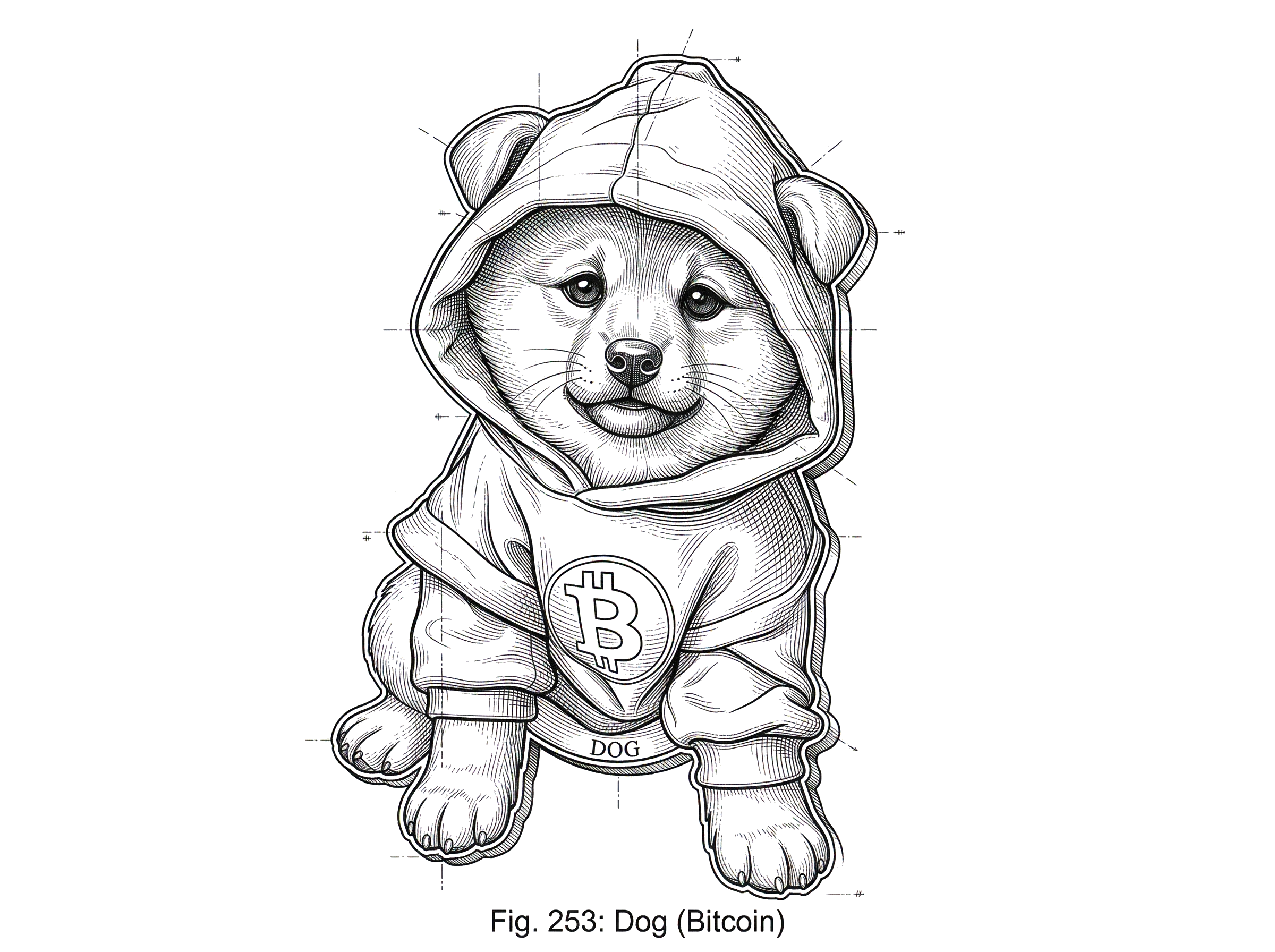
DOG is Dog (Bitcoin), a Bitcoin-native Rune meme token with fixed supply, fair-drop roots, and value driven by provenance, access, and attention.
Introduction
DOG is Dog (Bitcoin), a Bitcoin-native meme token issued through the Runes standard, and that tells you almost everything important about the exposure. It is not a token you need to use a protocol, not a governance token that steers a product, and not a claim on revenues or treasury assets. What you are buying is a scarce, fixed-supply meme asset whose main economic engine is attention: people value it because they want a Bitcoin-native meme coin with recognizable provenance, broad community distribution, and access through exchanges and wallets that support Runes.
That can be easy to misunderstand because DOG sits inside several Bitcoin narratives at once. It is tied to Ordinals culture, to the launch of Runes during the Bitcoin halving, and to the Runestone community that received its initial distribution. Those links explain why traders and holders focus on DOG at all. The token does not become more useful when Bitcoin activity rises; its market role strengthens when Bitcoin-native token culture becomes more legible, easier to access, and more socially important.
What role does DOG serve as a Bitcoin-native meme token?
DOG’s job is simple: it serves as a Bitcoin-native meme asset. In plain English, it is a tradable social object on Bitcoin rather than a productive on-chain instrument. People hold it because they want exposure to the meme-coin narrative that emerged early in the Runes ecosystem, not because they need DOG to pay fees, unlock computation, secure validators, or govern upgrades.
The core point is straightforward. Many tokens have demand because some application forces users to buy them first. DOG does not work that way. Demand comes from identity, culture, speculation, and the desire to own a meme coin that is native to Bitcoin’s newest fungible-token rail rather than to a faster smart-contract chain.
If you buy DOG, you are not underwriting a business model. You are underwriting the persistence of a meme, the staying power of its community, and the market’s willingness to treat “Bitcoin-native meme coin” as a valuable category.
Why does Bitcoin-native provenance matter for DOG?
DOG exists as a Rune, and Runes were designed to fit Bitcoin’s unspent transaction output model, or UTXO model. In Bitcoin, coins are tracked as spendable outputs rather than as balances in a smart contract account. Casey Rodarmor’s Runes proposal was explicitly meant to create fungible tokens that work more cleanly with Bitcoin’s native transaction structure and avoid some of the extra complexity and UTXO clutter associated with earlier Bitcoin token approaches such as BRC-20.
For DOG, the main claim is not superior utility but superior fit with Bitcoin culture and infrastructure. A meme coin on Solana is cheap and fast, but it is not a Bitcoin-native object. DOG’s appeal depends on the idea that some traders and collectors want the meme coin that lives directly on Bitcoin’s emerging fungible-token rail, without smart contracts and without a separate native token for the token layer itself.
There is also a status element to this. DOG is widely described as having launched during the halving-era debut of Runes and as having become Rune #3. For a meme asset, that kind of early placement is not a technical advantage in the usual sense. It is a provenance advantage. Early issuance, recognizable timing, and proximity to a major Bitcoin event give holders a reason to view DOG as canonical rather than interchangeable.
How was DOG initially distributed and why did that create demand?
DOG’s first serious advantage was distribution. Project materials state that the full supply was airdropped to Runestone holders, and multiple sources describe Runestone as a very large Ordinals-linked distribution event that reached over 112,000 early Ordinals adopters, while some secondary sources describe over 75,000 holders receiving DOG. The exact recipient count varies by source, but the broad picture is consistent: DOG did not begin with a presale or a small insider sale. It began with a large community allocation tied to an existing Bitcoin-native audience.
That origin affects demand in two ways. First, it gave DOG immediate social density. Instead of needing to build a holder base from zero, it inherited an audience that already cared about Ordinals, inscriptions, Bitcoin collectibles, and the Runes launch. Second, it created a fairness narrative. The project repeatedly frames DOG as “free and fair,” with no team allocation, no insider carveout, and 100% of supply distributed and circulating at launch.
For a meme token, that story is part of the product. Meme coins often trade on distrust of insiders as much as on humor or branding. If holders believe there is no hidden treasury waiting to sell into rallies, that can make the token easier to rally around. The claim changes what market participants think their counterparty risk is: not the risk that a foundation or core team dumps vested supply, but the more familiar risk that a broad set of holders trades based on sentiment.
What drives current demand for DOG?
DOG demand is downstream of attention, access, and symbolism.
Attention drives meme assets because they do not convert usage into token demand the way utility tokens do. DOG rises in relevance when Bitcoin meme culture is active, when traders want exposure to the Runes theme, or when the token becomes a focal point for the idea that Bitcoin can host its own major meme coin rather than merely importing wrapped versions from elsewhere.
Access shapes whether DOG behaves like a niche collectible or a widely traded asset. Listings on centralized exchanges and support from wallets and marketplaces for Bitcoin-native assets turn it from an obscure rune into something more liquid and easier to own. Exchange support is especially important here because buying and storing Runes directly through self-custody tools can be unfamiliar for users who are comfortable with ordinary exchange balances but not with inscription-aware wallets or marketplace flows.
Symbolism also does real work. DOG is not competing only on price. It competes on meaning. Its pitch is that it is the flagship dog-themed meme asset of the Bitcoin Runes era. That symbolic role can attract both Bitcoin users who want a native meme token and general meme-coin traders looking for a new narrative category.
The flip side is that none of this is mechanically durable. DOG does not have protocol-level sink demand. No user must buy DOG to make Bitcoin transactions, mint Runes, or access Ordinals. If attention fades or a rival Bitcoin meme token captures the narrative, demand can weaken quickly.
Is DOG's supply fixed, and why does tradable float still matter?
DOG’s supply mechanics are unusually easy to summarize compared with many crypto assets. Multiple sources state a total supply of 100,000,000,000 DOG, and project materials say circulating supply is also 100,000,000,000. On that account, DOG does not present the typical token-overhang questions that come with future unlocks, emissions, validator rewards, or treasury releases.
That simplicity changes the kind of risk holders face. You are not primarily worrying about dilution from scheduled unlocks. You are worrying about holder behavior within an already distributed supply. If a meaningful share of the airdropped base is inactive, lost, or committed to holding, tradable float can be tighter than the headline supply suggests. If large recipients are waiting for liquidity windows to sell, actual float can expand in bursts even with no new issuance.
So the important supply question is not “Will more DOG be minted?” The evidence here points to a fixed, fully distributed supply. The more important question is “How much of the existing supply is economically available at a given time?” For meme tokens, active float and the intensity of speculative demand chasing that float often matter more than nominal supply alone.
What are the differences between holding DOG in self-custody vs. on an exchange?
Holding DOG directly is exposure to the token itself, but the path you choose changes the experience.
In self-custody, you are exposed to DOG as a Bitcoin-native Rune. You rely on wallets, marketplaces, and indexers that understand Runes correctly. The upside is direct control over the asset in a Bitcoin-native environment. The downside is more operational complexity: sending to unsupported destinations, misunderstanding wallet support, or confusing Bitcoin-native DOG with lookalike or cross-listed representations can create avoidable risk.
On an exchange, the exposure is economically similar but operationally different. You gain simpler execution and often better liquidity, but you trade direct control for platform dependence. Exchange support is especially important for DOG because Bitcoin-native token rails are newer and less standardized for ordinary users than ERC-20 trading on Ethereum-style networks. Kraken’s listing materials, for example, describe DOG as a Bitcoin Runes asset and warn users to deposit only through supported networks. The warning highlights a real issue with newer token rails: custody details shape outcomes.
Readers who want a simpler route can buy or trade DOG on Cube Exchange, moving from a bank-funded USDC balance or an external crypto deposit into a simple convert flow or spot order from the same account. For first buys, that mainly changes convenience and execution style, not the underlying thesis: you are still buying a meme asset whose value depends on market demand rather than protocol utility.
How does the Runes ecosystem affect DOG's outlook despite its lack of on-chain utility?
DOG does not need utility to hold attention, but it does need a functioning habitat. That habitat is the Bitcoin-native asset stack around Ordinals and Runes: wallets that display balances correctly, marketplaces that let users trade, exchanges that list the token, and enough user interest that Bitcoin-native fungible assets remain a recognizable market category.
The Runes design was pitched as a simpler, more UTXO-aligned alternative to BRC-20. That design choice affects DOG indirectly because easier, cleaner fungible-token infrastructure on Bitcoin lowers friction for all Runes assets. If users, wallets, and exchanges prefer Runes over older Bitcoin token schemes, DOG benefits from being a prominent early Rune.
But this dependency cuts both ways. Secondary reporting on Runes showed a strong early burst of issuance, transactions, and fee generation around launch, followed by a significant cooldown. That does not invalidate DOG, but it reminds you that DOG is exposed to the fortunes of a young ecosystem. If Runes remains a durable standard with better tooling and continued exchange support, DOG keeps its home-field advantage. If Runes activity fades, fragments across competing Bitcoin token schemes, or fails to attract sustained user attention, DOG’s “native to Bitcoin’s fungible-token future” narrative weakens.
What are the main risks of holding DOG (narrative, infrastructure, and category risk)?
Narrative risk comes first because DOG is a meme token. Its price is driven mainly by social coordination, not by discounted future cash flows or locked-in protocol demand. Meme coins can rise very far and fall very fast for the same reason: belief is powerful, but belief is reversible. Reporting around DOG’s early life already reflected that pattern, with sharp rallies and steep drawdowns occurring in short periods.
Infrastructure risk is subtler but still important. DOG depends on Bitcoin-native token tooling that is newer and less universally understood than token rails on smart-contract chains. Wallet support, exchange deposit rules, marketplace liquidity, and indexer correctness all affect the user experience. If the market remains confused about canonical Bitcoin-native DOG versus mirrored or mislabeled representations on other chains or aggregators, that can create discovery and custody problems.
There is also governance ambiguity. Project materials emphasize that DOG has no official team or central controller and is associated with a CC0, public-domain style ethos. That supports the decentralization narrative, but it also means there may be no clear steward responsible for long-term coordination. When a token is pure culture, that can be fine during periods of enthusiasm. During periods of fragmentation or infrastructure disputes, the absence of a central coordinator can become a weakness rather than a strength.
Finally, there is category risk. Runes itself was introduced with explicit ambivalence by its designer, who warned that fungible tokens are overwhelmingly used for scams and memes. DOG may be among the more prominent examples of the format, but it still lives in a category where abuse, imitation, and speculative excess are common.
Conclusion
DOG is best understood as a fixed-supply Bitcoin-native meme token whose value comes from provenance, distribution, and attention rather than utility. You are getting exposure to the success or failure of a social asset: early and visible in the Runes ecosystem, broadly distributed through the Runestone community, and dependent on continued market interest in Bitcoin-native meme culture.
The short version to remember is simple: DOG is not a claim on a business or protocol. It is a bet that the market continues to care about the leading dog-themed meme coin of the Bitcoin Runes era.
How do you buy Dog (Bitcoin)?
Dog (Bitcoin) can be bought on Cube through the same direct spot workflow used for other crypto assets. Fund the account, choose the market or conversion flow, and use the order type that fits the trade you actually want to make.
Cube lets readers move from a bank-funded USDC balance or an external crypto deposit into trading from one account. Cube supports both a simple convert flow for first buys and spot markets with market and limit orders for more active entries.
- Fund your Cube account with fiat or a supported crypto transfer.
- Open the relevant market or conversion flow for Dog (Bitcoin) and check the current price before you place the order.
- Use a market order for immediacy or a limit order if you want tighter price control on the entry.
- Review the estimated fill and fees, submit the order, and confirm the Dog (Bitcoin) position after execution.
Frequently Asked Questions
DOG is a Bitcoin-native meme token issued as a Rune; its value comes from provenance (early Rune placement and halving-era timing), broad airdrop distribution to Runestone holders, and ongoing market attention rather than any protocol utility, revenues, or governance rights.
Project materials and multiple sources list DOG’s total (and circulating) supply as 100,000,000,000 DOG, and the article describes that supply as fixed and fully distributed rather than subject to future minting or emissions.
DOG was airdropped to Runestone holders tied to the Ordinals/Runes launch; sources report the Runestone distribution reached a large early Ordinals audience (figures cited vary - roughly 75,000 to over 112,000 recipients), so initial holders were drawn from that community rather than a small presale.
Runes were designed to align with Bitcoin’s UTXO model as a simpler, Bitcoin‑native fungible‑token approach; that means DOG’s claim is cultural and infrastructural (a better fit with Bitcoin tooling and provenance) rather than providing additional on‑chain utility compared with tokens on smart‑contract chains.
You can hold DOG in self‑custody or on exchanges; self‑custody gives direct ownership in a Bitcoin‑native environment but requires inscription/Runes‑aware wallets and indexers, while exchanges offer simpler trading and liquidity but add platform custody dependence and deposit/network warnings called out in exchange listing materials.
The main risks are narrative risk (price driven by social attention), infrastructure risk (new, less standardized Bitcoin token tooling, wallet/exchange deposit and indexing issues), governance ambiguity (no clear central steward or team), and category risk from scams and speculative excess common to fungible tokens on Bitcoin.
Yes - token identity can be confusing: some market pages and aggregators include references to Solana explorers or non‑Bitcoin contract addresses while the project describes DOG as a Runes (Bitcoin) token, so cross‑listing, metadata mismatches, or mirrored representations have been observed and warrant careful verification on inscription/indexer tools.
Project pages repeatedly claim DOG has "no team" and a CC0, public‑domain ethos, but some sources note Leonidas/Runestone played an introducing role, creating ambiguity between "no central team" and identifiable originators; that ambiguity is part of the infrastructure/governance risk the article highlights.
Even with a fixed headline supply, tradable float depends on holder behavior: lost or long‑term holders can tighten float, while coordinated selling or newly active recipients can expand it; exchange listings, wallet support, and marketplace accessibility further shape how liquid or discoverable DOG actually is.
Related reading