What is Comedian
Learn what Comedian (BAN) is, how this Solana memecoin works, what drives demand, how supply and liquidity shape risk, and what holders own.
Introduction
Comedian (BAN) is a Solana token whose market role is not to pay for computation, secure a network, or govern a protocol, but to turn a cultural reference into a tradable meme asset. That sounds obvious once stated, yet it is the main thing people often miss when they approach tokens through a utility-first lens. With BAN, the exposure is primarily to attention, narrative momentum, exchange distribution, and the willingness of traders to keep pricing that attention.
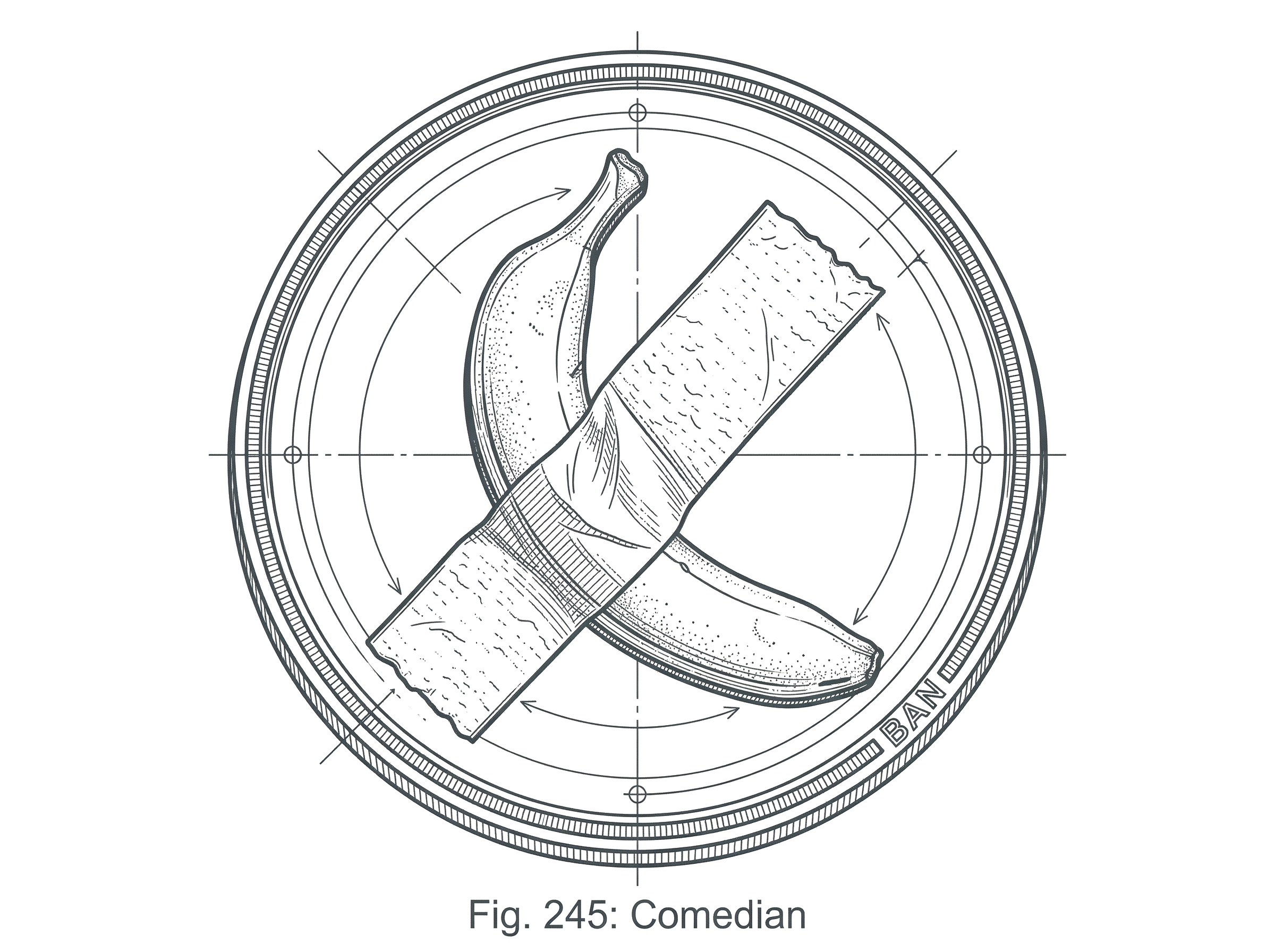
The name points to Maurizio Cattelan’s artwork Comedian, the banana duct-taped to a wall that became a global shorthand for the strange economics of art, status, and spectacle. BAN carries that same joke into crypto. In effect, the token asks the market to price not a cash flow or a productive network right, but a shared piece of internet-and-art culture. That does not make it unreal; it makes the mechanism different. The token’s value comes from people wanting to own, trade, or signal around the meme, not from a requirement that some application consume BAN to function.
The contract address associated with Comedian on Solana is 9PR7nCP9DpcUotnDPVLUBUZKu5WAYkwrCUx9wDnSpump. Available source material consistently places it in the Solana ecosystem and identifies it as an SPL token, meaning a standard Solana-native token that can be held in Solana wallets and traded through Solana venues and centralized exchanges that support it. The same sources also frame it as a memecoin. That framing tells you what sort of demand to expect, what kind of risk you are taking, and what type of analysis is actually useful.
What do you own when you buy Comedian (BAN)?
Buying BAN is buying into a market for social belief rather than a market for mandatory token usage. There is no evidence here that BAN is needed to access a service, pay fees on a protocol, unlock governance rights that control meaningful treasury assets, or earn protocol revenue. The most grounded description available is much simpler: BAN is a Solana-based memecoin inspired by the Comedian artwork and traded because people find that reference compelling, funny, culturally resonant, or potentially profitable.
That distinction changes how the token should be read. If a token powers a lending market or settlement layer, rising product usage can create fairly direct token demand. If a token is a meme asset, usage and demand are less tightly linked. Demand comes from visibility, listings, wallet support, social circulation, and the expectation that other traders will care later. BAN behaves more like a cultural chip than a productive asset.
BAN’s strongest explanatory variable is likely reflexivity. Reflexivity means price moves can change the conditions that created the move. If BAN rises, it becomes more visible on ranking sites, more discussed on social media, more attractive to momentum traders, and more likely to be listed or highlighted by exchanges and wallets. That extra visibility can bring in new buyers, which can reinforce the original rise. The reverse is also true: once attention leaves, there may be little fundamental usage to stabilize demand.
The compression point is that BAN is not a token with a meme attached; it is a meme packaged as a token. If that clicks, most of the rest follows.
Why does the 'Comedian' artwork affect BAN’s market value?
The art reference is the basis for why BAN is legible to the market. The original Comedian artwork became famous because it condensed several ideas into one image: absurdity, media amplification, elite attention, and the uneasy line between value and performance. Crypto memecoins often work through the same mechanism. They gather attention by being easy to recognize, easy to repeat, and easy to argue about.
BAN benefits from that because the underlying symbol is already globally understood. A banana taped to a wall is not an obscure in-joke that requires deep crypto-native context. It is a meme with crossover recognition in art, mainstream media, and internet culture. That broad recognizability lowers the cognitive cost for new buyers. People may not know the tokenomics, but they understand the joke immediately.
Some exchange and market-profile materials explicitly connect renewed attention around the artwork, including a high-profile Sotheby’s sale, to interest in BAN. The settled fact is that BAN is marketed through this art connection. The more contingent implication is that attention around the artwork can spill over into token demand. That spillover is plausible, but it should not be confused with durable utility. Cultural catalysts can create bursts of buying; they do not by themselves create a long-run reason the token must be held.
What drives demand for Comedian (BAN)?
For a token like BAN, demand is best understood through a few linked channels: cultural recognition, trading access, social momentum, and speculative utility.
Cultural recognition explains whether a memecoin can stand out in a crowded field. Most have little hard utility, so differentiation comes from whether the symbol sticks in people’s minds. BAN has a concise ticker, a memorable visual reference, and an art-world association that makes it easier to discuss than a random dog or frog clone with no broader context. That does not guarantee durability, but it improves initial transmissibility.
Trading access shapes how much of that recognition can turn into actual buying. A token that exists only in obscure on-chain pools reaches a narrower audience than one supported by major wallets, explorers, market-data sites, and centralized exchanges. BAN appears on CoinMarketCap, is supported in Solflare’s swap flow, and has been listed on exchanges including Gate and KuCoin according to their product and announcement pages. Every additional access point reduces friction for the next marginal buyer.
Social momentum drives memecoin markets because they are heavily path dependent. Traders often buy not because they intend to use the token, but because they expect attention to broaden. Holder growth, exchange listings, and ranking visibility can all be read by the market as signs that a token is becoming socially legible. Distribution can therefore become a demand driver in its own right.
Speculative utility is the final piece. BAN may have little functional utility, but it still has trading utility. Traders can use it to express a view on meme risk appetite, on Solana retail sentiment, or on whether a culturally sticky token can attract flows faster than a more generic meme competitor. That is a real use case, but it is a market use case, not a product use case.
How do BAN’s supply and float affect price and liquidity?
The evidence available here is thin on primary on-chain supply detail, so this is an area where caution is warranted. CoinMarketCap and KuCoin profile BAN with a circulating supply very close to 1 billion tokens, specifically around 999.96 million BAN. That suggests a meme-token structure where the market quickly prices a mostly distributed or fully visible supply rather than waiting through years of emissions.
The exposure is therefore different from holding an early-stage token with long vesting schedules and recurring unlocks. If supply is already largely in circulation, dilution risk may be lower than in venture-style token launches where new tokens steadily hit the market. But it does not remove supply risk; it changes its form. For a memecoin, the key questions become who holds the tokens, how concentrated the ownership is, what portion of supply is actually liquid, and whether large holders can materially move price.
Some secondary sources note a holder base in the tens of thousands and modest liquidity relative to market capitalization. That is directionally useful. It suggests BAN is not purely held by a tiny handful of wallets, but it also suggests that quoted market value may sit on top of relatively shallow tradable depth. The market cap can look large while real exit liquidity for bigger holders remains limited.
Because the explorer evidence supplied here did not render full on-chain details, claims about burns, treasury control, emissions, or formal allocation splits would be speculative. The safest conclusion is narrower: BAN appears to trade as a standard Solana memecoin with supply near 1 billion, and the dominant supply question is not scheduled inflation so much as concentration and tradable float.
How does being on Solana change how you trade and hold BAN?
BAN is an SPL token on Solana, and that affects exposure in operational ways even if it does not create intrinsic demand. Solana’s low transaction costs and fast settlement make it easier for traders to rotate into and out of meme assets quickly. That lowers the friction of speculation. In a memecoin market, low-friction trading is part of the product.
Being on Solana also means BAN fits into Solana-native wallets and swap infrastructure. Solflare’s guide describes BAN as purchasable by swapping from SOL or other SPL tokens inside the wallet, and it identifies the same contract address used across other sources. Wallet-level support expands the buyer base beyond users comfortable interacting directly with decentralized exchange interfaces.
At the same time, Solana compatibility introduces a common risk: token impersonation. For meme assets especially, fake tickers and copycat contracts are common. The contract address matters more than the name. For BAN, the address repeatedly identified across sources is 9PR7nCP9DpcUotnDPVLUBUZKu5WAYkwrCUx9wDnSpump. Using the wrong contract means you may end up buying a different token that merely looks similar in a wallet or search result.
Wallet vs. exchange: how custody changes your exposure to BAN
The token itself does not change, but your exposure does.
In a self-custody Solana wallet, you directly control the asset on-chain. That gives you the cleanest exposure to BAN as a token. You can move it between wallets, swap it through Solana liquidity venues, and avoid exchange-specific counterparty risk. But you also take on operational risk yourself: seed phrase security, transaction verification, scam-token confusion, and the need to keep some SOL available for network fees.
On a centralized exchange, what you hold is economically linked to BAN but operationally mediated by the exchange. The benefit is convenience. Trading is often simpler, order books may be deeper than on-chain pools, and portfolio management is easier if you already use the venue. The tradeoff is custody and platform dependency. Your ability to deposit, withdraw, or continue trading depends on the exchange’s support, listing status, and operational decisions.
This distinction is especially relevant for memecoins because market access can itself shape price. A wallet-integrated swap route mostly expands crypto-native access. A major exchange listing can expose the token to a broader retail base and can materially change liquidity conditions. BAN’s presence on Gate and KuCoin therefore functions less as a badge of legitimacy than as an expansion of the routes through which speculative demand can arrive.
If a reader wants a practical access rail, they can buy or trade BAN on Cube Exchange, moving from a bank-funded USDC balance or an external crypto deposit into trading from one account, with either a simple convert flow for first buys or spot market and limit orders for more active entries.
What risks could cause Comedian (BAN) to lose value?
The simplest risk is that BAN’s role is easy to describe but hard to defend. Its role is to embody a meme. That works while the meme circulates. It weakens when attention fragments, when traders move to fresher symbols, or when the market stops treating the art reference as novel.
A second risk is competition. Memecoins have very low barriers to entry. If BAN’s differentiation is mainly cultural branding, another token can compete for the same flows with a stronger community, more aggressive exchange distribution, or a more viral launch. Unlike a token that secures an indispensable protocol, BAN does not appear to enjoy strong switching costs.
A third risk is liquidity fragility. Secondary sources suggest nontrivial but still limited liquidity relative to headline market capitalization. In these conditions, price can move sharply on relatively modest net flows. That is attractive during upside runs and punishing during exits. Apparent valuation should not be mistaken for guaranteed realizable value.
There is also governance and disclosure risk in the broad sense. The available material does not establish a robust formal governance system, revenue model, or audited technical framework for BAN. KuCoin’s token profile explicitly shows no auditor listed. That does not prove a flaw in the token contract, but buyers should not assume a level of technical assurance that has not been shown.
Finally, the project website evidence in this packet is noisy and unreliable. The banart.art page captured here is unrelated gambling content rather than a trustworthy project explainer. That does not invalidate the token’s existence, since multiple other sources converge on the Solana address and exchange listings, but it does weaken the informational environment around the asset. Poor official communications can make due diligence harder and scams easier.
How should you value BAN when it lacks traditional fundamentals?
Trying to value BAN like a productive crypto network will likely mislead you. There is no clear evidence here of fee capture, protocol revenue, staking yield, governance rights over meaningful assets, or token sinks tied to application usage. The cleaner framework is to ask whether the meme remains salient enough to attract and retain market attention.
That does not make valuation impossible. It just shifts the variables. The relevant questions become whether BAN is memorable, whether it keeps exchange and wallet access, whether its community remains active, whether its symbol travels well across platforms, and whether Solana meme traders continue to treat it as a liquid cultural asset worth rotating through. These are softer variables than cash flow, but they are not imaginary. They are simply the variables that meme markets actually clear on.
A disciplined holder should therefore avoid confusing popularity with inevitability. BAN can trade well for long stretches without acquiring deeper utility. It can also lose relevance quickly without any technical failure. The token’s market behavior is best understood as socially collateralized: the collateral is ongoing collective attention.
Conclusion
Comedian (BAN) is a Solana memecoin that gives holders exposure to a cultural narrative, not to a token required by a working protocol. Its demand comes from recognition, speculation, exchange access, and social momentum; its main supply risk is concentration and liquidity rather than obvious ongoing inflation. The short version to remember is simple: BAN is a tradable meme about value itself, and owning it means betting that enough other people will keep caring about that joke.
How do you buy Comedian?
Comedian can be bought on Cube through the same direct spot workflow used for other crypto assets. Fund the account, choose the market or conversion flow, and use the order type that fits the trade you actually want to make.
Cube lets readers move from a bank-funded USDC balance or an external crypto deposit into trading from one account. Cube supports both a simple convert flow for first buys and spot markets with market and limit orders for more active entries.
- Fund your Cube account with fiat or a supported crypto transfer.
- Open the relevant market or conversion flow for Comedian and check the current price before you place the order.
- Use a market order for immediacy or a limit order if you want tighter price control on the entry.
- Review the estimated fill and fees, submit the order, and confirm the Comedian position after execution.
Frequently Asked Questions
Related reading