Cube
Trade
Pro
Advanced trading interface with professional tools
Swap
Exchange cryptocurrencies instantly
Bundles
Trade multiple tokens in a single transaction
Algos
Create and manage automated trading strategies
Portfolio
Portfolio
View your cryptocurrency holdings and performance
Orders
Track your open and completed orders
Transactions
View your complete transaction history
Rewards
Rewards Dashboard
View your rewards and claim loot boxes
Blocks Leaderboard
See top traders competing for block rewards
Referral Leaderboard
See top referrers and track referral rankings
Investors
Investor Resources
Browse investor resources and documentation
Presentation (pdf)
Download investor presentation
Settings
Profile
Your profile and account verification
Subaccounts
Separate portfolios across subaccounts
Address Book
Manage saved withdrawal addresses
Multi-Factor Authentication
Add a verification step for sensitive account actions
API Keys
Connect applications to your account
Onramp
Link bank account to buy crypto
Account Recovery
Manage account recovery setup
Learn
News
Read the latest news, announcements, and updates from Cube Exchange
What-Is Guides
Learn about cryptocurrencies
FAQ
Frequently asked questions about Cube Exchange
Fees
View our transparent fee schedule and pricing information
Security
Learn more about Cube Exchange security
About
About
Learn more about Cube Exchange
Legal
Legal information, terms of service, privacy policy, and risk disclosures
EN
Select Language
EN
English
ES
Español
ID
Bahasa Indonesia
JA
日本語
PL
Polski
PT
Português
RU
Россия
TH
แบบไทย
TR
Türkçe
UK
Україна
VI
Tiếng Việt
ZH-CN
简体中文
ZH-TW
繁體中文
Light
Dark
System
Sign In
/
Markets
/
Trading
/
Markets: Trading
#DERIVATIVES
#ORDER TYPES
What is Put/Call Open Interest Ratio?
The put/call open interest ratio looks simple: puts outstanding divided by calls outstanding. What makes it useful is not the arithmetic, but the distinction between *positions still on the books* and *today’s trading flow* — a difference that changes how traders read sentiment, hedging, and crowding.
Mar 22, 2026
•
23 min read
#DERIVATIVES
What is Options Skew?
Options skew is the reason two options on the same asset and expiration can imply very different volatilities. It exists because markets do not price upside and downside risk symmetrically, and that asymmetry changes hedging costs, volatility signals, and tail-risk interpretation.
Mar 22, 2026
•
21 min read
#DERIVATIVES
What is Initial Margin?
Initial margin looks like idle collateral until markets move fast and a counterparty fails. Then it becomes the buffer that buys time: enough prefunded value to absorb likely losses while a position is closed out or replaced.
Mar 22, 2026
•
22 min read
#DERIVATIVES
What Is Convexity? How Curvature Shapes Bonds, Options, and Hedging
Convexity is what makes derivative risk change as markets move. It explains why options can accelerate gains and losses, why bond duration stops being enough for large rate moves, and why dealer hedging can sometimes calm markets and sometimes amplify them.
Mar 22, 2026
•
19 min read
#DERIVATIVES
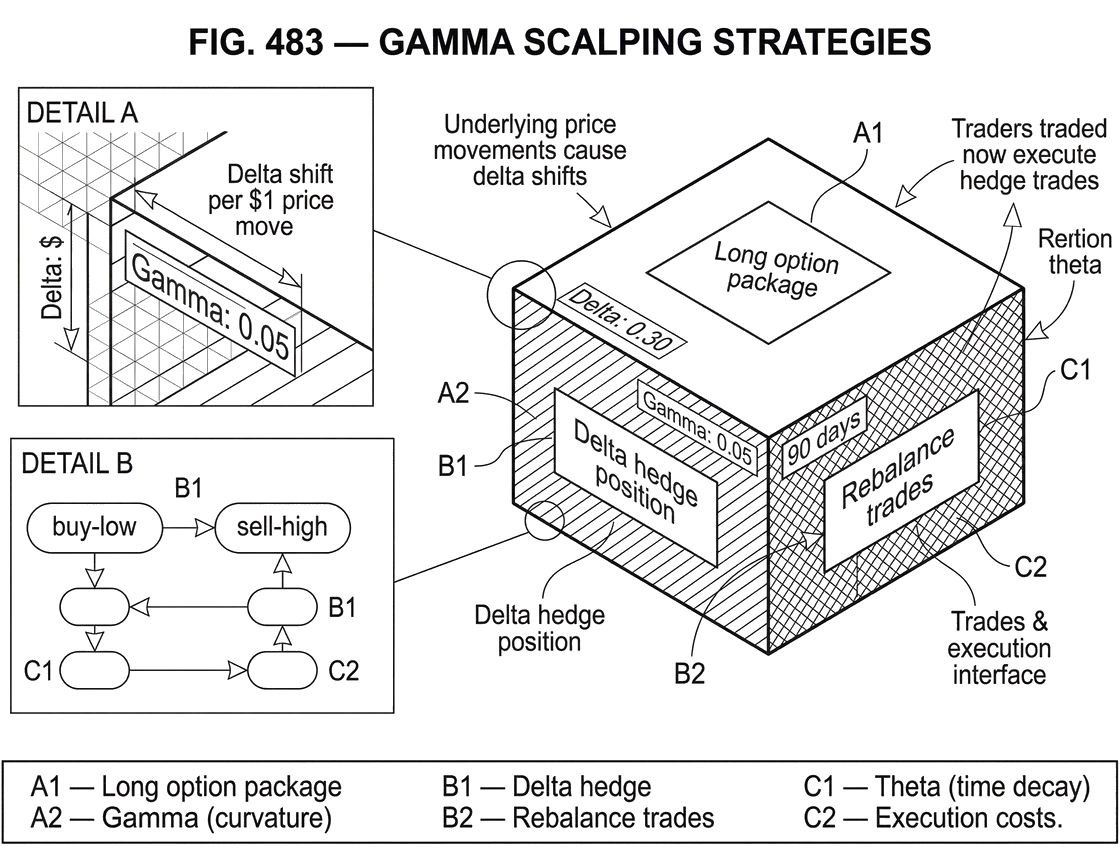
What Is a Gamma Squeeze?
A gamma squeeze is not just a fast rally with a dramatic name. It is a specific feedback loop: options dealers hedge call exposure by buying the underlying as price rises, and that hedging can itself push price higher when gamma is large.
Mar 22, 2026
•
20 min read
#DERIVATIVES
What Is Slippage?
Slippage is the gap between the price you thought you would get and the price you actually received. That sounds like a small execution detail, but it is really where liquidity, market structure, latency, and MEV all become visible in a single number.
Mar 21, 2026
•
23 min read
#TRADING
What is Spot Trading?
Spot trading is the simplest way to trade an asset: you pay now, you get the asset now, and your profit or loss comes from what that asset is worth when you later sell it. That simplicity is exactly why spot markets sit underneath so much of trading, from exchange order books to on-chain swaps.
Mar 21, 2026
•
23 min read
#TRADING
What is a VWAP Order?
A VWAP order tries to solve a simple but difficult problem: how do you buy or sell a large position without pushing the market too far away from you? Instead of sending one big order, it spreads trading through the day in proportion to market volume, aiming to finish near the market’s volume-weighted average price.
Mar 21, 2026
•
23 min read
#ORDER TYPES
What is RFQ (Request for Quote)?
RFQ, or Request for Quote, exists for a simple reason: sometimes the best way to trade is not to expose your full order to the whole market. Instead, a buyer or seller asks selected liquidity providers for executable prices, compares the responses, and chooses whether to trade.
Mar 21, 2026
•
26 min read
#TRADING
What Is a Take-Profit Order?
A take-profit order sounds simple: close the trade when price reaches your target. The important part is what happens next, because on some venues the trigger sends a market order, while on others it places a limit order — and that difference determines whether you get certainty of exit, certainty of price, or neither.
Mar 21, 2026
•
25 min read
#ORDER TYPES
What is a Trailing Stop Order?
A trailing stop order tries to solve a simple problem: how do you protect a gain without choosing, in advance, the exact price where the trend must end? It moves the stop with favorable price movement, but that convenience comes with mechanical tradeoffs around triggers, gaps, and execution.
Mar 21, 2026
•
23 min read
#ORDER TYPES
What is a TWAP Order?
A TWAP order solves a simple but costly problem: how to trade a large position without revealing all of it at once to the market. Instead of sending one big order, it breaks the trade into smaller pieces and releases them over a fixed time window, trading predictability for a different set of execution risks.
Mar 21, 2026
•
23 min read
#ORDER TYPES
1
2
3
4