What is Bitfinex?
Learn what Bitfinex is, how its exchange, margin, funding, and API systems work, and why active crypto traders use it.
Introduction
Bitfinex is a centralized cryptocurrency exchange built for traders who want a market venue, not just a brokerage app. That distinction matters. A brokerage mainly lets you buy or sell against the platform’s own interface; an exchange tries to gather many buyers and sellers into shared markets, where price is discovered through an order book and where different needs (spot trading, leverage, funding, and automation) can meet on the same system.
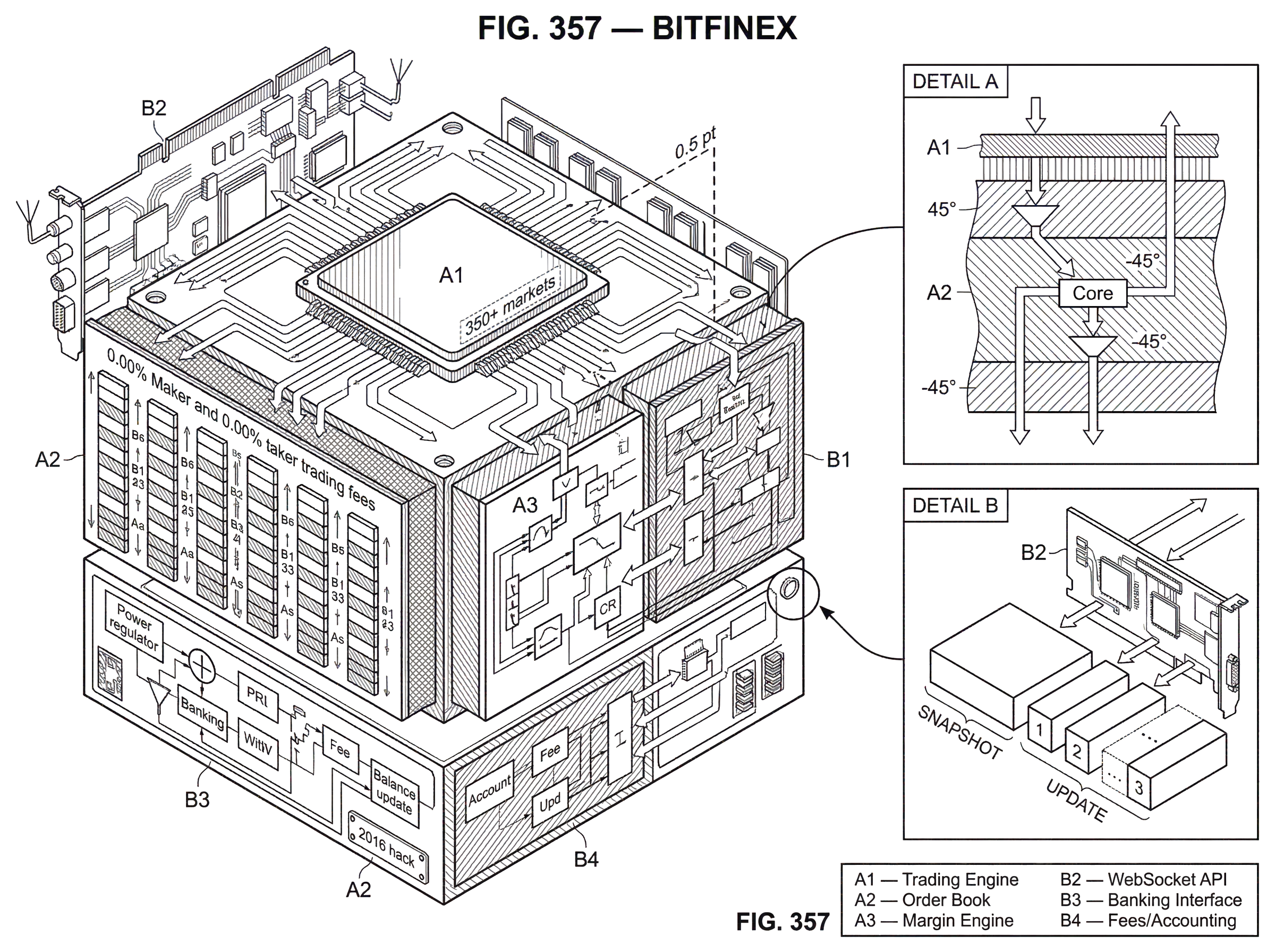
Bitfinex presents itself as “The Original Bitcoin Exchange,” and its product design reflects that older exchange-first model. It is not centered on making crypto feel invisible. It is centered on giving users a place to trade across 350+ markets, use advanced order routing and margin, access lending and borrowing, and connect directly through APIs and WebSockets. More recently, Bitfinex has made 0.00% maker and 0.00% taker trading fees a permanent default across spot, margin, derivatives, securities, and OTC trading, which changes the cost equation but does not remove every other platform cost.
The simplest way to understand Bitfinex is this: it is for users who care about market structure, execution, and flexibility. If you mainly want a minimal app for occasional purchases, much of Bitfinex will feel like extra machinery. If you want to place specific orders, borrow against positions, lend capital into a funding market, or run a trading system through an API, that machinery is the point.
How does Bitfinex combine spot, margin, lending, and derivatives in one venue?
| Option | Fragmentation | Transfers & ops | Liquidity & pricing | Best for |
|---|---|---|---|---|
| Integrated venue (Bitfinex) | Low | Fewer transfers | Consolidated liquidity | Multi-role traders |
| Fragmented platforms | High | More transfers | Split liquidity | Specialised users |
Most active traders do not just need a button that says buy or sell. They need a place where several different functions line up. They may want to hold assets outright in spot markets, open leveraged positions in margin markets, source financing for those positions, hedge with derivatives, or trade large blocks away from the public book. If those functions live on separate platforms, users face fragmentation: more transfers, more operational risk, and less clarity about where liquidity actually sits.
Bitfinex is useful because it tries to bring these roles together. On the public product side, that includes spot trading, margin trading, lending, borrowing, staking, perpetuals, and access to futures and options through integrations, plus tokenised securities through separate Bitfinex Securities entities. The important point is not the inventory by itself. It is that Bitfinex is designed as a venue where a trader, a borrower, a lender, and an algorithm can all participate in connected markets.
That connection shows up most clearly in margin. Leveraged trading is not magic; someone has to supply the capital being borrowed. Bitfinex’s funding markets let lenders provide assets and earn fees from active funding contracts, while borrowers pay interest on the funds they use. In other words, margin on Bitfinex is not only an exchange feature. It is also a marketplace for financing risk.
How does trading on Bitfinex work; maker vs taker, zero-fee trading, and other costs?
| Cost type | Free? | Payer | When charged | Typical example |
|---|---|---|---|---|
| Trading fees | Yes | None | On trade execution | 0.00% maker/taker |
| Borrowing interest | No | Borrower | While funds are borrowed | Variable interest rate |
| Margin funding provider charge | No | Lender (platform takes cut) | When fees collected | 15% (18% hidden offer) |
| Withdrawals / banking | No | User | On withdrawal | Varies, up to 1.00% or fixed minimums |
At the user-facing level, Bitfinex works like an order-book exchange. You select a market such as a crypto pair, view live bids and asks, and place an order against the book. If your order adds liquidity rather than immediately matching, you are acting as a maker. If it removes resting liquidity, you are acting as a taker. On Bitfinex, the notable change is that both of those trading fees are now 0.00% across the covered products.
That does not mean every activity on the platform is free. It means the exchange is no longer charging the standard maker-taker fee on trades themselves. Other fees still exist where the mechanism is different. Borrowers still pay interest for financing. Margin funding providers still pay a platform charge on fees they collect. Withdrawals and certain banking actions can still carry costs. Bitfinex states that these other fees remain unchanged, so the right way to think about the platform is zero trading fees, not zero platform costs.
A concrete example makes the structure clearer. Imagine a trader who wants exposure to bitcoin without paying the full notional amount upfront. On Bitfinex, that trader can enter a margin position. To support it, the platform sources funding from lenders in the funding market. The trader pays interest on the borrowed funds, and that interest accrues with timing rules that matter: Bitfinex says borrowers are generally charged in one-second increments, though manually returned borrowed funding can trigger a minimum of one hour of interest. What looks from the outside like a simple leveraged trade is, underneath, a coupled system of matching, collateral, and financing.
The same logic applies to Bitfinex’s high-leverage offering. The homepage advertises up to 100x leverage, which is attractive to traders who care about capital efficiency and short-term directional bets. But leverage is not just more upside. It compresses the distance between a normal price move and liquidation risk. So the product naturally fits experienced users who understand position sizing and margin mechanics better than casual users who only want asset exposure.
Why use Bitfinex’s API and WebSocket; best practices for automated trading
| API | Best use | Latency | Data model | Connection limits |
|---|---|---|---|---|
| REST | One-off requests, history | Higher | Full responses | Rate-limited |
| WebSocket | Real-time trading and updates | Low | Snapshot plus incremental updates | Auth 5/15s, Public 20/min |
| FIX | Institutional low-latency access | Low | Order-level messages | By arrangement |
Some exchanges treat APIs as secondary infrastructure around a website. Bitfinex’s documentation suggests the opposite emphasis: the API is broad enough that, in its own words, it should be possible to rebuild almost the entire platform on top of it. That tells you something important about who Bitfinex is built for. It is not only for manual traders looking at charts. It is also for firms, developers, and systematic traders who want direct, programmable access.
Here the platform’s speed-first design matters. Bitfinex recommends using its WebSocket API wherever possible instead of leaning on REST for everything. The reason is straightforward: REST is better for one-off requests and historical queries, but real trading systems need a continuous stream of updates. Bitfinex sends an initial snapshot over WebSocket and expects clients to maintain local state by applying incremental updates as they arrive. That model reduces repeated full-data transfers and lowers latency, but it also pushes more responsibility onto the user’s software.
This is a good example of Bitfinex’s broader trade-off. The platform gives users more direct control, but that control assumes competence. The API docs are explicit about details that casual platforms often hide: connection limits, message formats, numeric error codes, symbol conventions like trading pairs prefixed with t and funding currencies prefixed with f, timestamps in Unix milliseconds, and precision rules for prices and amounts. Prices are limited to up to five significant digits and up to eight decimals, while amounts are rounded to eight decimals. Those are not cosmetic implementation notes. They are the boundary conditions that determine whether an automated strategy behaves correctly.
Which Bitfinex products are native and which are offered via integrations or separate entities?
A smart reader could easily assume that every market and instrument on Bitfinex is native to the same exchange stack. That is not quite right. Bitfinex does offer a broad set of products, but some of them are available through integrations or separate entities rather than through the core exchange alone.
That matters because “available on Bitfinex” can mean different things operationally. Futures are described as available through an integration with Thalex Digital Trading Platform Ltd. Tokenised securities are offered through Bitfinex Securities entities in specified jurisdictions, including Astana and El Salvador. So the user experience may feel unified at the front end, but the underlying operator, terms, and availability can vary by product and location.
This is not unusual in crypto platforms that expand beyond spot trading. But it is an important distinction if you are trying to understand what Bitfinex fundamentally is. At its core, Bitfinex is a centralized exchange and trading venue. Around that core, it layers adjacent products that broaden what users can do without requiring every feature to be operated in exactly the same way.
What uptime, transparency, and operational risks should you expect from Bitfinex?
Bitfinex advertises 99.9% uptime, and it maintains a public status page covering core components such as the web server, trading engine, backend workers, WebSockets, and FIX gateways. For active traders and API users, this matters more than marketing language. The real question is not whether an exchange claims reliability, but whether it exposes operational state, incident history, and channels for updates. Bitfinex does provide a status page, help center, and developer documentation, which is the basic infrastructure serious users expect.
At the same time, any explanation of Bitfinex that ignores its history would be incomplete. Bitfinex is one of the longer-running names in crypto, and that longevity includes major incidents and controversies. The best-known operational event was the 2016 hack, in which roughly 120,000 bitcoin were stolen. The exchange’s later recovery and reimbursement path became part of its history, but the incident remains a reminder of the custody risk inherent in centralized venues. There have also been regulatory and governance controversies tied to Bitfinex and affiliated entities, especially around liquidity, banking relationships, and disclosures.
Those historical facts do not tell you that the platform is unusable. They tell you what kind of risk model applies. When you use Bitfinex, you are not interacting with a trustless protocol that settles purely on-chain under fixed public rules. You are using a company-operated market infrastructure. The upside is speed, product breadth, and integrated services. The cost is exposure to operational, custody, entity, and jurisdictional risk.
Who should use Bitfinex; use cases and who it’s best for
Bitfinex makes the most sense for users who want an exchange as a trading environment rather than as a simple retail purchase funnel. Zero trading fees make the venue cheaper to access than many traditional maker-taker exchanges, especially for active traders. The funding market, margin system, APIs, and advanced connectivity make it especially relevant to professional or semi-professional users who care about execution and automation.
That same design also explains why Bitfinex is not the universal default for everyone. The platform assumes users can navigate market depth, financing costs, leverage risk, precision constraints, and product differences across entities and integrations. In return, it gives them more control over how they trade and how they connect to the market.
Conclusion
Bitfinex is best understood as a full-featured centralized exchange for active crypto market participants. Its core value is not any single feature, but the way it combines order-book trading, margin, funding, APIs, and broad market access into one venue; now with zero maker and taker trading fees across its main trading products. If you remember one thing, remember this: Bitfinex is built less like a beginner app and more like market infrastructure for people who want to trade, finance, and automate in the same place.
What should you look for before choosing a crypto exchange?
Before choosing an exchange, compare custody, fees, execution, and supported workflows; then run a quick Cube-centered test to see how the platforms differ in practice. Cube Exchange supports the same core workflows (fund, trade, withdraw) and is a useful baseline for custody model and execution comparisons.
- Verify the custody model: read the venue’s custody statement and confirm whether it holds private keys custodially or uses MPC/threshold signing like Cube Exchange.
- Compare fees and execution options: open both fee schedules and test a limit order on each venue to measure fill, slippage, and any maker/taker or funding charges.
- Test API and connectivity if you automate: review API docs, check WebSocket support and rate limits, then generate a test API key and run a small subscribe/order workflow.
- Validate product and entity coverage: confirm which products (margin, futures, tokenised securities) are native versus provided via integrations or separate legal entities and note any jurisdictional exclusions compared with Cube Exchange.
Frequently Asked Questions
Bitfinex advertises 0.00% maker and taker fees across its core spot, margin, derivatives, securities, and OTC markets, but the public materials link to a details page and do not unequivocally list jurisdictional exclusions or conditional limits - in short, zero trading fees are the headline, but eligibility and edge cases are not fully documented on the homepage.
Zero trading fees remove the standard maker‑taker charge on executed trades, but Bitfinex still collects other platform revenue: borrowers pay interest, margin funding providers face platform charges on fees they collect, withdrawals and certain banking actions can carry fees, and special services (e.g., token recovery) are charged; the company also references other alternative revenue streams but provides little public detail.
Margin positions are financed via Bitfinex’s funding markets where lenders supply assets and borrowers pay interest; borrowers are generally charged interest in one‑second increments, though manually returned borrowed funds can trigger a minimum of one hour of interest, and lenders’ earnings are subject to platform charges.
For real‑time trading systems Bitfinex recommends using the WebSocket API: it sends an initial snapshot then incremental updates and expects clients to maintain local state; the docs also publish operational limits and numeric rules you must respect, such as per‑connection/channel and connection‑rate limits and precision/rounding constraints on prices and amounts.
Not all instruments are operated by the same legal entity: some products are provided through integrations or separate Bitfinex entities (for example, futures via Thalex Digital Trading Platform Ltd. and tokenised securities through Bitfinex Securities in specified jurisdictions), so availability, operator terms, and legal treatment can vary by product and location.
Bitfinex is a centralized, company‑operated exchange with a history that includes the 2016 hack (~120,000 BTC stolen) and subsequent recovery/reimbursement actions, as well as documented controversies over banking relationships and third‑party payment processors; those events underline the custody, operational, and jurisdictional risks inherent in using a centralized venue.
High leverage (Bitfinex advertises up to 100x) increases capital efficiency but also greatly reduces the price movement required to trigger liquidation, so these products are primarily intended for experienced traders who understand position sizing, margin mechanics, and liquidation risk.
Bitfinex publishes an uptime claim (e.g., 99.9%) and maintains a public status page showing core components, but the status page covers only listed components and recent incidents and may not constitute a complete historical archive or reveal unlisted third‑party dependencies.
Bitfinex offers LEO‑based fee discounts for certain products (for example, a P2P lending fee reduction tied to LEO holdings is described as a 0.05% reduction per 10,000 USDT in LEO), but the discount excludes certain LEO token variants and other product exclusions apply, so you should consult the fee documentation for exact eligibility and limits.
Related reading