Cube
Trade
Pro
Advanced trading interface with professional tools
Swap
Exchange cryptocurrencies instantly
Bundles
Trade multiple tokens in a single transaction
Algos
Create and manage automated trading strategies
Portfolio
Portfolio
View your cryptocurrency holdings and performance
Orders
Track your open and completed orders
Transactions
View your complete transaction history
Rewards
Rewards Dashboard
View your rewards and claim loot boxes
Blocks Leaderboard
See top traders competing for block rewards
Referral Leaderboard
See top referrers and track referral rankings
Investors
Investor Resources
Browse investor resources and documentation
Presentation (pdf)
Download investor presentation
Settings
Profile
Your profile and account verification
Subaccounts
Separate portfolios across subaccounts
Address Book
Manage saved withdrawal addresses
Multi-Factor Authentication
Add a verification step for sensitive account actions
API Keys
Connect applications to your account
Onramp
Link bank account to buy crypto
Account Recovery
Manage account recovery setup
Learn
News
Read the latest news, announcements, and updates from Cube Exchange
What-Is Guides
Learn about cryptocurrencies
FAQ
Frequently asked questions about Cube Exchange
Fees
View our transparent fee schedule and pricing information
Security
Learn more about Cube Exchange security
About
About
Learn more about Cube Exchange
Legal
Legal information, terms of service, privacy policy, and risk disclosures
EN
Select Language
EN
English
ES
Español
ID
Bahasa Indonesia
JA
日本語
PL
Polski
PT
Português
RU
Россия
TH
แบบไทย
TR
Türkçe
UK
Україна
VI
Tiếng Việt
ZH-CN
简体中文
ZH-TW
繁體中文
Light
Dark
System
Sign In
/
Protocols
/
Protocols
Layer 1 and Layer 2 networks, DeFi protocols, and the infrastructure powering decentralized apps.
#BITCOIN
#ETHEREUM
#EXCHANGES
#LENDING
#NETWORKS
#ORACLES
#SOLANA
#STABLECOINS
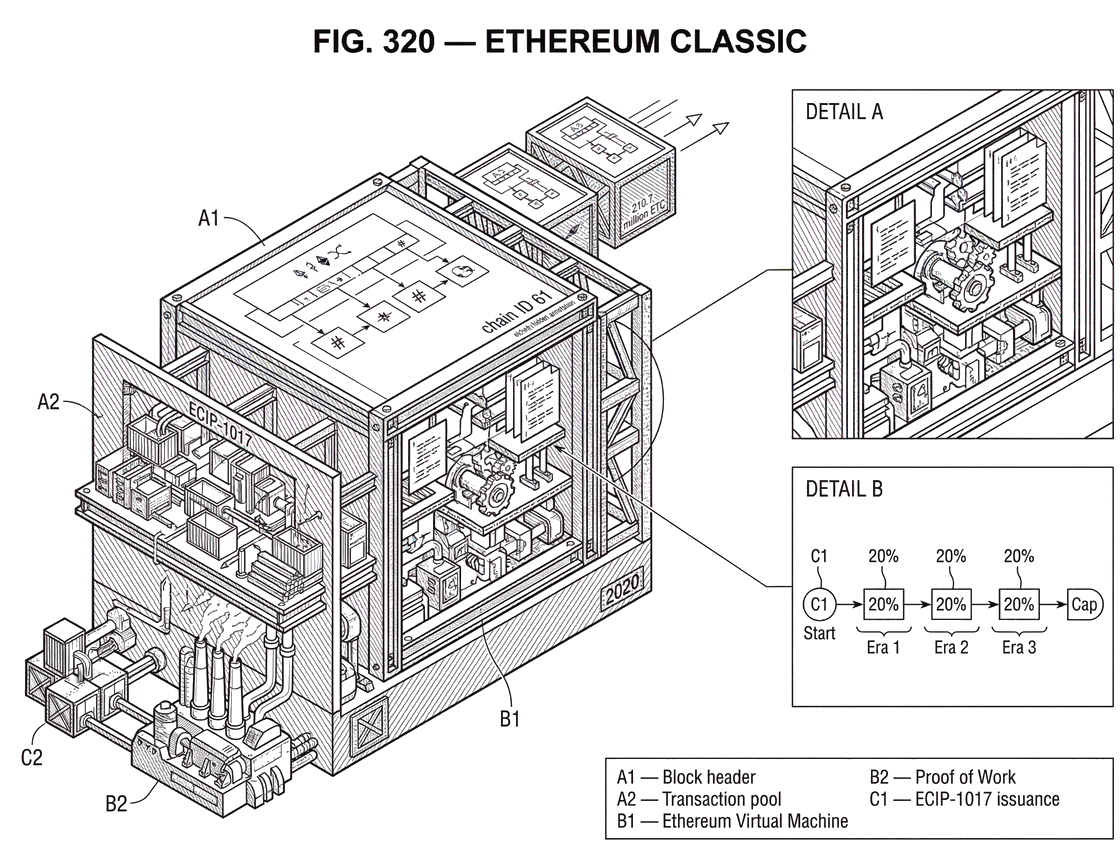
What is Ethereum Classic?
Ethereum Classic is the chain that kept the original Ethereum history after the DAO fork and built its identity around a hard claim: if a blockchain can be rewritten for one crisis, its neutrality has changed. That choice shaped everything else — its governance, proof-of-work security model, monetary policy, and developer story.
Mar 21, 2026
•
24 min read
#NETWORKS
What is Cardano?
Cardano is a proof-of-stake blockchain built around a distinctive idea: keep the local predictability of UTXOs while making room for smart contracts and native assets. That design choice shapes almost everything else, from its Ouroboros consensus to Plutus scripts, stake pools, and scaling work like Hydra.
Mar 21, 2026
•
25 min read
#NETWORKS
What is Chiliz?
Chiliz is a blockchain built around a very specific idea: turning sports fandom into an on-chain economy. Its importance is not that it tries to be a general-purpose network, but that it narrows the problem to fan tokens, club engagement, and the financial rails around them.
Mar 21, 2026
•
25 min read
#NETWORKS
What Is Cosmos?
Cosmos matters because it treats blockchains less like apps on one shared computer and more like independent networks that can still talk to each other. Its core bet is simple: let chains keep their own rules, then connect them with a protocol for verified cross-chain communication.
Mar 21, 2026
•
24 min read
#NETWORKS
What Is BNB Chain?
BNB Chain matters because it tries to make Ethereum-style applications cheaper and faster without abandoning the tools developers already know. The interesting part is the tradeoff: it gets that speed by using a much smaller validator set and a more opinionated architecture than Ethereum.
Mar 21, 2026
•
23 min read
#NETWORKS
What is Bittensor?
Bittensor tries to turn machine intelligence into a market: models and other digital-service providers compete, validators score their output, and the network routes TAO rewards toward what the market judges useful. The interesting part is not just that it pays for AI work, but how it tries to make evaluation itself part of the protocol.
Mar 21, 2026
•
26 min read
#NETWORKS
What is Canton Network?
Canton Network matters because it tries to combine two things blockchains usually force apart: shared state across many institutions and strict privacy about who sees what. Instead of making every node process every transaction, Canton partitions state, lets parties verify only the parts they need, and uses shared synchronizers to coordinate atomic workflows across applications.
Mar 21, 2026
•
27 min read
#NETWORKS
What is Avalanche?
Avalanche matters because it tries to solve an old blockchain tradeoff in a different way: not by picking a leader faster, and not by waiting for longer chains, but by letting validators repeatedly sample each other until the network snaps into agreement. That design gives Avalanche fast, probabilistic finality and a network architecture built around multiple specialized chains.
Mar 21, 2026
•
26 min read
#NETWORKS
What is Bitcoin Cash?
Bitcoin Cash matters because it makes a very specific bet about cryptocurrency: that a blockchain should work as everyday cash, with fast settlement, simple transfers, and fees low enough to ignore. To understand Bitcoin Cash, the key is not just that it forked from Bitcoin, but why it chose different tradeoffs around scaling and payments.
Mar 21, 2026
•
22 min read
#NETWORKS
What Is Aptos?
Aptos is a Layer 1 blockchain built around a simple bet: blockchains feel slow and fragile partly because too much work is forced through one narrow path. Its design combines the Move language, parallel execution, and a pipelined validator architecture to make execution safer and the network more responsive.
Mar 21, 2026
•
25 min read
#NETWORKS
What is Algorand?
Algorand is a blockchain built around a specific bet: you can get fast finality and low computation without giving up open participation. Its design combines stake-weighted selection, private randomness, and Byzantine agreement so blocks are confirmed quickly and, with overwhelming probability, do not fork.
Mar 21, 2026
•
23 min read
#NETWORKS
What is Kamino?
Kamino matters because it turns several common Solana DeFi tasks — lending, borrowing, and more structured yield strategies — into one connected system. Its core trick is simple: pooled lending markets on one side, and vaults and APIs on top that make those markets easier to use directly or embed into other products.
Mar 21, 2026
•
15 min read
#LENDING
1
2
3
4
5
6
7
8
9
10
11