What is RSIC?
Learn what RSIC•GENESIS•RUNE (RSIC) is, how its fixed supply and Rune mechanics work, and what drives demand, custody risk, and trading exposure.
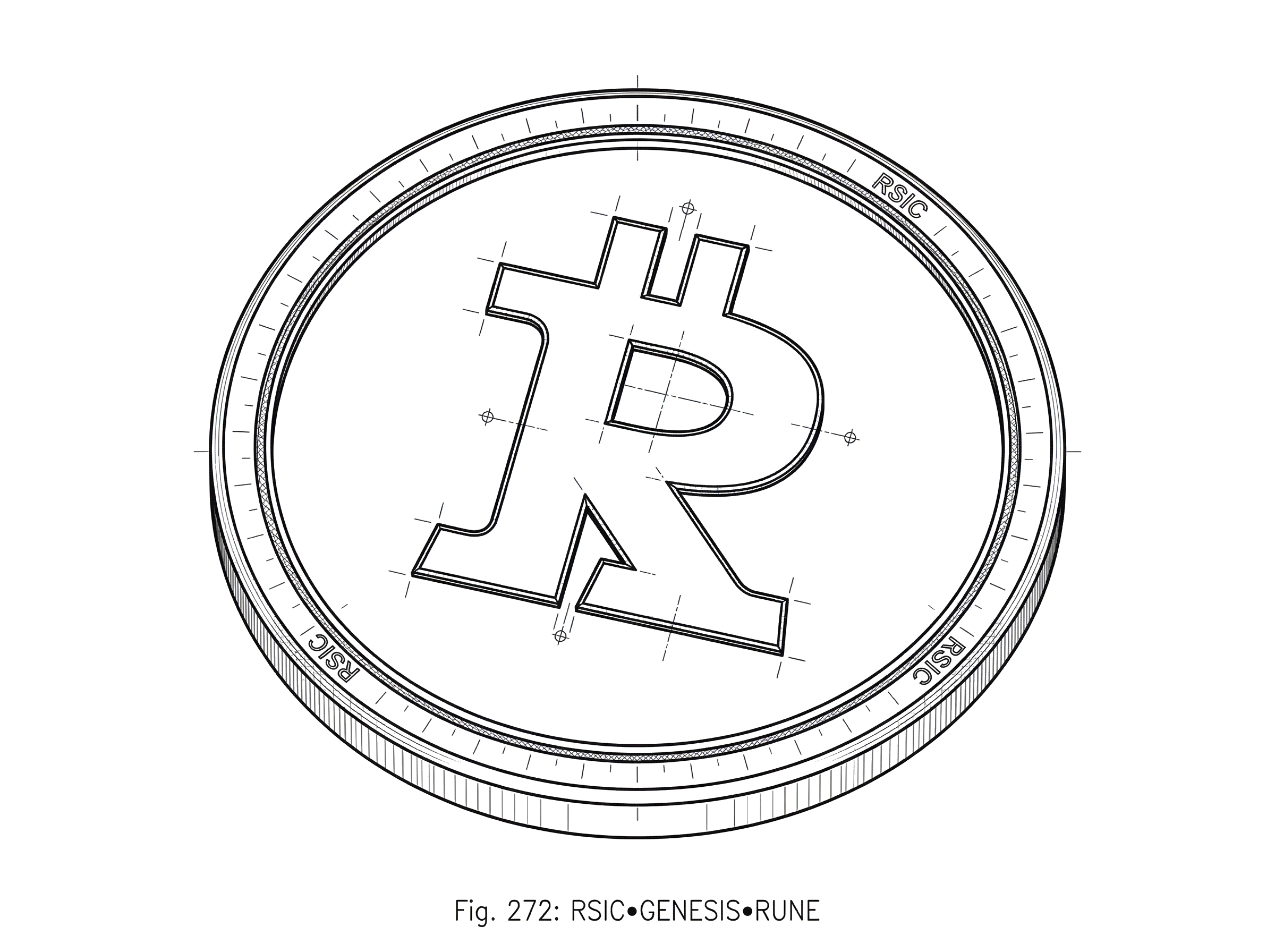
Introduction
RSIC•GENESIS•RUNE (RSIC) is a Bitcoin Rune whose value proposition is easy to misread if you start from the ticker instead of the mechanism. What traders actually get exposure to is not a fee claim on Bitcoin, not protocol governance, and not a token required to use the Runes standard. They are buying a fixed-supply asset on Bitcoin whose identity comes from being one of the earliest prominent Runes and from how it was distributed through the earlier RSIC inscription system.
The Runes protocol is the transport layer: it defines how fungible tokens are etched, tracked, transferred, and, if malformed, accidentally burned. RSIC is a particular asset within that system. Its market depends less on mandatory utility than on provenance, early-mover status, recognizability inside the Ordinals and Runes ecosystems, and the willingness of holders and exchanges to treat that status as worth trading.
The simplest way to make RSIC click is this: the original RSIC inscriptions were designed as a way to allocate a future Rune, and RSIC•GENESIS•RUNE is that Rune in finished form. Once you see that, the rest follows. The token’s supply behavior, holder expectations, and risks all come from the transition from an inscription-based allocation game into an etched Bitcoin-native fungible token.
How did RSIC inscriptions become the RSIC•GENESIS•RUNE token?
The primary project whitepaper described RSIC as a “peer-to-peer rune allocation system.” In that design, RSICs were not themselves the final fungible token. They were inscriptions meant to “mine” or allocate a future bag of runes after the Runes protocol launched on Bitcoin. The whitepaper says 21,000 RSIC inscriptions were manufactured and distributed free to the Ordinals community.
That original setup explains much of the token’s market identity. People often treat RSIC as if it were simply another meme coin minted on Bitcoin, but the more precise description is that it emerged from a pre-launch allocation framework aimed at early Ordinals participants. Holders had to activate an RSIC inscription by transferring it once, even to their own address, and then activated RSICs would allocate runes to the holding address every Bitcoin block until the supply was fully allocated. The early object people held was an inscription that represented a claim on future distribution, not the final fungible Rune itself.
The whitepaper also laid out how allocations were supposed to work. Rewards were designed to stack with the number of RSICs held, with no per-address limit, and emissions were split across flat, boosted, random, and halvening-style categories. That structure created a game around holding, activating, and concentrating RSIC inscriptions before the Rune existed.
When the Runes protocol activated at Bitcoin block 840,000, the final token could be etched on-chain as a Rune. The Ordinals rune record for RSIC•GENESIS•RUNE shows exactly that: it was etched at block 840,000, transaction 28, with genesis timestamp 2024-04-20 00:09:27 UTC. The token is listed as rune number 8, which is why secondary sources often call it the “8th Rune.”
The compression point is that RSIC’s economic story is mostly about migration from anticipation to finalized token. Before block 840,000, the market was pricing a social and mechanical claim on future allocation. After etching, the market was pricing the finished Rune itself.
What does RSIC•GENESIS•RUNE do today?
Today, RSIC does not appear to perform a required operational role inside the Runes protocol. The protocol does not need RSIC specifically in order to function. Runes, as a standard, can create many fungible tokens on Bitcoin, and the normative behavior is defined by the ord implementation rather than by RSIC holders.
So what job does RSIC do? In practical terms, it serves as a tradable unit of exposure to an early, culturally important Bitcoin Rune. That may sound soft, but it is economically real. Many cryptoassets are valuable not because a base protocol needs them for gas or governance, but because a market converges on them as the recognizable bearer of a narrative, a community, or a historical milestone. RSIC’s strongest claim is that it became one of the earliest flagship Runes assets with roots in the Ordinals community.
Demand therefore looks different from the demand profile of a utility token. Interest in RSIC is more likely to come from collectors of early Bitcoin-native assets, traders seeking liquid exposure to the Runes theme, and ecosystem participants who want the token most associated with the original RSIC distribution story. Secondary sources repeatedly frame it this way: an early, high-profile Rune, strongly tied to meme culture and community identity.
RSIC is real exposure, but the demand base is more reflexive and more market-dependent. If attention to Bitcoin Runes rises, early recognizable assets can benefit disproportionately. If attention fades, there is no hard protocol necessity that forces users to acquire RSIC anyway.
How many RSIC exist, are any burned, and can new RSIC be minted?
The token’s supply mechanics are much cleaner than the pre-launch allocation game that led to it. The on-chain rune record shows a total supply of 21,000,000,000 units, all premined at genesis. Premine is listed as 21,000,000,000, or 100% of supply, and the mint field is “no,” meaning no further minting is available.
That has two immediate consequences. First, RSIC does not have ongoing inflation from future token issuance. A buyer is not taking dilution risk from an open mint schedule or an emissions curve that can continue expanding supply. Second, whatever distribution process happened through the original RSIC system, the finished Rune itself exists as a fully created stock of tokens from inception.
There is also an important nuance: the rune record reports a nonzero burned amount, 38,312,530 units. In the Runes model, burns are not just a symbolic accounting category. The protocol can destroy tokens when they are sent into malformed transactions, called cenotaphs, or otherwise rendered unspendable according to protocol rules. Since supply is fixed and minting is closed, burns make effective available supply lower over time.
RSIC is also indivisible. The rune page lists divisibility as 0. The token cannot be broken into decimal fractions; transfers move whole units only. For a token with 21 billion units, indivisibility is operational rather than scarce in the Bitcoin sense, but it still affects wallet display, market microstructure, and settlement behavior. You cannot send 0.5 RSIC. Every trade or transfer settles in whole numbers.
The on-chain metadata also shows turbo = false. In the Runes specification, the Turbo flag opts a rune into future protocol changes that may increase validation complexity. RSIC not using Turbo means it is not explicitly opting into that path.
How do Runes protocol rules affect holding and transferring RSIC?
To understand RSIC, you need just enough of the Runes protocol to know what can change your holding experience. Runes are encoded through protocol messages called runestones, and the ord reference implementation is the normative specification. Code behavior, not vague community expectation, is what determines how balances and transfers are recognized.
Bitcoin fungible-token systems have historically suffered from indexing ambiguity. Runes was designed to be more native and more explicit than earlier inscription-based token formats. But it still has implementation and parsing rules, and those rules can have irreversible effects.
The key failure mode is the cenotaph. In the Runes spec, a malformed runestone can burn all rune inputs to the transaction. If a malformed runestone contains an etching, the etched rune can even become unmintable with supply zero. For RSIC specifically, the mint is already closed, so the main practical relevance is transfer risk: mishandled transactions or immature tooling can destroy tokens.
Your exposure is therefore partly market exposure and partly tooling exposure. Holding RSIC on a venue that abstracts away raw transaction construction is a different risk profile from self-custodying it in a wallet that supports Runes directly. The asset may be the same, but the operational path to losing it is different.
This is why custody and wallet support carry more weight here than they do for a plain ERC-20 in a mature wallet stack. Runes support is newer. Tooling has improved, but the ecosystem is still younger than the account-based token systems many users are used to.
What drives demand for RSIC and what could reduce its market value?
RSIC’s demand is best thought of as the combination of symbolic scarcity and ecosystem attention. Symbolic scarcity comes from three linked facts: it is an early Rune, it is tied to a specific pre-launch distribution story, and its supply is fixed with no further minting. Ecosystem attention comes from exchange support, wallet support, and the broader market’s interest in Bitcoin-native fungible tokens.
The strongest bullish interpretation is straightforward. If Bitcoin remains a credible home for culturally important on-chain assets, and if the Runes standard becomes a durable part of that stack, early flagship tokens such as RSIC may continue to attract traders and collectors. In that case, the token benefits from both historical provenance and category leadership.
The weaker interpretation is also straightforward. RSIC may be important mainly because it was early, not because it is indispensable. If newer Runes projects capture more mindshare, if Bitcoin token trading shifts elsewhere, or if the Runes category itself loses energy, RSIC’s role can shrink to that of a historical collectible with intermittent liquidity. That is still a role, but it is a narrower one.
There is also a factual dispute worth keeping straight. Some secondary explainers describe RSIC in “fair drop” terms with no team allocations or lockups. The primary whitepaper, however, says 10% of RSICs were reserved for the game designers. That statement refers to the original RSIC inscriptions, not necessarily to a later exchange-market float snapshot of the finished Rune, but it should make readers cautious about accepting simplified decentralization claims without distinguishing between the pre-Rune inscription system and the etched Rune token.
Another limit on the thesis is that neither Bitcoin nor the Runes protocol needs RSIC in the way Ethereum needs ETH for gas. If interest falls away, there is no usage floor created by mandatory payments. The token’s demand must be continuously re-earned by cultural relevance, liquidity, and market belief.
Exchange custody vs self‑custody for RSIC: what changes for holders?
For a token like RSIC, the holding format changes the exposure in practical ways even if it does not change the underlying asset economically. On an exchange, what you usually hold is a platform entitlement backed by the venue’s custody and operational support for the Rune. That reduces the chance you personally create a malformed transaction, and it makes trading easier, but it introduces exchange counterparty risk and limits your direct interaction with the Bitcoin-native asset.
In self-custody, you hold the Rune directly through wallet software that understands Runes and the relevant UTXO flows. That removes exchange dependency, but you take on the responsibility of choosing compatible software, managing addresses carefully, and avoiding transaction mistakes. Because Runes live in Bitcoin’s UTXO model rather than in an account-based smart contract, the user experience can be less forgiving.
Wallet support for Ordinals and Runes is still developing. Product materials in the ecosystem show that Bitcoin wallets increasingly support inscriptions, hardware-wallet connections, and marketplace workflows, but support is not as standardized as for older token ecosystems. For RSIC holders, custody is part of the asset’s operating risk.
Market access also affects what kind of participant you become. Some buyers want a simple first purchase and later occasional rebalancing; others want active spot trading. Readers can buy or trade RSIC on Cube Exchange, where the same account can be funded from a bank-funded USDC balance or an external crypto deposit, used for a simple convert flow for a first buy, and then reused for spot trading with market or limit orders if they want more active execution later.
Is RSIC primarily a historical/collectible asset or a functional token?
There are two different reasons people buy early cryptoassets, and RSIC sits much more in one camp than the other. The first reason is historical or cultural ownership: holding something because it marks an early stage of a new asset standard and became a social focal point. The second is functional ownership: holding something because the system forces users to own it in order to transact, govern, or earn fees.
RSIC fits the first category much better than the second. The historical claim is unusually concrete. It was etched at block 840,000, it is rune number 8, and it emerged from a published RSIC allocation design that targeted the Ordinals community before Runes went live. Those are durable facts.
The functional claim is narrower. There is no primary-source basis for saying RSIC is required to use Runes, that it governs the protocol, or that it entitles holders to cash flows from network activity. Traders may still speculate on adoption of Bitcoin-native fungible tokens through RSIC, but that is indirect exposure. It works through market preference, not protocol necessity.
This distinction helps with valuation discipline. If you treat RSIC like infrastructure equity, you will probably overstate its hard demand drivers. If you treat it like a fixed-supply, early-vintage Bitcoin-native cultural asset with exchange-traded liquidity, the token makes more sense.
Conclusion
RSIC is the finished Rune that came out of the earlier RSIC inscription allocation system. What you are buying is exposure to a fixed-supply, non-mintable, early Bitcoin Rune whose importance comes from provenance, community recognition, and Runes-market attention more than from mandatory protocol utility.
The memorable version is simple: RSIC is not the fuel of Runes; it is one of the earliest and best-known assets created within them. That makes it potentially durable as a historical Bitcoin-native token, but its demand depends on whether the market continues to care about that history.
How do you buy RSIC•GENESIS•RUNE?
RSIC•GENESIS•RUNE can be bought on Cube through the same direct spot workflow used for other crypto assets. Fund the account, choose the market or conversion flow, and use the order type that fits the trade you actually want to make.
Cube lets readers move from a bank-funded USDC balance or an external crypto deposit into trading from one account. Cube supports both a simple convert flow for first buys and spot markets with market and limit orders for more active entries.
- Fund your Cube account with fiat or a supported crypto transfer.
- Open the relevant market or conversion flow for RSIC•GENESIS•RUNE and check the current price before you place the order.
- Use a market order for immediacy or a limit order if you want tighter price control on the entry.
- Review the estimated fill and fees, submit the order, and confirm the RSIC•GENESIS•RUNE position after execution.
Frequently Asked Questions
RSIC•GENESIS•RUNE is the finished Rune that emerged from an earlier RSIC inscription allocation game - it’s a fixed‑supply Bitcoin Rune etched at block 840,000 (rune #8) and not a general-purpose Bitcoin utility or protocol governance token.
Yes - RSIC began as transferable inscriptions that allocated a future fungible Rune; holders activated inscriptions to receive emissions until the Runes protocol launched and the final Rune was etched.
No - the Runes protocol does not require RSIC for operation, and RSIC does not grant protocol governance or mandatory utility; its value is principally market‑driven provenance and recognition, not protocol necessity.
The on‑chain rune record lists total supply as 21,000,000,000 units, premine = 100% (no further minting), mint = no, and it records 38,312,530 units burned, so the token was fully created at genesis and cannot be freshly minted.
RSIC is indivisible (divisibility = 0), so transfers and balances are whole units only - you cannot send fractional (e.g., 0.5) RSIC.
A key technical risk is malformed runestones (cenotaphs) which can burn inputs or make etchings unmintable; because Runes are enacted by specific parsing rules, immature tooling and improper transaction construction can destroy tokens.
Holding on an exchange typically reduces the risk of accidentally creating a malformed transaction because the exchange handles raw Runes transactions, but it adds counterparty and custody risk; self‑custody gives direct ownership but increases operational risk from immature wallet tooling and UTXO management.
Demand is driven by symbolic scarcity and ecosystem attention - being an early, recognizable Rune with fixed supply and provenance attracts collectors and traders - while loss of attention, stronger competing Runes, or reduced Runes market activity could shrink RSIC’s role to that of a collectible with intermittent liquidity.
There is a factual tension in the record: the RSIC whitepaper states 10% of original RSIC inscriptions were reserved for the game designers (referring to the pre‑Rune inscriptions), while the etched Rune’s on‑chain metadata shows a 100% premine at genesis; who ultimately received the premine/what the final distribution breakdown was is not settled in the public metadata.
The Rune’s metadata records turbo = false, meaning RSIC did not opt into the Runes ‘Turbo’ flag pathway that the specification reserves for possible future protocol changes; the concrete effects of opting into Turbo are unspecified in prose and deferred to implementation details.
Related reading