Cube
Trade
Pro
Advanced trading interface with professional tools
Swap
Exchange cryptocurrencies instantly
Bundles
Trade multiple tokens in a single transaction
Algos
Create and manage automated trading strategies
Portfolio
Portfolio
View your cryptocurrency holdings and performance
Orders
Track your open and completed orders
Transactions
View your complete transaction history
Rewards
Rewards Dashboard
View your rewards and claim loot boxes
Blocks Leaderboard
See top traders competing for block rewards
Referral Leaderboard
See top referrers and track referral rankings
Investors
Investor Resources
Browse investor resources and documentation
Presentation (pdf)
Download investor presentation
Settings
Profile
Your profile and account verification
Subaccounts
Separate portfolios across subaccounts
Address Book
Manage saved withdrawal addresses
Multi-Factor Authentication
Add a verification step for sensitive account actions
API Keys
Connect applications to your account
Onramp
Link bank account to buy crypto
Account Recovery
Manage account recovery setup
Learn
News
Read the latest news, announcements, and updates from Cube Exchange
What-Is Guides
Learn about cryptocurrencies
FAQ
Frequently asked questions about Cube Exchange
Fees
View our transparent fee schedule and pricing information
Security
Learn more about Cube Exchange security
About
About
Learn more about Cube Exchange
Legal
Legal information, terms of service, privacy policy, and risk disclosures
EN
Select Language
EN
English
ES
Español
ID
Bahasa Indonesia
JA
日本語
PL
Polski
PT
Português
RU
Россия
TH
แบบไทย
TR
Türkçe
UK
Україна
VI
Tiếng Việt
ZH-CN
简体中文
ZH-TW
繁體中文
Light
Dark
System
Sign In
/
Markets
/
Exchanges
/
Markets: Exchanges
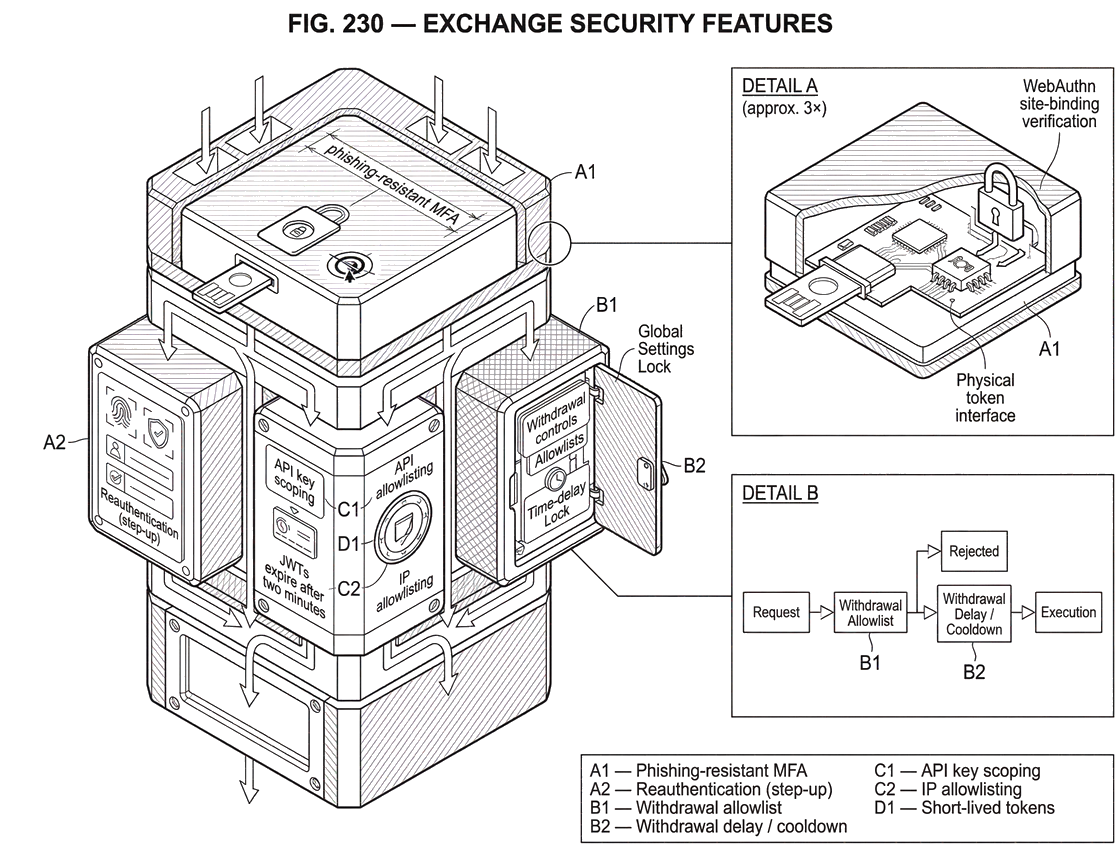
What Is Exchange Security Features?
Exchange security features exist for a simple reason: on a crypto exchange, a compromised account can become a direct path to moving money. The important question is not whether an exchange offers “security,” but which attack paths its controls actually break — phishing, credential theft, malicious withdrawals, or leaked API keys.
Mar 21, 2026
•
15 min read
#EXCHANGES
What Are Exchange Fees?
Exchange fees look simple on the surface, but they quietly shape where orders go, how liquidity appears, and what traders actually pay. To understand an exchange, you have to understand its fee logic: not just the headline rate, but the incentives built into adding, removing, and routing orders.
Mar 21, 2026
•
15 min read
#EXCHANGES
What Are Recurring Buys?
Recurring buys turn investing discipline into a product feature. Instead of deciding when to buy every time, you set an amount, a schedule, and a funding source, and the exchange handles the repetition — which is why the tool is closely tied to dollar-cost averaging.
Mar 21, 2026
•
12 min read
#EXCHANGES
What Are Exchange Deposits and Withdrawals?
Deposits and withdrawals are the points where an exchange meets the blockchain. They look simple in an app, but underneath they depend on address matching, network selection, confirmations, internal ledgers, and risk controls — which is why small mistakes can be irreversible.
Mar 21, 2026
•
23 min read
#EXCHANGES
What Is a Crypto Exchange?
A crypto exchange seems simple: a place to trade digital assets. But that simplicity hides a deep design choice about who holds your assets, how prices are formed, and which risks you are actually taking when you click buy or sell.
Mar 21, 2026
•
25 min read
#EXCHANGES
What is a Hybrid Exchange?
Hybrid exchanges exist because traders want two things that often conflict: the speed and tooling of centralized venues, and the asset control of decentralized ones. A hybrid exchange tries to split the job in two, keeping matching fast off-chain while moving custody and settlement toward on-chain, non-custodial guarantees.
Mar 21, 2026
•
24 min read
#EXCHANGES
What are Supported Order Types?
Supported order types are one of the clearest ways exchanges differ in practice. They determine not just whether you can buy or sell, but how precisely you can control price, timing, visibility, and automatic triggers when markets move.
Mar 21, 2026
•
16 min read
#EXCHANGES